Stainless Steel Gate Valves: Grades CF8, CF8M, 316L, Applications And Corrosion Resistance Comparison
An SS gate valve is not chosen just because the pipeline “needs stainless.” The grade still has to match the fluid, cleaning method, chloride level, temperature, and site environment. CF8 can work well in mild service, while CF8M and 316L are usually considered when corrosion risk, washdown exposure, or welding requirements become more important.
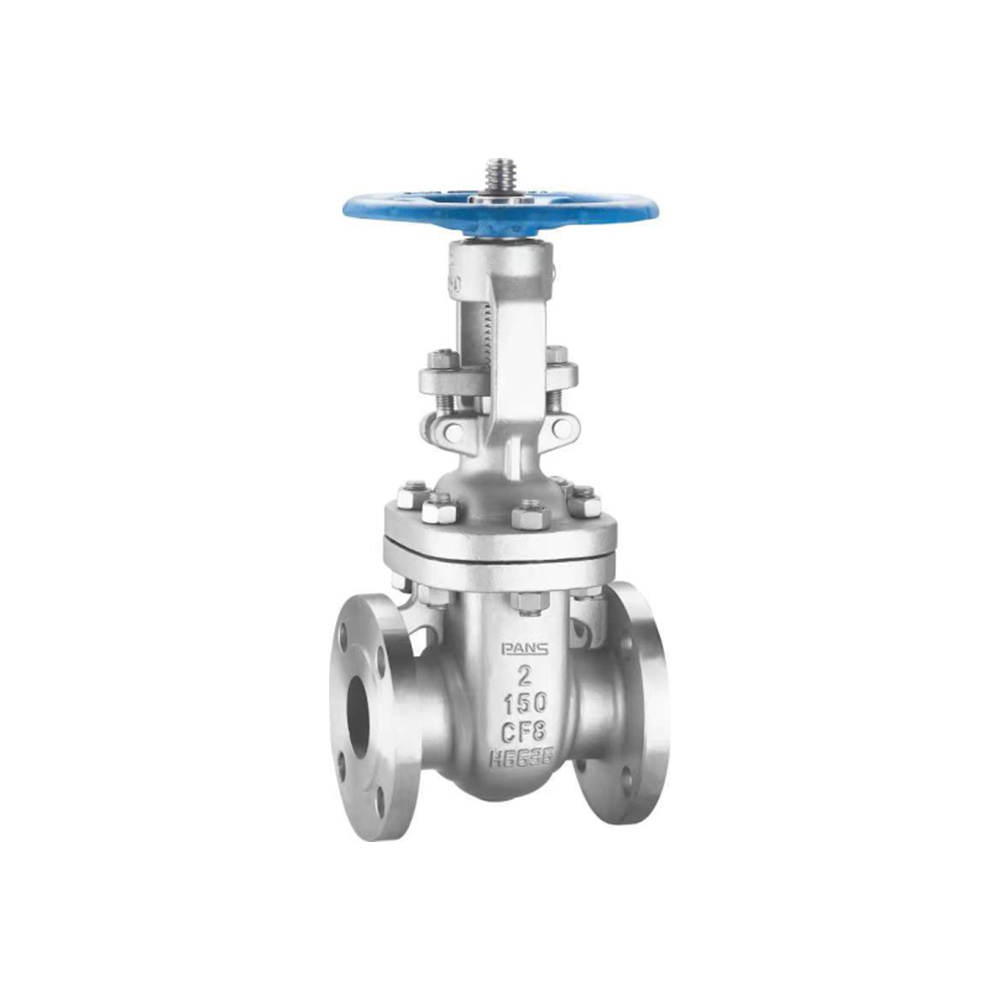
For standard stainless isolation service, the PANS wedge gate valve is a useful product page to review early. It helps buyers connect the material discussion with a real gate valve design before trim, flange, and testing details are finalized.
How Do You Choose The Right SS Gate Valve Grade?
The word “stainless” can make a valve sound ready for any corrosive line. That is where many material mistakes begin.
A valve on clean indoor water does not face the same conditions as a valve near salt air, chemical washdown, dosing systems, or stagnant process liquid. Those details change how stainless steel behaves over time.
So the grade selection should start with the fluid. Then check the temperature, chloride content, cleaning chemicals, pressure, and whether liquid can sit inside the valve after shutdown.
ASTM A351 is often used for cast stainless pressure parts. The specification covers austenitic steel castings for valves, flanges, fittings, and other pressure-containing parts. It also ties grade selection to service conditions and corrosion resistance.
Where CF8 Makes Sense
CF8 stainless steel is commonly used when the line needs better corrosion resistance than carbon steel, but the service is still fairly mild. It is often compared with cast 304 stainless steel.
This grade can fit clean water, air, light industrial fluids, and some mild chemical duties. It gives a useful balance between corrosion resistance and cost, especially when the project does not justify a higher-alloy stainless material.
The caution is simple: CF8 should not be treated as a cure-all. If chlorides collect on the valve, liquid stays stagnant, or cleaning chemicals remain on the surface, CF8 may lose its margin. The valve may install without issue, then show corrosion later in service.
Why CF8M Is Often Chosen For Tougher Service
CF8M is commonly compared with cast 316 stainless steel. Its molybdenum content gives it better resistance than CF8 in many chloride-containing environments.
That is why the CF8 vs CF8M choice matters in coastal plants, cooling water systems, chemical lines, and washdown areas. A CF8M gate valve may cost more upfront, but it can be easier to defend when corrosion risk is part of the job.
The Nickel Institute stainless steel resource explains how alloying elements affect stainless properties, including corrosion resistance. In valve selection, that means chemistry should follow exposure, not habit.
Where 316L Fits Into The Order
316L stainless steel is often mentioned in stainless valve projects, but it is not always the right term for every part of the valve.
CF8M is a cast grade. 316L is a low-carbon wrought grade. It is often linked to fabricated or welded parts rather than cast valve bodies.
The “L” means low carbon. That can help when welding is involved because lower carbon reduces certain corrosion risks around welded areas. If a project includes welded extensions, fabricated assemblies, or a direct 316L requirement, name it clearly in the inquiry.
For a cast valve body, confirm whether CF8M is the acceptable casting grade before the order moves forward.
Which Stainless Gate Valve Grade Fits Each Service Condition?
Use this table as a quick filter before asking for the price. The final material still needs to follow the project specification.
| Service Condition | Grade To Review First | Why It May Fit |
| Clean water or mild indoor service | CF8 stainless steel | Good corrosion resistance without moving to a higher-cost alloy |
| Coastal air or chloride exposure | CF8M | Better protection than CF8 in many chloride conditions |
| Chemical cleaning or washdown | CF8M or specified stainless grade | More margin when residue stays on the surface |
| Welded stainless assemblies | 316L stainless steel | Low carbon helps support welding-related requirements |
| Severe chemical or high-chloride service | Special stainless or alloy | Standard stainless grades may not be enough |
The point is not to buy the most expensive grade every time. The point is to avoid using a mild-service grade on a line that will punish it.
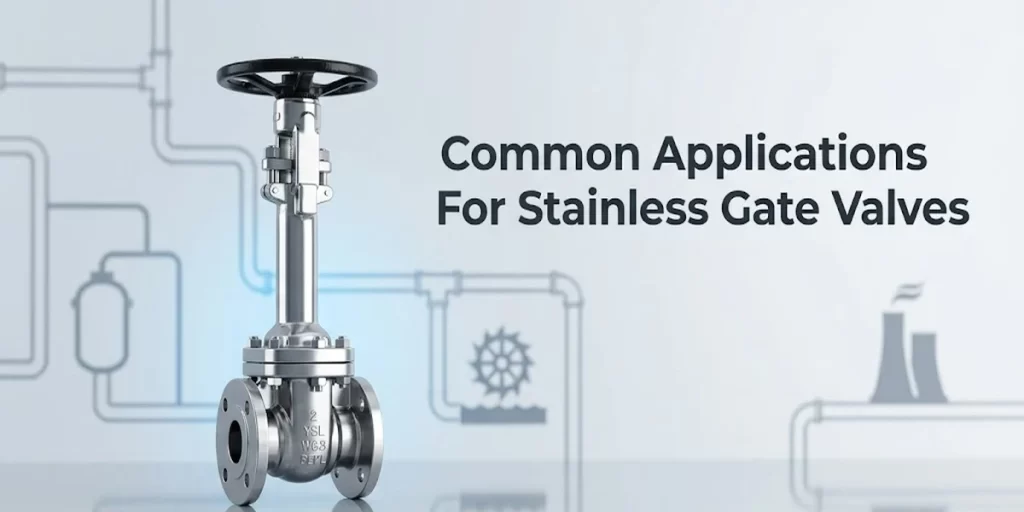
Where Are Stainless Steel Gate Valves Commonly Used?
Stainless steel gate valves are used when the line needs corrosion resistance, cleaner material control, or better protection from the surrounding environment. The right grade depends on the medium and site conditions.
Are Stainless Gate Valves Used In Food, Beverage, and Washdown Areas?
Washdown service can be harder on stainless than it looks. Water chemistry, cleaning chemicals, and chloride residue all matter. CF8M is often safer than CF8 when cleaning fluids or chlorides are part of the environment.
Are Stainless Gate Valves Used In Water Treatment And Coastal Facilities?
Water treatment valves may face disinfectants, chlorides, stagnant zones, and outdoor exposure. Coastal sites add salt air. In these applications, CF8M is often a stronger starting point than CF8 unless the project standard says otherwise.
Are Stainless Gate Valves Used In Chemical, Power, and Process Lines?
Chemical and power plants usually need tighter material review. The medium, concentration, and temperature should be stated clearly. For leakage-sensitive service, buyers can also review the PANS below the sealed gate valve when stem sealing and material choice both matter.
What Details Should Buyers Send Before A Stainless Valve Quote?
A stainless valve inquiry should include the fluid, concentration, chloride content if known, working temperature, pressure, valve size, flange standard, operation method, required material grade, and test documents.
The ASME B16.34 valve standard is useful because it covers pressure-temperature ratings, materials, testing, and marking for valves. This helps connect stainless grade selection with pressure and temperature limits.
For corrosion review, the Outokumpu stainless corrosion guide notes that pitting and crevice corrosion can occur in chloride solutions. It also explains why chromium, molybdenum, and nitrogen can improve resistance in harsher environments.
Wedge Gate Valve
Design & Manufacture Standard: API 600
Face to Face: ASME B16.10
Grade Selection Questions Buyers Ask
1. Is CF8 The Same As 304 Stainless Steel?
CF8 is often treated as the cast counterpart to 304 stainless steel. Still, the ASTM casting grade and project specification should control the final material choice.
2. Is CF8M Better Than CF8?
CF8M is better in many chloride and chemical conditions because it contains molybdenum. CF8 may still be enough for mild water, air, or indoor utility service.
3. When Should 316L Be Specified?
Specify 316L when the project requires low-carbon stainless steel, especially for welded or fabricated parts. For cast valve bodies, confirm whether CF8M is acceptable.
Match The Grade To The Corrosion Risk
An SS gate valve should be selected from the service condition first, not from a broad stainless label. CF8 can fit mild lines. CF8M is often better for chloride exposure, coastal air, and washdown areas. 316L matters when low-carbon or welding requirements appear in the specification.
PANS can help buyers separate these cases across one order. A project may include clean utility lines, chemical service, and outdoor corrosion exposure at the same time. Those lines do not always need the same stainless grade.
Send the medium, temperature, pressure, chloride risk, flange standard, and required documents early. With those details, PANS can help match the stainless steel gate valve grade, sealing design, and testing plan before production starts.
Search
Categories
Tags
Product
- Ball Valve
- Floating Ball Valve
- Fully Welded Ball Valve
- Trunnion Ball Valve
- Butterfly Valve
- Full Metal-Seated Bi-Directional Butterfly Valve
- High Performance Butterfly Valve
- Three-Eccentric Metal Hard Seal Butterfly Valve
- Check Valve
- Cast Lift Check Valve
- Cast Swing Check Valve
- Wafer Type Check Valve
- DIN Valve
- DIN Bellow Sealed Globe Valve
- DIN Globe Valve
- DIN Rising Stem Gate Valve
- DIN Swing Check Valve
- Forge Valve
- Forged Check Valve
- Forged Floating Ball Valve
- Forged Gate Valve
- Forged Globe Valve
- Gate Valve
- Bellow Sealed Gate Valve
- Flat Gate Valve
- Wedge Gate Valve
- Globe Valve
- Cast Globe Valve
- Plug Valve
- Eccentricity Plug Valve
- Inverted Pressure Balance Lubricated Plug Valve
- Orbit Plug Valve
- Sleeve Type Plug Valve
- Slurry Valve
- Slurry Valve
- Strainer


