What Is a Full Port Ball Valve? Full Bore vs Standard Bore
Image URL: https://notebooklm.google.com/notebook/d6c020e7-6a05-4b6a-b1c0-cfe3bd8350ca
A full port ball valve is a ball valve with an internal opening that closely matches the pipe’s inside diameter. That larger opening helps fluid move with less restriction, less pressure drop, and a straighter flow path. In this guide, you will learn what it means, how it compares with a standard or reduced port design, where each type is used, and how to choose the right one for your system.
For beginners, the main benefit is simple. Once you understand the bore size, it becomes much easier to choose the right valve for water, oil and gas, chemical service, slurry lines, and long pipelines. That saves time during selection and helps prevent flow problems later.
What It Is
A ball valve is a quarter-turn valve. Inside the body, a drilled ball rotates to open or block flow. When the hole lines up with the pipe, flow passes through. When the ball turns 90 degrees, flow stops. This simple motion is one reason ball valves are widely used for shutoff service.
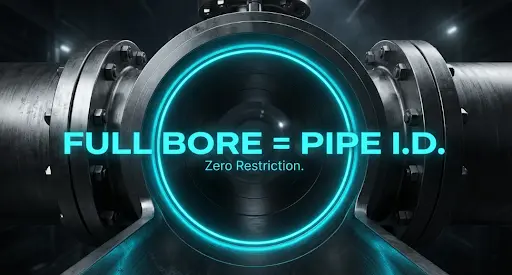
So, what is a full port ball valve? It is a design where the bore through the ball is about the same size as the connected pipe. You may also see it called a full bore valve. In normal use, both terms mean the same thing.
Three key takeaways
- A full-bore design has a larger opening, so flow sees less restriction.
- A standard or reduced port ball valve has a smaller opening than the pipe.
- The choice affects pressure drop, size, weight, cost, and application fit.
How It Differs
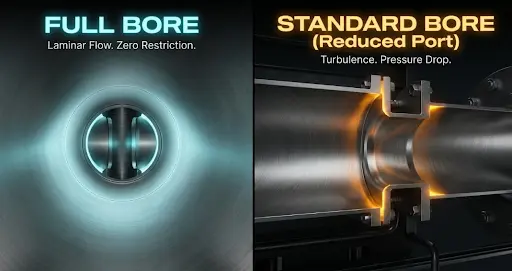
The easiest way to understand the difference is to compare the opening inside the ball.
Full bore
In a full-bore design, the opening is close to the pipe ID. Fluid passes through with a straighter path and less narrowing. That is why it is often chosen when flow efficiency matters.
Standard bore
In a standard bore design, the opening is smaller than the pipe. Many articles describe it as roughly one nominal pipe size smaller. This smaller opening creates more restriction. It also increases velocity through the valve.
A quick comparison
- Full bore: larger opening, lower pressure drop, larger body
- Standard bore: smaller opening, more pressure drop, smaller body
- Full bore: better for pigging, solids, and viscous fluids
- Standard bore: better when space and budget matter more
Why It Matters
Bore size changes how the system behaves. That is the real reason this topic matters.
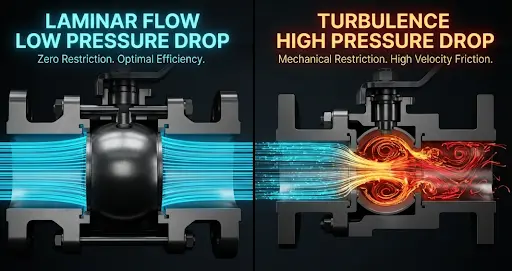
First, a larger opening usually means less pressure loss across the valve. If a system needs to protect flow rate, reduce turbulence, or avoid extra resistance, the full-bore option often makes more sense. This is why many comparison articles place pressure drop at the center of the buying decision.
Second, the smaller opening in a standard bore valve can raise fluid velocity through the port. In some systems, this can increase turbulence and make cavitation more likely. That matters more in services with pressure changes, flashing liquids, or sensitive piping conditions.
Third, pigging is a major factor in pipelines. ASME pipeline guidance notes that pig passage calls for a full-bore, through-conduit type valve. That is one reason larger pipeline systems often favor full-bore construction.
Where It Fits
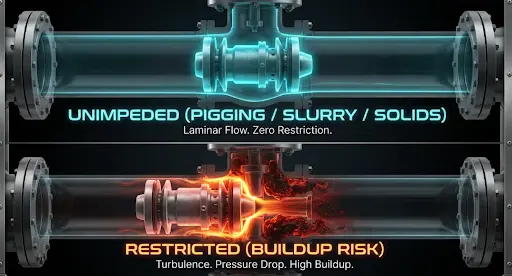
A full-bore valve is often the better choice when the process needs smooth passage through the line.
It is commonly selected for viscous fluids, slurries, and media that may leave buildup in tight restrictions. It also works well in systems where pressure drop must stay low, such as transfer lines, pump discharge lines, and process loops, where every restriction adds up. Solids service and high-flow duties are common use cases.
In long-distance pipelines, large-diameter systems often use trunnion-mounted ball valves. This design supports the ball at both ends, which helps reduce operating torque and maintain stable sealing under higher loads. Industry sources also describe trunnion-style valves as low-torque designs for demanding pressure service.
That makes this construction useful in oil and gas, petrochemical, and energy projects where line size and pressure make operation harder. PANS also presents ball valves, including trunnion ball valves, for oil and gas, petrochemical, chemical, power, LNG, and related sectors.
When It Costs More
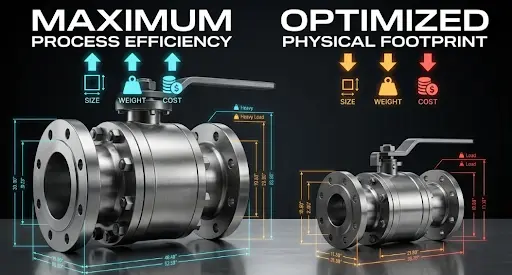
The larger-bore option is not automatically better for every job.
A larger opening usually means a larger body, more material, more weight, and a higher price. In many general shutoff duties, that added cost may not bring a meaningful system benefit.
The valve is not always the main restriction in a line. Pipe length, elbows, fittings, and other components may matter more.
That is where the standard bore design earns its place. It is more compact, often more economical, and widely used when a small amount of restriction is acceptable. For many water, utility, HVAC, and general industrial lines, it is a practical choice.
How To Choose
If you are still deciding, ask these questions in order.
How much pressure drop can the line accept?
If the answer is “very little,” a full-bore design is often the safer choice. If moderate loss is acceptable, a standard bore valve may be enough.
What is flowing through the line?
Clean, low-viscosity media can often work well with either design. Thicker fluids, solids, or slurries usually favor the larger opening.
Does the pipeline need pigging?
If yes, full bore becomes much more important. ASME guidance supports that point for pig passage.
How important are size and cost?
If space is tight or the budget is strict, a standard bore option may be the better fit. If process performance matters more, the larger opening may justify the extra cost.
How PANS Supports Valve Selection
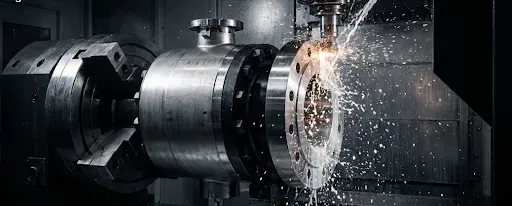
PANS VALVE presents itself as a one-stop industrial valve manufacturer with experience in steel valves, including ball valves, and with manufacturing, technical support, and customer service for industrial projects. Its site states that the company was established in 1985, operates a 25,000 m² production base, and serves sectors such as water systems, oil and gas, chemical processing, petrochemical service, and power generation.
The company also describes CNC-based machining, R&D support, project-oriented service, and training for installation and maintenance. For buyers who need a supplier for project work, these points matter because valve selection is not only about the part itself. It is also about drawings, lead time, technical review, and after-sales support.
Conclusion
A full-bore valve is the right choice when flow path, pressure drop, pigging, or solids handling matter most. A standard or reduced port design is often the smarter choice when space, weight, and cost matter more. The best answer depends on the process, not just the valve catalog.
If you are comparing options for an upcoming project, explore the PANS VALVE website or browse its ball valve offering through the main site. A clear valve match today can save rework, pressure loss, and maintenance later.
FAQ
What does full port ball valve mean?
It means the opening through the ball is close to the pipe’s inside diameter.
That helps reduce restriction and pressure drop.
What is full port ball valve used for?
It is used where flow loss should stay low.
Common examples include pipelines, viscous fluids, slurry service, and piggable systems.
What full port ball valve advantages matter most?
The main advantages are lower pressure drop, smoother flow, and easier pig passage.
It can also help with solids or thicker media.
Search
Categories
Tags
Product
- Ball Valve
- Floating Ball Valve
- Fully Welded Ball Valve
- Trunnion Ball Valve
- Butterfly Valve
- Full Metal-Seated Bi-Directional Butterfly Valve
- High Performance Butterfly Valve
- Three-Eccentric Metal Hard Seal Butterfly Valve
- Check Valve
- Cast Lift Check Valve
- Cast Swing Check Valve
- Wafer Type Check Valve
- DIN Valve
- DIN Bellow Sealed Globe Valve
- DIN Globe Valve
- DIN Rising Stem Gate Valve
- DIN Swing Check Valve
- Forge Valve
- Forged Check Valve
- Forged Floating Ball Valve
- Forged Gate Valve
- Forged Globe Valve
- Gate Valve
- Bellow Sealed Gate Valve
- Flat Gate Valve
- Wedge Gate Valve
- Globe Valve
- Cast Globe Valve
- Plug Valve
- Eccentricity Plug Valve
- Inverted Pressure Balance Lubricated Plug Valve
- Orbit Plug Valve
- Sleeve Type Plug Valve
- Slurry Valve
- Slurry Valve
- Strainer


