Steam Ball Valves: Temperature Limits, Seat Materials, and Application Guide
A steam ball valve can work in steam service only when its seat, packing, body material, and pressure class match the actual line temperature. Soft seats may fit clean, saturated steam. However, superheated steam, dirty condensate, and frequent cycling often need a metal-seated ball valve.
For smaller on-off steam isolation duties, buyers can start by reviewing the PANS floating ball valve product line. It gives procurement teams a direct product family to compare before checking seat material, pressure class, and testing needs.
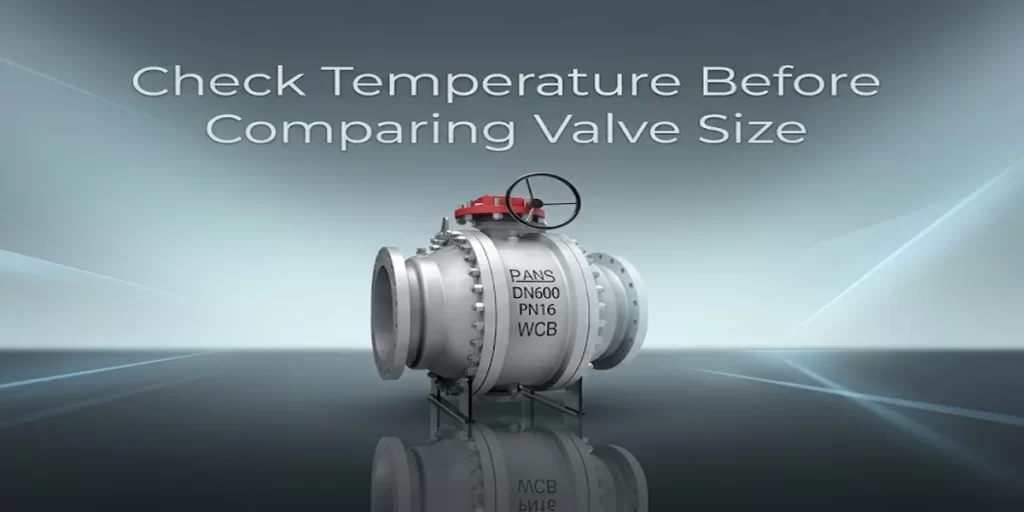
Check Temperature Before Comparing Valve Size
The first selection point is not pipe size. It is the highest temperature the valve will face during startup, operation, and shutdown. Steam systems can heat quickly, so the normal operating temperature may not show the full thermal load.
This matters because the seat and packing often reach their limit before the steel body does. If a soft seat runs above its range, it may deform, leak, or make the valve harder to operate. Because of that, every inquiry should ask for the full pressure-temperature rating, not just the valve class.
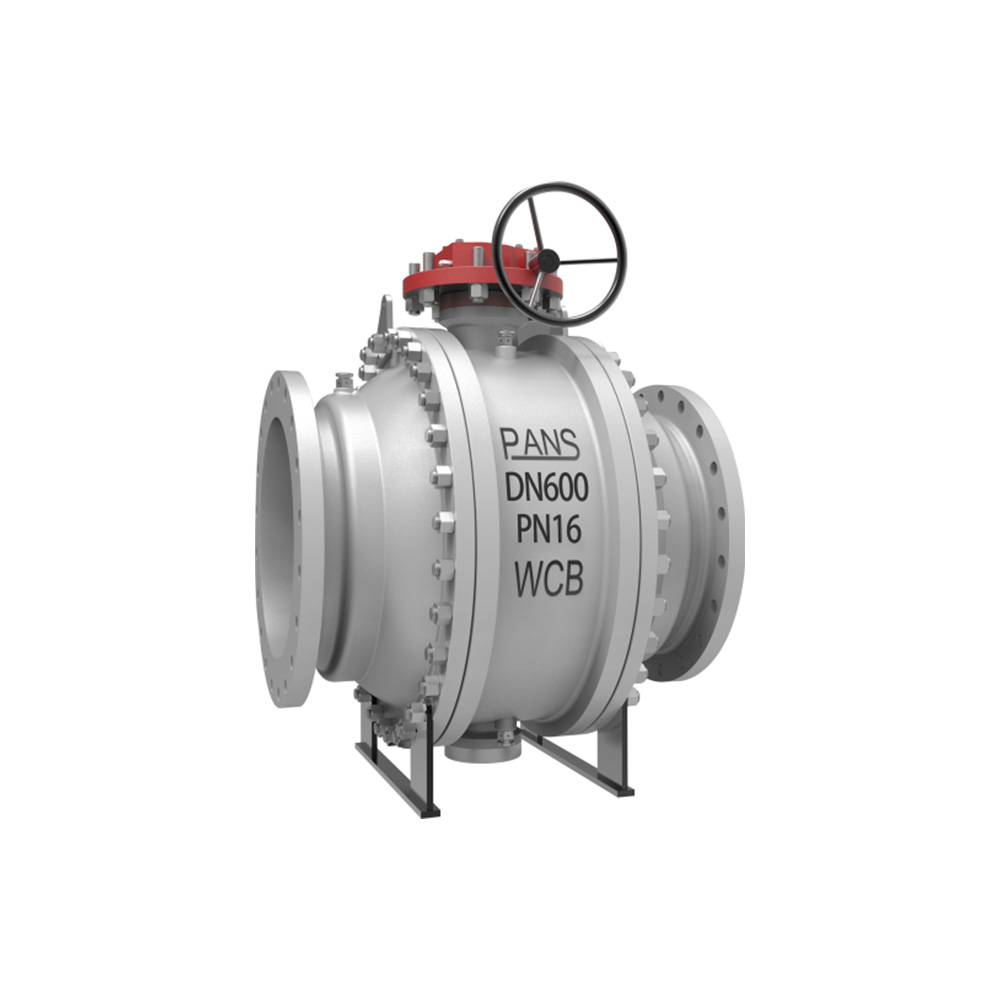
For larger steam lines or higher-pressure service, the PANS trunnion ball valve may be the better product family to compare. Its supported ball structure helps reduce seat load and operating torque, which can matter when pressure and size increase.
The valve body still matters too. The ASME B16.34 valve standard covers pressure-temperature ratings, materials, testing, and marking. Therefore, a Class 300 valve should still be checked against its working temperature and material.
Is Saturated Steam Or Superheated Steam Harder On Ball Valve Seats?
Saturated steam and superheated steam create different risks. Saturated steam can carry moisture during startup, poor drainage, or steam trap failure. That moisture may move rust scale into the valve cavity and damage soft seats.
Superheated steam creates a heat problem instead. It is usually drier, but it runs hotter. As the line temperature rises, polymer seats and packing materials become the main concern. This is where a high-temperature ball valve with graphite packing or metal-to-metal seating may be more suitable.
The buyer should describe the real medium clearly. “Steam” alone is too general. Tell the supplier whether the line carries saturated steam, superheated steam, wet steam, clean steam, or condensate.
Which Seat Material Works Best For A Steam Ball Valve?
Seat design affects shutoff, torque, service life, and cost. Soft seats are useful when the buyer needs tight shutoff and easy operation. Still, they need a temperature margin because steam can surge during warmup.
Metal seats handle heat and debris better. However, they may cost more and may follow a defined leakage class. That tradeoff should be discussed before the purchase order is issued.
| Steam Duty | Better Seat Direction | Why Buyers Choose It |
| Clean low-pressure saturated steam | PTFE or reinforced soft seat | Tight shutoff with lower operating torque |
| Higher-temperature saturated steam | Engineered soft seat or PEEK | Better load resistance than standard PTFE |
| Superheated steam | Hard-faced metal seat | More stable under higher temperatures |
| Dirty condensate or pipe scale | Metal seat with graphite packing | Lower risk of seat cutting |
| Frequent cycling | Spring-loaded or metal seat design | Better resistance to seat movement |
This table is only a guide. The final choice should follow the valve datasheet, pressure-temperature rating, and project specification.
Can Ball Valves Be Used For Steam Isolation And Control?
A steam service valve should match the job it performs. Ball valves are mainly on-off isolation valves. They open quickly, so they are not usually the best option for throttling or slow flow control.
This point matters because steam piping can suffer water hammer when condensate is not drained correctly. The CAPP water hammer guidance for steam distribution pipelines explains why drainage and controlled warmup matter in steam systems.
If the system needs flow adjustment, a globe valve or control valve may protect the seat better. If the system needs a simple shutoff, a correctly rated steam ball valve can be practical.
What Data Should Buyers Send For A Steam Ball Valve Quote?
A useful quote needs more than “DN50, Class 300.” Send steam type, normal temperature, maximum temperature, working pressure, valve size, pressure class, body material, seat material, end connection, actuator type, and test standard.
For oil, gas, and pipeline projects, API requirements may also matter. API Specification 6D defines manufacturing requirements for valves used in pipeline service. This helps buyers align technical documents before production.
PANS lists Class 150 to Class 2500 or PN10 to PN420, sizes from 1/2 inch to 40 inches, and temperature ranges from -196°C to +600°C, depending on product design. It also mentions soft or metal seals, graphite packing, and API 598 testing.
Because those ranges depend on the exact design, buyers should not treat them as one rating for every valve. A floating design, a trunnion design, and a custom metal-seat design may have different limits.
Trunnion Ball Valve
Design & Manufacture Standard: API 608 / API 6D
Face to Face: ASME B16.10
Steam Valve Questions Buyers Ask Before Ordering
1. Can A Ball Valve Be Used For Steam?
Yes. A ball valve can isolate steam when the pressure class, seat material, packing, and temperature rating match the line condition. It should not be used for fine throttling unless the design allows that duty.
2. When Should Buyers Choose Metal Seats?
Choose metal seats for superheated steam, dirty condensate, pipe scale, or frequent cycling. Metal seats resist heat and particles better than common soft seats.
3. What Is The Most Common Buying Mistake?
The common mistake is choosing by size and price first. Steam valves should be checked by temperature, pressure, seat design, and line condition before comparing quotes.
Choose A Steam Valve That Protects The Line
A steam ball valve should make the piping system easier to isolate, not harder to maintain. That is why temperature, seat material, and valve function should come before price comparison. A cheaper soft-seat valve can become expensive if steam heat damages the seat or condensate carries scale into the sealing area.
This is where PANS gives buyers a practical advantage for steam projects. Buyers can compare floating and trunnion ball valve options, then match the seat, packing, class, and test plan to the actual steam condition. For clean saturated steam, the goal may be tight shutoff and lower torque. For superheated steam, the goal shifts to heat resistance, graphite sealing, and stable metal-seat performance.
Instead of sending only a size and pressure class, send the full steam data. PANS can then help narrow the design before production, which reduces quote revisions, seat mismatch, and late inspection problems.
Search
Categories
Tags
Product
- Ball Valve
- Floating Ball Valve
- Fully Welded Ball Valve
- Trunnion Ball Valve
- Butterfly Valve
- Full Metal-Seated Bi-Directional Butterfly Valve
- High Performance Butterfly Valve
- Three-Eccentric Metal Hard Seal Butterfly Valve
- Check Valve
- Cast Lift Check Valve
- Cast Swing Check Valve
- Wafer Type Check Valve
- DIN Valve
- DIN Bellow Sealed Globe Valve
- DIN Globe Valve
- DIN Rising Stem Gate Valve
- DIN Swing Check Valve
- Forge Valve
- Forged Check Valve
- Forged Floating Ball Valve
- Forged Gate Valve
- Forged Globe Valve
- Gate Valve
- Bellow Sealed Gate Valve
- Flat Gate Valve
- Wedge Gate Valve
- Globe Valve
- Cast Globe Valve
- Plug Valve
- Eccentricity Plug Valve
- Inverted Pressure Balance Lubricated Plug Valve
- Orbit Plug Valve
- Sleeve Type Plug Valve
- Slurry Valve
- Slurry Valve
- Strainer


