What Drives Gate Valve Price? Material, Class, Size, and Certification Costs
Gate valve price changes when the material, pressure class, size, end connection, testing scope, and documents change. A basic carbon steel valve for clean utility service is not priced like a stainless gate valve for chemical media, even when both valves use the same nominal size.
For standard cast steel isolation service, buyers can start with the PANS wedge gate valve product page. It gives procurement teams a clear product family to compare when reviewing material, pressure class, end connection, and test requirements.
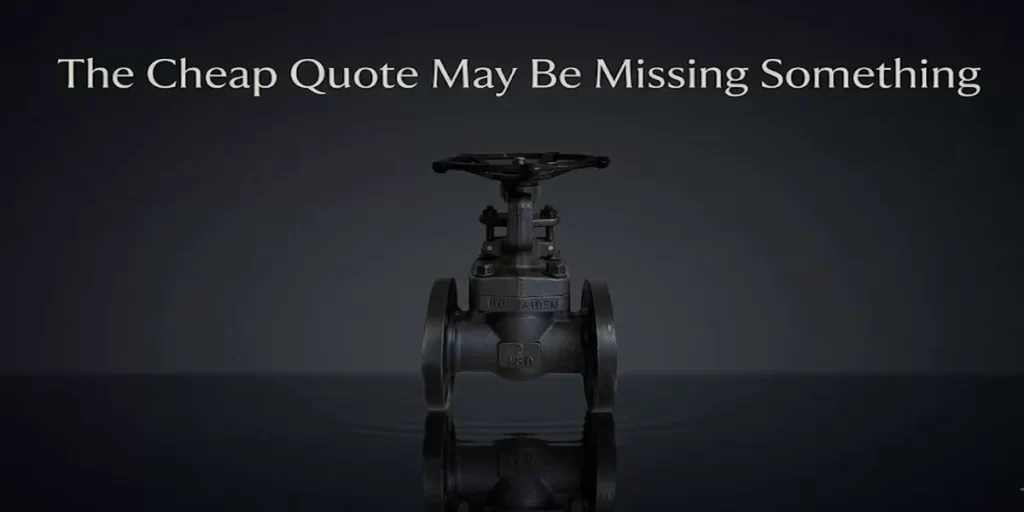
The Cheap Quote May Be Missing Something
A gate valve quote can look low because it leaves out details. The material may be lower. The trim may be different. The testing package may be thinner. The price may also exclude documents needed before shipment.
That is why buyers should not compare prices by size alone. A DN100 valve can be built for light utility work or for petroleum, gas, steam, or chemical service. Those duties do not ask for the same body strength, sealing surface, or inspection record.
For compact high-pressure lines, a PANS forged gate valve may be more relevant than a larger cast design. Forged valves are commonly considered when buyers need smaller sizes, stronger body structure, and tighter project specifications.
The standard is another reason prices move. API 600 steel gate valves are made for heavy-duty refinery and related service. The standard covers bolted bonnets, OS&Y construction, rising stems, wedge or parallel seating, and flanged or butt-welding ends.
Why Do Same-Size Gate Valves Have Different Prices?
Material usually sets the base cost. Carbon steel is often the practical choice for clean water, steam, oil, or non-corrosive gas. It is easier to source and usually costs less than stainless or alloy material.
Stainless steel costs more because the alloy content is higher. SS304 and SS316 are also not the same purchase. SS316 contains molybdenum, which can help in chloride or chemical exposure. That extra resistance only makes sense when the medium needs it.
Some services need more than stainless steel. Duplex stainless steel, alloy steel, or nickel alloy may be required for stronger corrosion or temperature resistance. These choices raise the first invoice, but they may reduce shutdown risk later.
How do pressure, class, size, and end connection change gate valve cost?
Pressure class changes the valve body, not just the nameplate. A Class 150 steel gate valve uses less wall thickness than a Class 600 or Class 900 valve of the same size. As class rises, machining time, bolting size, test pressure, and handling work usually rise too.
Size adds another layer. Larger valves need more metal, larger castings, more machining area, and stronger packing. They also cost more to create and ship. For export buyers, freight can be a painful surprise if weight is checked too late.
The end connection also affects the gate valve cost. Flanged ends need facing and drilling. Butt-weld ends need weld preparation. Socket weld and threaded ends are common on small forged valves.
| Cost Driver | What Changes In The Valve | Budget Effect |
| Material grade | Casting, forging, alloy content and machining | Stainless, duplex, and alloy grades cost more |
| Pressure class | Wall thickness, bolting, and test pressure | Higher classes add material and labor |
| Nominal size | Body weight, machining area and packing | Larger valves raise price and freight |
| End connection | Flange drilling, facing, weld prep, or threading | Some ends add extra shop work |
| Documentation | MTRs, pressure tests and inspection records | More paperwork adds time and cost |
This is why an ANSI gate valve price should include size, class, connection, and document scope in the same inquiry.
What Certification And Testing Costs Should Buyers Expect?
Testing and documents can change the final quote. Material test reports, pressure tests, dimensional checks, coating records, certificates of conformity, and third-party inspections all take time. Someone has to prepare and submit those records.
The ASME B16.34 valve standard covers pressure-temperature ratings, dimensions, materials, testing, and marking. That is why project valves are priced by more than steel weight.
API requirements can also affect the buying process. The API standards program supports technical consistency for oil and gas equipment. If your project asks for API, ASME, ASTM, or witness inspection, say so before the quote is made.
Material grades should also be named clearly. ASTM International publishes material standards used across many industrial projects. If the project calls for a specific ASTM grade, list it instead of writing “carbon steel” only.
What Should Buyers Send For An Accurate Gate Valve Quote?
A good inquiry helps an industrial gate valve supplier price the order faster. Send the valve size, pressure class, medium, temperature, body material, trim material, end connection, operation method, quantity, and required certificates.
Also, explain the service. Water treatment, boiler steam, crude oil, gas transmission, and chemical processing create different risks. A supplier can price more accurately when it knows whether the buyer cares most about corrosion, pressure, delivery, documents, or maintenance.
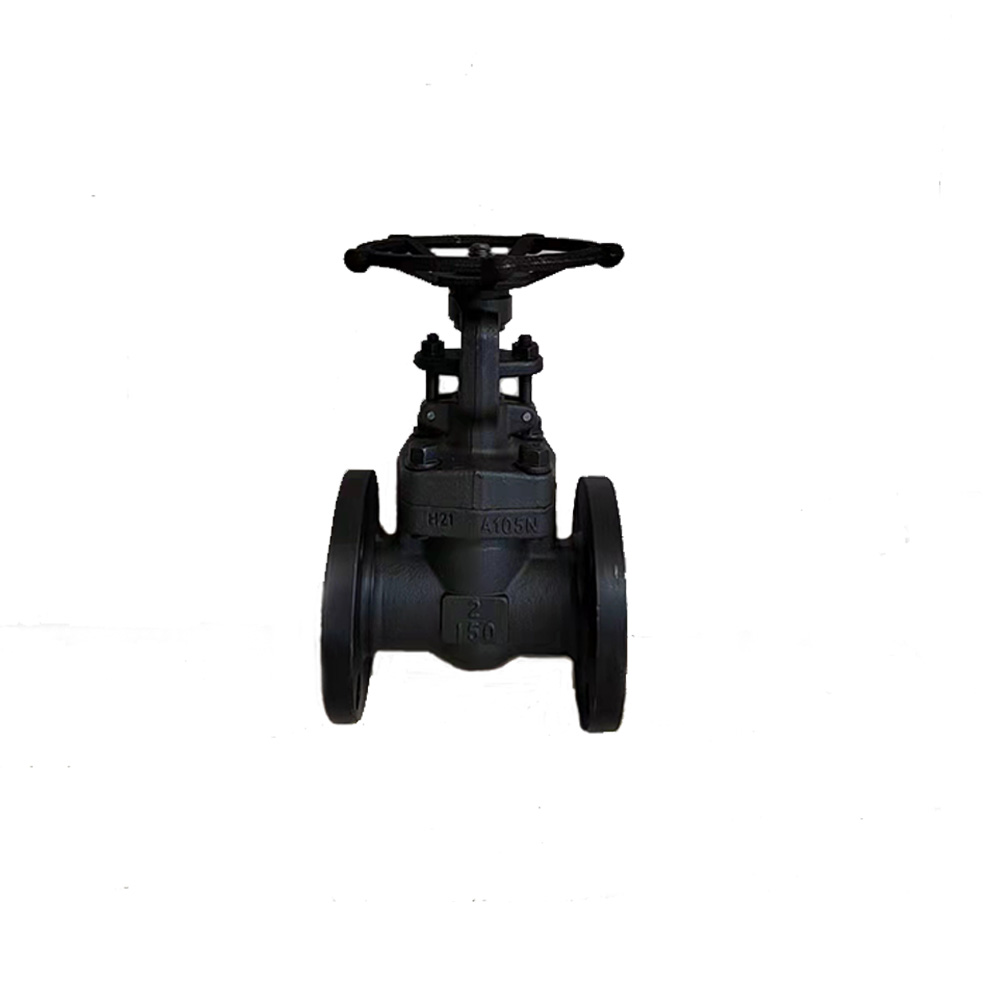
Forged Gate Valve
Design & Manufacture Standard: API 602
Face to Face: Manufacturer Standard
Pricing Questions Procurement Teams Ask
1. Should Buyers Always Choose Stainless Steel?
No. Stainless steel helps with corrosion, but it can waste budget on cleaning services. Match the material to the medium, temperature, corrosion risk, and maintenance plan.
2. Why Do ANSI Gate Valve Prices Differ?
They differ because material, class, trim, end connection, testing, and certificates may not match. One quote may include full documents, while another may only include the valve.
3. What Information Speeds Up A Quote?
Send size, class, medium, temperature, material, connection, quantity, operation method, standard, and certificate needs. This lets the supplier price the real value instead of guessing.
Price Is Easier To Defend When The Specification Is Clear
A clean gate valve budget does more than reduce the purchase price. It helps the buyer prove why the selected valve fits the line. Material protects against corrosion. Pressure class protects against load. Testing and certificates protect the order during inspection.
PANS can support that process by helping buyers compare wedge gate valve and forged gate valve options against the actual service. A cast wedge design may suit standard pipeline isolation, while a forged gate valve may fit compact high-pressure work better.
When the inquiry is complete, the quote becomes easier to explain. Procurement can see what drives the cost, engineering can review the specification, and distributors can protect margin without selling the wrong valve.
Search
Categories
Tags
Product
- Ball Valve
- Floating Ball Valve
- Fully Welded Ball Valve
- Trunnion Ball Valve
- Butterfly Valve
- Full Metal-Seated Bi-Directional Butterfly Valve
- High Performance Butterfly Valve
- Three-Eccentric Metal Hard Seal Butterfly Valve
- Check Valve
- Cast Lift Check Valve
- Cast Swing Check Valve
- Wafer Type Check Valve
- DIN Valve
- DIN Bellow Sealed Globe Valve
- DIN Globe Valve
- DIN Rising Stem Gate Valve
- DIN Swing Check Valve
- Forge Valve
- Forged Check Valve
- Forged Floating Ball Valve
- Forged Gate Valve
- Forged Globe Valve
- Gate Valve
- Bellow Sealed Gate Valve
- Flat Gate Valve
- Wedge Gate Valve
- Globe Valve
- Cast Globe Valve
- Plug Valve
- Eccentricity Plug Valve
- Inverted Pressure Balance Lubricated Plug Valve
- Orbit Plug Valve
- Sleeve Type Plug Valve
- Slurry Valve
- Slurry Valve
- Strainer


