How Much Does a 3-Inch and 2×2 Plug Valve Weigh? Size, Dimensions & Pressure Class Guide
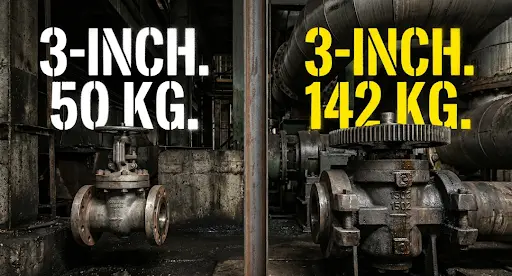
A 3-inch model does not have one fixed weight. In a flanged general-valve design, it can weigh about 50 kg at Class 150 and 75 kg at Class 900. A 2×2 Figure 1502 well-service model is often about 44 to 45 kg in a manual layout. The exact number changes with pressure class, end connection, body style, and operator type.
This guide explains the weight ranges, size differences, key dimensions, and pressure classes that matter before you choose one. It also shows why two valves with the same nominal size can have very different weights in real service. That helps buyers avoid sizing mistakes, lifting issues, and wrong support design.
Understand the Size Before You Compare the Weight
A plug valve is a quarter-turn valve. It opens and closes with a rotating plug inside the body. In simple terms, the listed size usually refers to the nominal pipe size or the bore connection size.
That is why a 2-inch plug valve and a 2×2 plug valve are not always the same product in practice. A standard flanged unit may follow ASME pressure classes. A 2×2 well-service unit often uses a Figure 1502 hammer union connection for oilfield pressure service.
So, when readers ask, how much does a 3 inch plug valve weight, the real answer is: it depends on the valve standard and end connection. The same rule applies to how much does a 2×2 plug valve weight.
Compare the Weight by Pressure Class
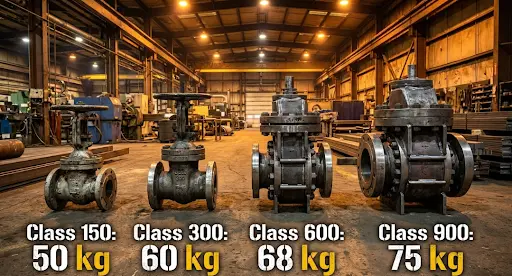
The chart in the PANS product manual shows that a flanged 3-inch general valve gets heavier as pressure class rises from 150LB to 900LB. The same trend appears at 2 inches. Higher class means thicker walls, stronger sealing areas, and more metal.
3-Inch Size: Compare the Class
For the 3-inch size in the PANS table:
- Class 150: about 50 kg
- Class 300: about 60 kg
- Class 600: about 68 kg
- Class 900: about 75 kg
This is a useful answer for buyers searching for a plug valve class 300 or checking a plug valve weight chart before installation.
2-Inch Size: Compare the Class
For the 2-inch size in the same table:
- Class 150: about 34 kg
- Class 300: about 37 kg
- Class 600: about 41 kg
- Class 900: about 47 kg
This is why plug valve weight should never be guessed from size alone. Pressure class changes the body mass in a big way.
Compare the Dimensions Along With the Weight
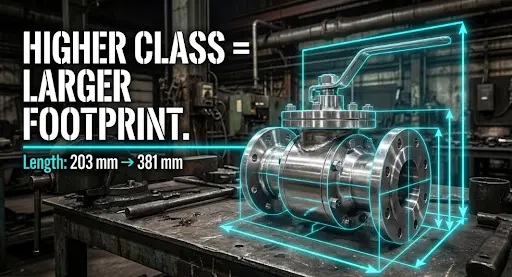
Weight matters, but dimensions matter too. A valve may fit the line size but still create trouble during lifting, support, or replacement.
The PANS dimensional chart shows these typical values for the 3-inch flanged size:
| Size | Class | L-RF (mm) | L-BW (mm) | H (mm) | W (mm) | Weight (kg) |
| 3-Inch | 150 | 203 | 330 | 490 | 280 | 50 |
| 3-Inch | 300 | 283 | 330 | 490 | 280 | 60 |
| 3-Inch | 600 | 356 | 356 | 490 | 280 | 68 |
| 3-Inch | 900 | 381 | 381 | 490 | 280 | 75 |
| 2-Inch | 150 | 178 | 267 | 435 | 220 | 34 |
| 2-Inch | 300 | 216 | 267 | 435 | 220 | 37 |
| 2-Inch | 600 | 292 | 292 | 435 | 220 | 41 |
| 2-Inch | 900 | 368 | 368 | 435 | 220 | 47 |
This shows how plug valve dimensions and weight rise together as the class goes up.
Compare the 1502 Well-Service Versions
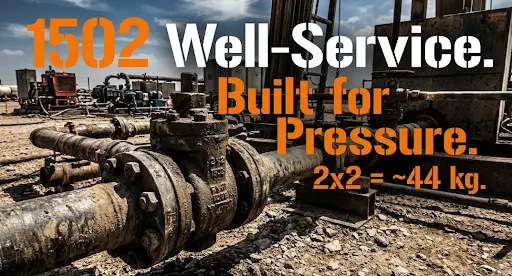
A 1502 plug valve is different from a standard flanged plant valve. It is common in high-pressure well service and flowline work. Industry spec sheets show that the 2×2 and 3×3 Figure 1502 designs are much heavier than many beginners expect.
2×2 Size: Check the Manual Weight
One manufacturer’s sheet lists a 2×2 plug valve with a Figure 1502 M x F connection at 97.90 lb, or about 44.4 kg. Another spec sheet lists a 2-inch 1502 standard model at 93 lb, or about 42.2 kg. That gives a practical range for buyers.
3-Inch 1502 Size: Check the Manual Weight
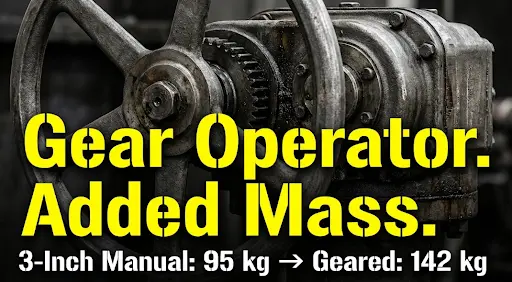
A common manual 3-inch 1502 model is listed at 210 lb, or about 95.3 kg. A gear-operated version is listed at 312 lb, or about 141.5 kg. Another spec sheet shows 3-inch 1502 standard units around 211 to 229 lb, depending on bore and layout.
So, for searches like 3 1502 plug valve weight or what’s the weight of a 3-inch 1502 plug valve, the honest answer is usually a range, not one single number.
Know Why the Weight Changes So Much
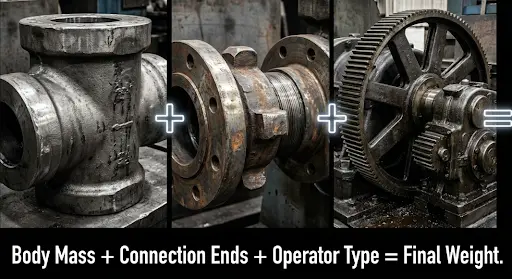
Several factors change the final mass:
Pressure Class: Add More Wall Thickness
Higher class valves need stronger pressure boundaries. That means more body metal and more weight. ASME B16.34 covers pressure-temperature ratings, dimensions, materials, testing, and marking for these valve types.
End Connection: Add More Metal Around the Ends
A flanged body, a butt-weld body, and a Figure 1502 hammer union body will not weigh the same. The connection design changes both length and body form.
Operator Type: Add More Height and More Mass
A manual handle, a handwheel, and a gear operator all add weight. This is very clear on 3-inch 1502 well-service models. Gear-operated units can be much heavier than manual ones.
Service Type: Add Different Material Needs
Standard service and sour service can use different trims, inserts, or sealing materials. That may change the final weight slightly. API 6D defines requirements for plug valves used in pipeline and piping systems in oil and gas service.
Check the Use Case Before You Buy
Weight is not just a catalog number. It affects handling, support, maintenance, and safety.
The installation manual for plug valves notes that poor installation, wrong operation, or poor maintenance can lead to damage, downtime, and costly repair work. It also says valves should be installed according to the manufacturer’s instructions and not forced beyond rated limits.

For beginners, that means three simple checks:
- confirm the pressure class
- confirm the end connection
- confirm the operator type
Those three points usually explain most weight differences.
Conclusion
The key point is simple. Do not judge a plug valve by size name alone. A 3-inch flanged valve may be 33 kg or 65 kg, depending on pressure class. A 3-inch Fig. 1502 version may be much heavier because of its operator and service design. A 2” x 2” flowline model often lands near 90 lb, but that is still a catalog-specific figure.
If you need help comparing dimensions, pressure class, or end connections, explore the PANS VALVE plug valve collection or visit the company profile and customer service page. PANS was established in 1985, operates a 25,000 m² production base, and supports customers with engineering, installation guidance, and after-sales service.
Frequently Asked Questions
How much does a 3 inch plug valve weigh?
A flanged 3-inch general valve can weigh about 50 kg at Class 150 and about 75 kg at Class 900. A 3-inch Figure 1502 well-service model can be about 95 to 142 kg, depending on operator type.
How much does a 2×2 plug valve weigh?
A manual 2×2 Figure 1502 model is often around 93 to 97.9 lb, or about 42 to 44.4 kg. Actual weight changes by service rating and construction.
What is a plug valve class 300?
Class 300 is a pressure class under ASME valve standards. It is heavier than Class 150 because the body needs more strength for higher-pressure service.
Search
Categories
Tags
Product
- Ball Valve
- Floating Ball Valve
- Fully Welded Ball Valve
- Trunnion Ball Valve
- Butterfly Valve
- Full Metal-Seated Bi-Directional Butterfly Valve
- High Performance Butterfly Valve
- Three-Eccentric Metal Hard Seal Butterfly Valve
- Check Valve
- Cast Lift Check Valve
- Cast Swing Check Valve
- Wafer Type Check Valve
- DIN Valve
- DIN Bellow Sealed Globe Valve
- DIN Globe Valve
- DIN Rising Stem Gate Valve
- DIN Swing Check Valve
- Forge Valve
- Forged Check Valve
- Forged Floating Ball Valve
- Forged Gate Valve
- Forged Globe Valve
- Gate Valve
- Bellow Sealed Gate Valve
- Flat Gate Valve
- Wedge Gate Valve
- Globe Valve
- Cast Globe Valve
- Plug Valve
- Eccentricity Plug Valve
- Inverted Pressure Balance Lubricated Plug Valve
- Orbit Plug Valve
- Sleeve Type Plug Valve
- Slurry Valve
- Slurry Valve
- Strainer


