Are Ball Valves Directional? How Flow Direction Works
Image URL: https://notebooklm.google.com/notebook/f37c7487-911e-4b3a-b5e4-7a7688e4ade7
Yes, some are, and some are not. That is the short answer. This guide explains how ball valves control flow, when direction matters, how to read open and closed positions, and how to choose between floating and trunnion designs. It also helps beginners avoid common installation mistakes and understand what the right design can do for safety, sealing, and service life.
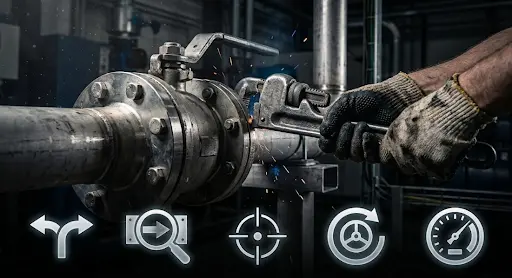
A ball valve is a quarter-turn valve. Inside the body, a drilled ball turns to start or stop flow. In many general shut-off systems, flow can pass from either side. In other designs, the valve must face one way so the seats, cavity relief features, or sealing system work as intended.
Ball Valve Direction Depends on Design, Not Appearance
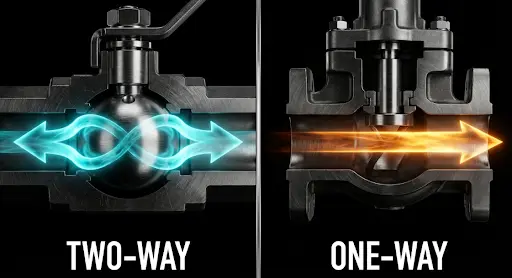
Not every model is directional. Many standard shut-off valves are bidirectional, which means they can block flow from either side. Some special designs are unidirectional, which means they must follow a marked inlet-to-outlet path.
That is why people ask, are ball valves directional. The correct answer depends on seat design, pressure conditions, and service type. In simple water lines, direction may not matter. In high-pressure, hazardous, or backflow-sensitive systems, it often does.
How a Ball Valve Works
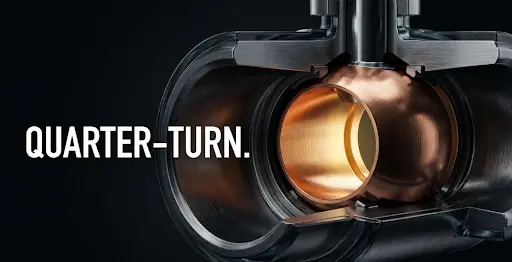
A ball valve opens when the bore in the ball lines up with the pipe. It closes when the bore turns away from the flow path. Many manufacturers use a 90-degree handle movement for this open-close action. Swagelok states that general service ball valves are designed for fully open or fully closed operation, not throttling.
Three key takeaways
- A ball valve uses a drilled ball to let media pass or stop it.
- The handle usually turns only a quarter turn from open to closed.
- Flow direction depends on the internal sealing design, not on the handle alone.
When Direction Matters
Direction matters when the valve has a one-way sealing system or a pressure-relief feature that works from one side. Some severe-service and cryogenic designs are engineered around bidirectional or self-relieving seat behavior because direction and pressure relief are safety issues, not just layout issues.
Direction also matters when reverse flow could damage downstream equipment. In those cases, the wrong orientation can increase leakage, stress the seat, or trap pressure in the cavity. That can shorten service life and raise operating risk.
When Direction Doesn’t Matter
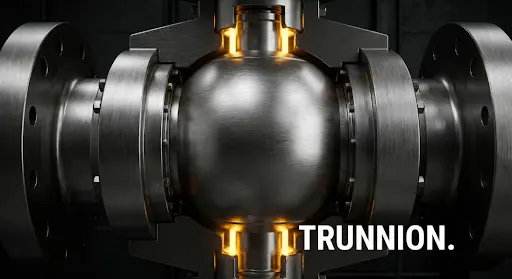
In many common shut-off duties, a standard bidirectional design works from either side. That is one reason ball valves are widely used across transmission, storage, gas processing, and industrial services. Their straight-through path also helps keep the pressure drop low when fully open.
This is the context behind the question do ball valves have a flow direction. Some do. Many do not. The safe approach is simple: check the body marking, product data, and installation instructions before you fit the valve.
Floating vs. Trunnion Ball Valves
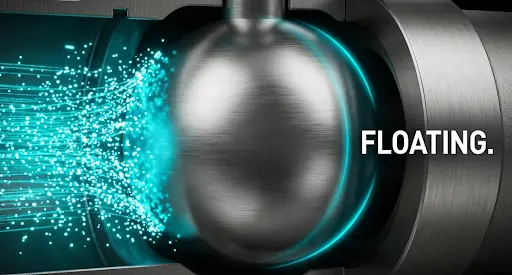
A floating design lets the ball move slightly under line pressure. That movement pushes the ball against the downstream seat to create sealing. Swagelok describes floating ball construction as a way to achieve positive seat sealing across a wide pressure range.
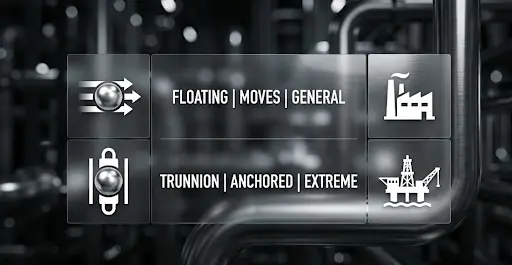
A fixed ball valve, often called a trunnion ball valve, supports the ball at the top and bottom. This design is common in larger sizes and higher-pressure duties because it lowers operating torque and manages heavier loads more effectively. SLB describes its WKM 370D Series as trunnion-mounted for ANSI and API Spec 6D applications.
For buyers with zero background, think of it this way:
| Design | How the ball is supported | Typical strength | Common use |
| Floating ball valve | Ball moves slightly under pressure | Good for many shut-off duties | General industrial service |
| Fixed / trunnion ball valve | Ball is anchored by trunnions | Better for larger size or higher pressure | Oil, gas, and heavy-duty service |
PANS lists both Floating Ball Valve and Trunnion Ball Valve in its ball valve range. Its product materials include carbon steel, stainless steel, duplex stainless steel, titanium, nickel, and chromium alloys.
In practical terms, bidirectional sealing design helps prevent reverse leakage in systems that may see pressure from either side. That matters in shut-off duty, equipment protection, and process stability. When the application is more demanding, engineers often review whether a floating or fixed structure gives the better sealing load, torque level, and pressure response.
How to Identify Open and Closed Positions
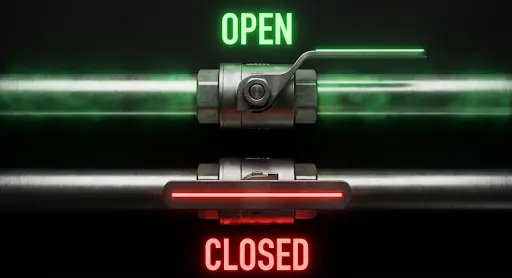
People often ask about the open and closed positions or which way is open on a ball valve. The usual rule is simple. If the handle is in line with the pipe, the valve is open. If the handle is across the pipe, the valve is closed. Parker and Swagelok both describe this same basic indicator logic.
Still, the handle only shows position. It does not confirm whether the valve is one-way or two-way. For that, check for a cast arrow, stem marking, data sheet, or model instructions. Some valves use directional handles or stem flats to show both open-closed position and flow direction.
Installation: Getting the Direction Right
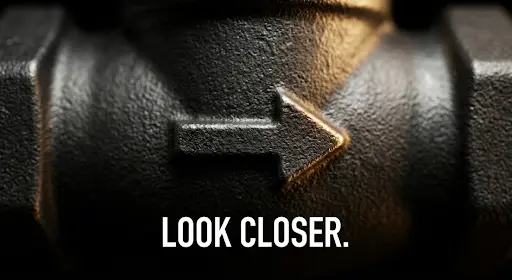
If you are wondering, does it matter which way a ball valve is installed? The answer is yes when the valve is directional. A one-way model installed backward may not seal as intended. It may also fail to relieve trapped pressure in the correct way.
Use this simple check before startup:
- Verify whether the valve is unidirectional or bidirectional.
- Find any arrow or body marking.
- Align the valve with the actual flow path.
- Confirm handle access and clear the open-closed indication.
- Pressure-test the system after installation.
These steps answer other common search queries too, such as does ball valve have flow direction, does a ball valve have a flow direction, which way does a ball valve go, and do ball valves have a direction. The key is not to guess from appearance alone.
How Each Design Is Applied
Bidirectional models are often used where flow may reverse or where the valve serves as a simple shut-off device. Unidirectional models are more common where system pressure, contamination control, or downstream protection makes orientation important. The ball valves are used across gas processing, transmission, storage, industrial service, and more.
For sourcing, support also matters. PANS states that it has been making valves since 1985, operates workshops covering 25,000 square meters, produces about 3,000 tons annually, and offers one-stop service from technical analysis through shipment. It also lists floating, trunnion, and fully welded ball valves in its range.
Conclusion
So, are ball valves directional? Sometimes yes, sometimes no. The smart move is to match the valve design to the job, then confirm the marking before installation. If you are comparing floating and fixed options, or building a valve list for a project, explore the PANS VALVE collection of ball valves and review its company profile for a straightforward starting point.
FAQ
Do ball valves have a flow direction?
Some do, and some do not. Standard shut-off models are often bidirectional. Special service models may require one-way installation.
Do ball valves have a direction?
Only directional models do. Always check for an arrow, data sheet, or installation guide before fitting the valve.
Which way does a ball valve go?
Install it according to the flow arrow if one is present. If there is no arrow, confirm the design in the product documentation.
Which way is open on a ball valve?
Usually, the handle is open when it is parallel to the pipe. It is closed when it is perpendicular.
Does it matter which way a ball valve is installed?
Yes, for directional valves. Wrong orientation can affect sealing, pressure relief, and backflow control.
What is flow direction ball valve marking?
It is usually a cast or etched arrow on the valve body. It shows the intended path from inlet to outlet.
Search
Categories
Tags
Product
- Ball Valve
- Floating Ball Valve
- Fully Welded Ball Valve
- Trunnion Ball Valve
- Butterfly Valve
- Full Metal-Seated Bi-Directional Butterfly Valve
- High Performance Butterfly Valve
- Three-Eccentric Metal Hard Seal Butterfly Valve
- Check Valve
- Cast Lift Check Valve
- Cast Swing Check Valve
- Wafer Type Check Valve
- DIN Valve
- DIN Bellow Sealed Globe Valve
- DIN Globe Valve
- DIN Rising Stem Gate Valve
- DIN Swing Check Valve
- Forge Valve
- Forged Check Valve
- Forged Floating Ball Valve
- Forged Gate Valve
- Forged Globe Valve
- Gate Valve
- Bellow Sealed Gate Valve
- Flat Gate Valve
- Wedge Gate Valve
- Globe Valve
- Cast Globe Valve
- Plug Valve
- Eccentricity Plug Valve
- Inverted Pressure Balance Lubricated Plug Valve
- Orbit Plug Valve
- Sleeve Type Plug Valve
- Slurry Valve
- Slurry Valve
- Strainer


