Can Plug Valves Be Buried? Underground Installation Guide
Image URL: https://notebooklm.google.com/notebook/7da537b0-8f71-4466-a60b-251c66feac02
Yes. Plug valves can be installed below ground when the valve is selected for buried service, installed in the right position, protected from corrosion, and given proper access for operation and maintenance. This guide explains where buried installation works, what can go wrong, how plug valve installation changes with service conditions, why coating matters, and what buyers should check before ordering.
For beginners, the main idea is simple. A valve under soil is harder to inspect and harder to repair. That means the installation work must be done carefully the first time. In water systems, poor setup can lead to damage, shutdowns, and costly excavation.
What Buried Service Means
Buried service means the valve sits below finished grade, usually in a pipe trench, with access from a valve box or vault. The line may carry water, wastewater, slurry, oil, gas, or another process fluid. Soil load, moisture, traffic load, and corrosion all become part of the design problem.
That is why underground work is not just about placing a valve in a trench. It also involves pipe support, joint alignment, access for operation, and surface protection.
Why Buried Installation Needs More Planning
Above-ground valves are easier to inspect. Underground valves are not. If the body coating is damaged, the box transfers load into the actuator, or solids collect in the wrong area, the repair cost rises fast. In buried lines, even a small mistake can turn into an excavation job.
For waterworks buyers, this is where an AWWA plug valve often comes into the discussion. AWWA lists C517 for resilient-seated cast-iron eccentric plug valves, and the same standards list also includes water-pipeline coating and installation standards such as C213, C214, C222, C224, C225, C229, C550, C600, and C604.
How Service Conditions Change the Installation
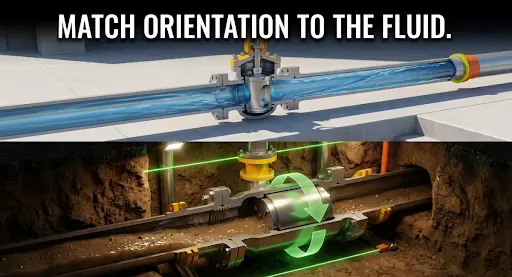
Clean Fluids Need One Approach
For clean service, eccentric plug valves can usually be installed in any orientation. The direct pressure is preferred when practical. That means line pressure acts on the plug from the side opposite the seat end.
This matters in clear water or other low-solids service. The risk of settled material blocking movement is lower.
Solids-Bearing Fluids Need Another Approach
For fluids with suspended solids, the valve orientation becomes stricter. In a horizontal pipe, the plug axis should stay horizontal, flow should enter from the seat end, and the plug should rotate counterclockwise to open. The goal is to keep the plug in the upper half of the body and reduce solids buildup in the closed area.
This is one of the most important lessons for ground plug valves. A buried valve is already harder to reach. If it is also installed in the wrong flow direction, maintenance becomes much harder.
How Coating Protects the Valve Underground
Underground steel equipment faces external corrosion from soil and moisture. PHMSA explains that external corrosion can be reduced through material selection, protective coatings, and cathodic protection. It also states that the exterior surface is typically coated to keep soil, air, or water from contacting the steel.
That is why plug valve coating is not a cosmetic detail. It is part of the service life plan.
Before installation, inspect the body for coating damage and repair it as needed. The installation manual says this step should be done before the valve goes into the line.
In waterworks, AWWA also maintains several coating standards for steel water pipe and fittings, including fusion-bonded polyethylene, tape, polyamide, and viscoelastic systems. It also lists C550 for protective interior coatings for valves and hydrants.
For oil and gas pipelines, anti-corrosion systems are even more important. API 6D covers plug valves for pipeline systems in the petroleum and natural gas industries, while PHMSA notes that coatings and cathodic protection are the main tools used to prevent external corrosion on buried lines.
How to Install the Valve the Right Way
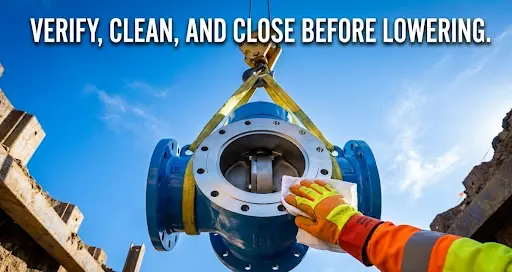
- Check the Valve Before Lowering It
Start with a basic inspection. Make sure the ends and seats are clean. Check exposed bolting. Open and close the valve to confirm movement. Verify stops or limit switches. Then close the valve before installation.
Do not skip handling rules. Smaller units should not be lifted by the actuator or through the waterway. Lift from proper points instead.
- Clean the Line Before Joining It
The valve interior, ends, and adjacent piping should be clean before assembly. Foreign material trapped inside the line can damage sealing surfaces early.
1. Check the Valve Before Lowering It
Start with a basic inspection. Make sure the ends and seats are clean. Check exposed bolting. Open and close the valve to confirm movement. Verify stops or limit switches. Then close the valve before installation.
Do not skip handling rules. Smaller units should not be lifted by the actuator or through the waterway. Lift from proper points instead.
2. Clean the Line Before Joining It
The valve interior, ends, and adjacent piping should be clean before assembly. Foreign material trapped inside the line can damage sealing surfaces early.
3. Align the Pipe Without Forcing the Valve
Do not use the valve as a jack to pull the pipe into alignment. Do not deflect the pipe-valve joint. This is a simple rule, but it prevents bending stress at the ends.
This applies to a flanged plug valve as well. Flanged ends help with assembly and future removal, but they do not solve poor pipe alignment.
4. Protect the Valve Box and Vault Area
If a valve box is used, it should not transfer shock or stress to the actuator from shifting soil or traffic load. If the valve is in a vault, the design should leave room to remove the actuator assembly for repair. The operating nut should also be reachable from the top opening.
What Buyers Should Ask Before Ordering
A buried valve should not be chosen by pressure class alone. Ask these questions first:
- What fluid will it handle: clean water, wastewater, slurry, oil, or gas?
- Is the flow clean or does it contain suspended solids?
- Is reverse pressure part of the duty?
- Will the valve be in a box, a vault, or direct burial access?
- What external coating system is required for the soil and climate?
- Does the actuator need sealing against groundwater or condensation?
For oil and gas projects, this review is even more important because the valve must match pipeline standards, corrosion-control practices, and site risk.
What Maintenance Still Matters After Burial
Buried does not mean forgotten. The manual says normal owner maintenance is usually limited to actuators and shaft seals. It also recommends cycling each valve through a full operating cycle on a schedule that prevents deposit buildup and loss of shutoff.
If a valve sticks between open and closed, do not force it. Excess torque can damage internal parts. The manual limits input torque on wrench-nut actuators to 300 ft-lb and handwheel rim pull to 200 lb.
EPA also stresses that underground systems need correct installation, corrosion protection, and operation and maintenance records.
Why This Matters for Product Selection
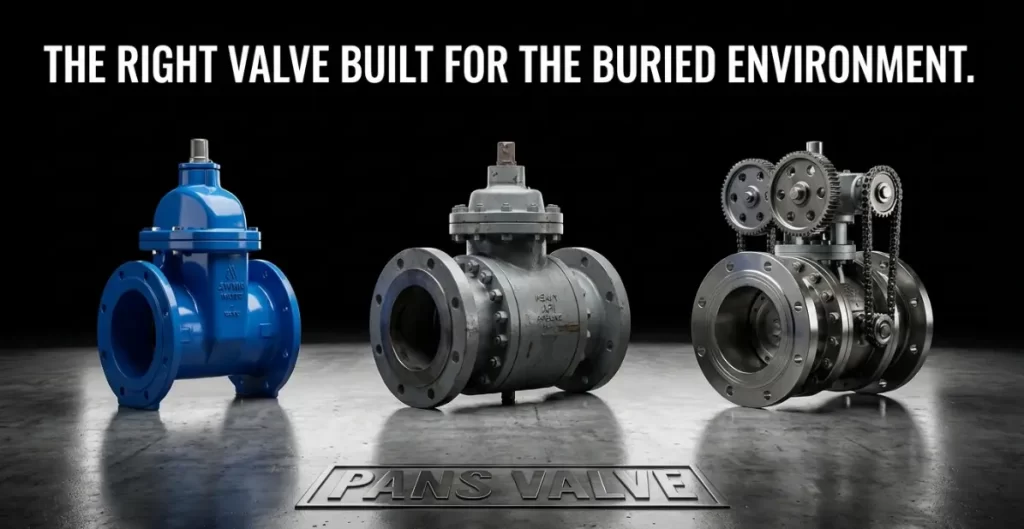
The best buried valve is not always the cheapest one. It is the one that matches the medium, pressure, coating system, access method, and maintenance plan. In water service, an eccentric design built to AWWA practice is often a strong fit. In process and pipeline service, buyers may look at heavy-duty steel bodies, special sealing systems, and stronger anti-corrosion protection.
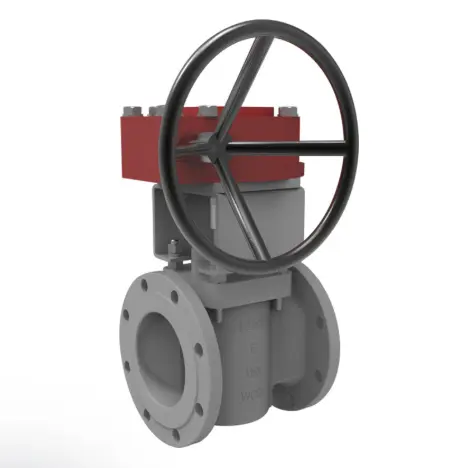
Image URL: https://www.pansvalve.com/products/sleeve-plug-valve/
Some PANS plug valves for demanding service can also be specified with sealing-focused designs, such as an inverted pressure balance structure, which is often chosen where pressure loading and shutoff performance matter. For oil and gas lines, that should be paired with the right anti-corrosion coating system for the site environment. PANS also serves water, oil, and gas, chemical, petrochemical, and energy applications, and offers manufacturing, technical support, and after-sales service for installation and maintenance.
Conclusion
So, can plug valves be buried? Yes, but only when the full underground system is planned as a system, not as a single part. Valve type, service conditions, coating, access, and maintenance all need to work together.
If you are comparing options for water, oil, and gas, or process lines, explore the collection of plug valves and support services from PANS VALVE. You can also review their application sectors, manufacturing capabilities, and customer service support to match the right valve to your project.
Frequently Asked Questions
Can buried plug valves be used in water systems?
Yes. They are commonly used in water and wastewater systems when installed with the correct orientation, coating, and access arrangement.
Do underground valves always need a valve box?
Not always. Some are installed in vaults. But buried service still needs safe access for operation, inspection, and future repair.
Why is coating important below ground?
Soil moisture can attack exposed metal. Coatings help isolate the valve surface from the environment and reduce corrosion risk.
Search
Categories
Tags
Product
- Ball Valve
- Floating Ball Valve
- Fully Welded Ball Valve
- Trunnion Ball Valve
- Butterfly Valve
- Full Metal-Seated Bi-Directional Butterfly Valve
- High Performance Butterfly Valve
- Three-Eccentric Metal Hard Seal Butterfly Valve
- Check Valve
- Cast Lift Check Valve
- Cast Swing Check Valve
- Wafer Type Check Valve
- DIN Valve
- DIN Bellow Sealed Globe Valve
- DIN Globe Valve
- DIN Rising Stem Gate Valve
- DIN Swing Check Valve
- Forge Valve
- Forged Check Valve
- Forged Floating Ball Valve
- Forged Gate Valve
- Forged Globe Valve
- Gate Valve
- Bellow Sealed Gate Valve
- Flat Gate Valve
- Wedge Gate Valve
- Globe Valve
- Cast Globe Valve
- Plug Valve
- Eccentricity Plug Valve
- Inverted Pressure Balance Lubricated Plug Valve
- Orbit Plug Valve
- Sleeve Type Plug Valve
- Slurry Valve
- Slurry Valve
- Strainer


