Gate Valve Parts and Functions: A Buyer’s Guide
إجابة سريعة
Gate valve parts usually include the body, bonnet, gate, seats, stem, packing, stem nut, yoke, and operator. The body and bonnet contain pressure; the gate opens or closes the flow path; the seats form the sealing surfaces; and the stem, packing, and operator transmit movement while keeping process fluid inside. Part names are similar across designs, but wedge, flat, and bellows-sealed construction change how those parts work. Confirm the exact internal arrangement, materials, and spare-parts list before ordering.
Two valves can share component names yet differ in gate, seat, bonnet joint, and stem seal—choices that affect containment, isolation, operation, and maintenance.
What Are the Main Gate Valve Parts?
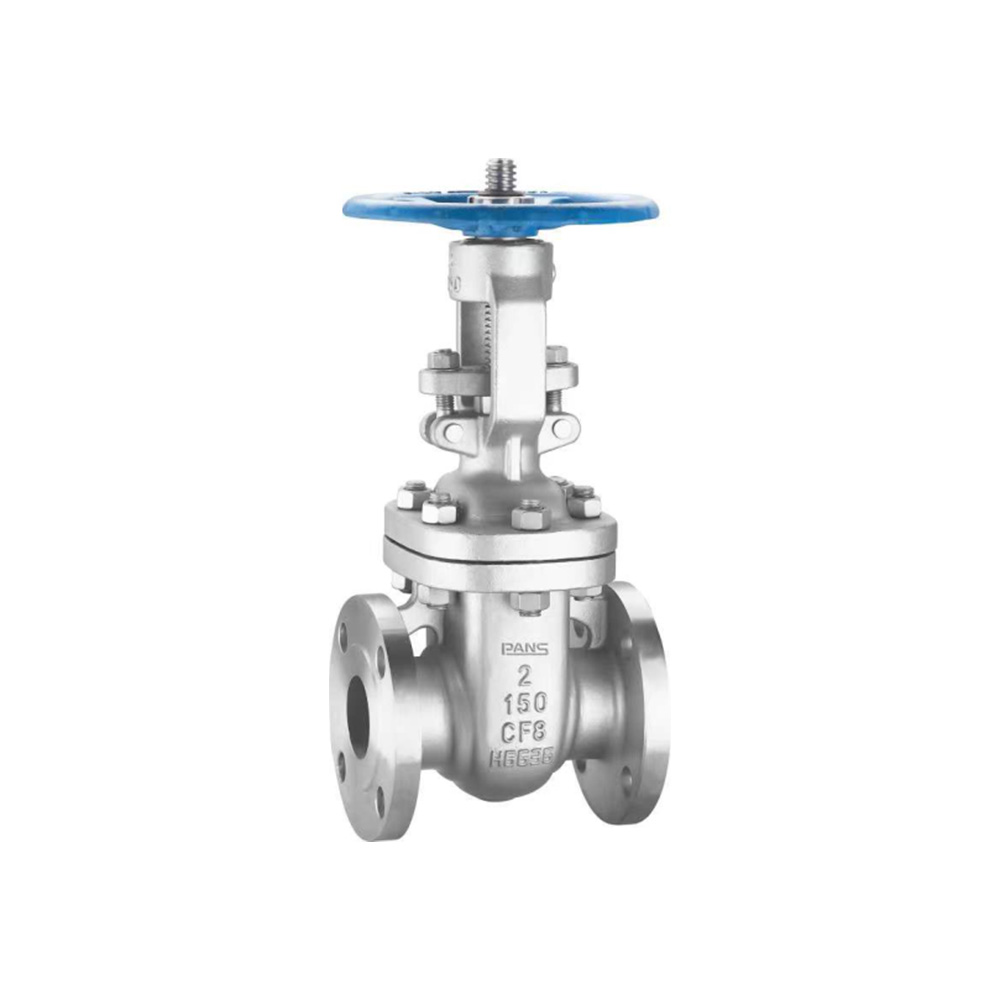
A gate valve has a pressure boundary, a closing member, sealing surfaces, and an operating train. The table lists the usual parts.
| Part | Main function | What buyers should confirm |
|---|---|---|
| جسم | Contains pressure and forms the flow path | Material, class, connection, bore |
| غطاء محرك السيارة | Closes the body and supports the stem assembly | Joint type, gasket, material |
| Gate or disc | Moves across the seats to stop flow | Wedge or flat, solid or flexible, trim |
| مقعد | Provides the sealing contact surface | Integral, renewable, or floating; hardfacing |
| ينبع | Transmits operator movement to the gate | Rising or non-rising, T-head, material and treatment |
| Packing and gland | Seals the stem through the bonnet | Packing type, temperature, adjustment |
| الجوز الجذعية | Converts rotation into stem travel | Thread, material, lubrication, access |
| Yoke and operator | Supports and drives the stem | Handwheel, gear, chainwheel, or actuator |
| Back seat | Provides a secondary stem seal when fully open | Design, condition, service limits |
How Do the Body and Bonnet Contain Pressure?
The body forms the pressure boundary and pipe connection, and guides flow toward the gate and seats. Material, wall thickness, pressure class, and end connection must match the line and design standard.
The bonnet closes the body around the stem. Bolted bonnets use a gasket and fasteners; pressure-seal bonnets use internal pressure to load the seal. The PANS wedge gate valve range lists Class 150–900 as usually bolted-bonnet and Class 1500–2500 as usually pressure-seal—product-family guidance, not universal practice. Confirm the joint, gasket, bolting, and material.
What Does the Gate Do, and Why Do Wedge and Flat Designs Differ?
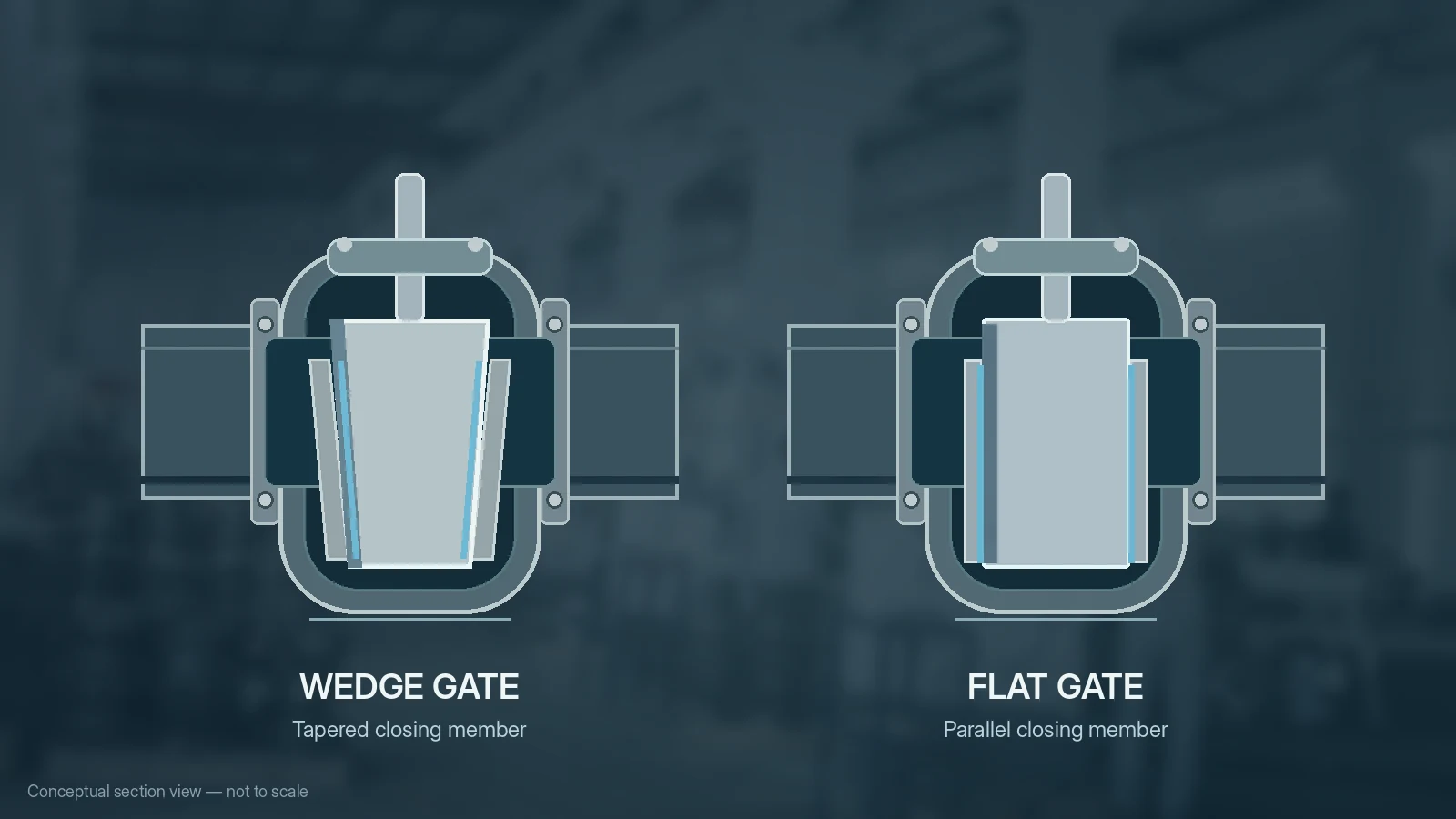
The gate, or disc, is the closing member. It crosses the flow path and seats against two surfaces. Gate valves isolate flow; a partly open gate can erode seats and cause vibration.
A wedge gate loads against the seats when closed. Solid and flexible wedges distribute load differently. PANS lists flexible wedges for NPS 2 and larger and solid wedges below NPS 2—a published product split, not a rule for every manufacturer.
A flat gate uses a parallel plate and seats. The PANS flat gate valve design uses floating seat rings with O-rings and preload for bidirectional sealing—a compact, parallel-seat option.
Do not assume full bore or piggability. Confirm bore, internal steps, seat geometry, and passage drawing against the cleaning tool.
How Do Seats and Sealing Surfaces Work?
Seats provide the sealing contact surfaces. They may be integral, threaded, welded, renewable, or floating—a choice that affects repairability, sealing, and spares.
Seat and trim materials must suit medium, pressure, temperature, and wear. Hardfacing can resist erosion or galling, but cannot compensate for the wrong base material or geometry. Confirm alloy and finish when hardfacing is specified.
Review leakage paths separately: seat leakage passes the closed gate; stem leakage passes packing or bellows; body-joint leakage passes the bonnet connection. Each needs its own test and repair method.
What Do the Stem, Stem Nut, Yoke, and Operator Do?
The stem transfers operator movement to the gate. Rising-stem valves show travel; non-rising designs move the handwheel or stem nut instead, affecting installation height, visibility, and access.
In published PANS designs, the stem may use a forged T-head to retain the gate and may be heat-treated or nitrided for wear resistance. Confirm material, treatment, thread, and gate connection.
The stem nut converts rotation into linear travel; the yoke supports and aligns the stem. Manual operators include handwheels, gears, and chainwheels; powered operation may use an electric actuator. Confirm the mounting interface and that actuator thrust and torque suit the valve and seat load.
How Is the Stem Sealed in a Packed Gate Valve?
In a packed gate valve, the stem passes through a stuffing box. Packing rings surround it, compressed by a gland and flange through eyebolts or studs. Adjustment must allow movement without excess friction or leakage.
PANS supplies graphite packing as standard on its wedge range, with PTFE or combined packing on request. Match packing to temperature, medium, and allowed leakage, and confirm fire-safe or emissions needs.
A back seat can provide a secondary seal when fully open. It does not permit packing service under pressure; isolate, depressurize, and follow a documented procedure.
What Changes in a Bellows-Sealed Gate Valve?
A bellows-sealed gate valve uses a metal bellows around the stem to contain process pressure. The bellows moves with the stem, separating process from atmosphere. Secondary packing is normally a backup, not proof that the primary seal can be ignored.
ال PANS bellows-sealed gate valve lists cobalt-alloy hardfacing, a heat-treated or nitrided stem, visible stem travel, Class 150–1500 coverage, and a published range of -29 to 350 °C, depending on materials. Confirm alloy, class, temperature limit, and test requirement.
Do not claim zero emissions or unlimited cycles without test evidence. Ask for bellows alloy, cycle rating, pressure and temperature limits, and the applicable leakage or emissions report.
Which Parts Wear or Need Replacement?
Seats, packing, bonnet gaskets, stem nuts, and bellows are the usual replacement candidates. Wear depends on cycles, medium, pressure, temperature, and maintenance. Identify exact model, size, class, trim, and revision.
The repair method depends on seat construction; packing and gaskets must match the original specification. Stem nut or bellows work may require deeper disassembly, so confirm the bill of materials and repair scope before stocking spares.
What Should Buyers Confirm Before Ordering?
Start with the duty. Quotations are comparable only when service, size, connection, and operating assumptions align.
- Medium, concentration, solids, and corrosive or abrasive content.
- Design and operating pressure and temperature, including transients, startup, and shutdown.
- Nominal size, actual bore, and pigging or cleaning needs.
- Connection standard, flange facing, weld end, or thread.
- Manual or actuated operation, fail-safe position, and mounting.
- Installation orientation, stem height, and maintenance clearance.
- Body, bonnet, gate, seat, stem, and packing materials.
- Gate type, seat arrangement, and hardfacing.
- Packing or bellows type, with leakage or emissions test.
- Spare-parts scope, tagging, documentation, and preservation.
- Project standards that override the general description.
التعليمات
1. Can gate valve parts be replaced on site?
Some parts are field-replaceable depending on design, isolation, space, and procedure. Seats, packing, and gaskets are common candidates; bellows or body repairs may need workshop work. Confirm the scope first.
2. Does a rising stem change the parts list?
It changes stem and operator arrangement, not body, gate, or seat function. Rising stems need overhead clearance; non-rising designs move the stem nut or handwheel.
3. How do I identify spare parts without a nameplate?
Use the drawing, bill of materials, size, class, trim, and visible markings. Photos help but do not prove internal materials, so ask the original supplier to match model and revision.
Match the Parts List to the Duty
The body and bonnet contain pressure, the gate and seats isolate flow, and the stem train turns closure into operation. Wedge, flat, and bellows designs solve different sealing and maintenance problems.
Share medium, pressure, temperature, size, connection, and operation method with PANS. The team can check the gate, seat, stem, and sealing arrangement against the duty. Contact PANS with the duty data for a quotation or spare-parts scope.
يبحث
فئات
العلامات
منتج
- صمام الكرة
- صمام الكرة العائمة
- صمام الكرة الملحومة بالكامل
- صمام الكرة مرتكز الدوران
- صمام الفراشة
- صمام الفراشة ثنائي الاتجاه ذو المقعد المعدني بالكامل
- صمام الفراشة عالي الأداء
- صمام الفراشة ذو الختم الصلب المعدني ثلاثي المركز
- فحص الصمام
- صمام فحص الرفع المصبوب
- صمام فحص التأرجح المصبوب
- صمام فحص نوع الرقاقة
- صمام الدين
- DIN صمام الكرة الأرضية المختوم
- صمام الكرة الأرضية DIN
- DIN ارتفاع صمام البوابة الجذعية
- صمام فحص التأرجح DIN
- صمام صياغة
- صمام الاختيار مزورة
- صمام الكرة العائمة مزورة
- صمام البوابة مزورة
- صمام الكرة الأرضية مزورة
- صمام البوابة
- صمام بوابة مغلق من الأسفل
- صمام البوابة المسطحة
- صمام بوابة إسفين
- صمام العالم
- صمام الكرة الأرضية المصبوب
- صمام التوصيل
- صمام التوصيل غريب الأطوار
- صمام توصيل مشحم لتوازن الضغط المقلوب
- صمام التوصيل المدار
- كم نوع صمام التوصيل
- صمام الطين
- صمام الطين
- مصفاة


