Metal Seated vs Soft Seated Ball Valve: Which Should You Buy?
إجابة سريعة
In the metal seated vs soft seated ball valve decision, the seat sets the practical limit. A soft seat uses a polymer ring against the ball for tight shutoff and low torque at lower cost, but heat, pressure, solids and chemical attack shorten its life. A metal seat uses hard-faced metal contact for high temperature, abrasion and frequent cycling, but usually has a defined leakage class and higher torque. Choose soft seat for clean, lower-temperature isolation; choose metal when heat, grit or wear dominates. PANS builds floating, trunnion and fully welded ball valves and offers custom hardfaced metal-to-metal designs for severe service.
The choice also changes leakage acceptance, actuator size, spares and RFQ data. This guide compares both designs, then gives you a duty matrix and quote checklist.
How Do Ball Valve Seat Materials Compare?
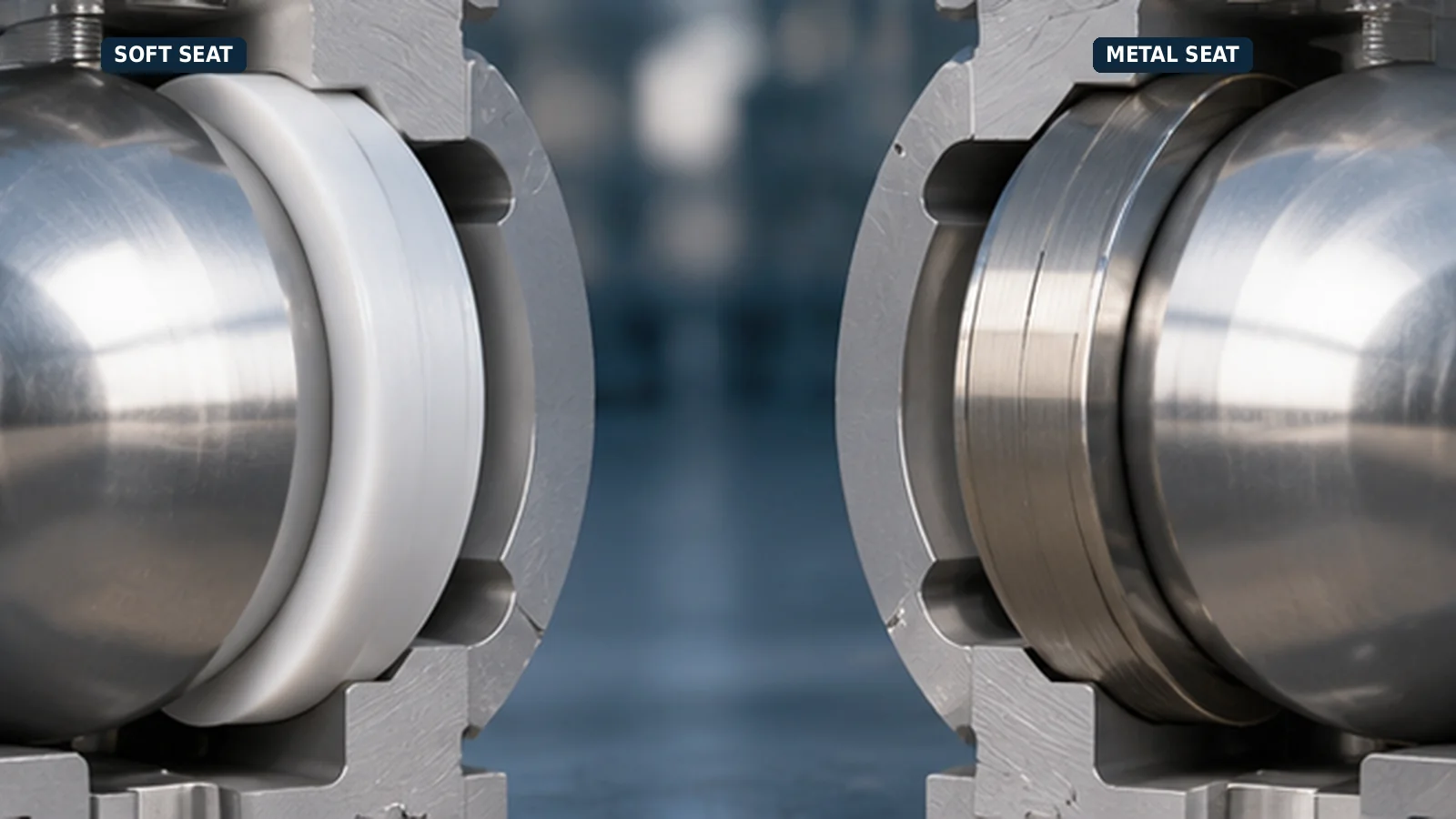
A ball valve seat is the ring that presses against the ball to stop flow. In a soft seated ball valve, the ring is a polymer. In a metal seated ball valve, it is metal, usually with a hard facing on the sealing surface.
Soft seats are not one material. PTFE is the common starting point. Reinforced PTFE adds glass or carbon to resist deformation, while PEEK handles more temperature and load. Each grade has its own pressure-temperature curve.
Metal seats vary too. The base ring may be stainless steel or another alloy, with Stellite or tungsten carbide on the contact area. Hardness, coating thickness, finish and lapping decide wear. A hardfacing label is not a performance guarantee.
PANS describes PTFE seat rings on its floating and trunnion pages and lists metal-to-metal designs with tungsten carbide or Stellite hardfacing as special designs. PEEK is also named among ball valve seat materials. Availability depends on model, size and duty, so confirm the grade on the quotation. Review the PANS ball valve collection before shortlisting.
Where Do the Service Limits Differ?
Temperature and pressure
Temperature is usually the first limit. A polymer seat can soften, creep or degrade before the steel body reaches its limit. The body may remain within its pressure-temperature rating while the seat exceeds its service limit. The complete valve must operate within the most restrictive applicable component rating. The ceiling depends on polymer grade, pressure, cycling and medium, not the brochure headline.
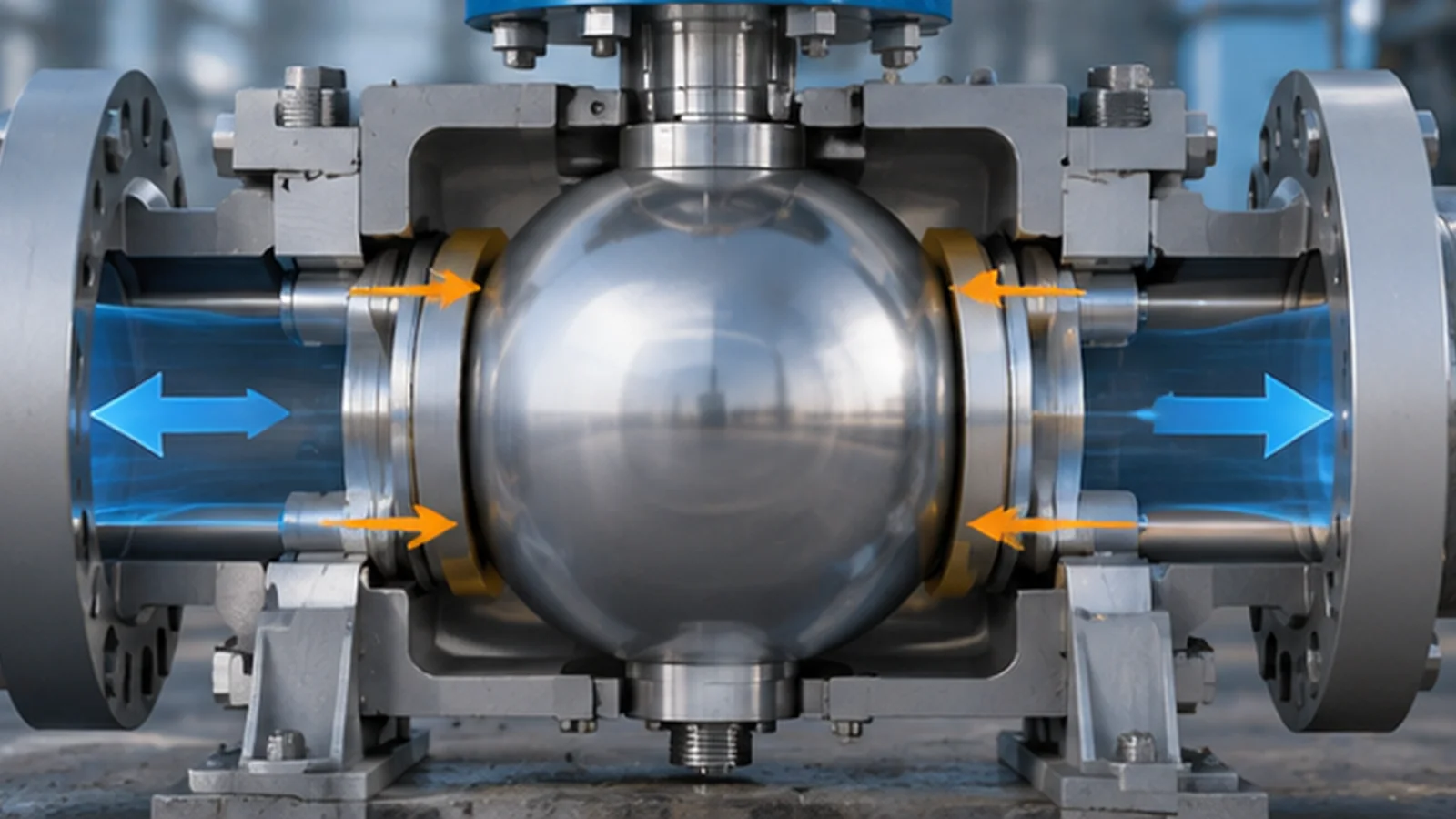
High differential pressure pushes the seat against the ball and can extrude or deform a polymer ring. Large sizes and floating designs are more sensitive because the seat carries the ball load. A trunnion design supports the ball separately, reducing seat load and torque. Our steam ball valve temperature and seat guide explains how saturated and superheated steam change the starting point.
A metal seat removes the polymer limit, but not the valve’s own limit. Body material, packing, gaskets, stem bearings and bolting still set the maximum.
Abrasion and solids
Soft seats are vulnerable to grit, scale, catalyst fines and other solids. Particles can embed in the polymer, cut the sealing edge or score the ball. Once damaged, tight shutoff is lost.
Hardfaced metal seats resist cutting and erosion better, but not every metal seat suits slurry. Particle size, hardness, velocity and concentration still matter, and the ball must also resist wear. In heavy abrasive duty, confirm whether a ball valve is the right type before comparing seats.
Leakage class and shutoff
Soft seated ball valves are usually chosen where tight shutoff is the priority. The polymer conforms to small ball-surface imperfections and seals with less force, which is why clean-service isolation often uses a soft seat.
Metal seats seal by precision contact and higher force. They are normally specified to a leakage class rather than bubble-tight shutoff. Ask for the acceptance class, test medium and test pressure. “Metal seated” does not mean zero leakage.
Fire-safe designs need a separate check. A soft-seated valve can include a secondary metal-to-metal or graphite seal that limits leakage after the polymer is damaged. PANS describes this auxiliary design and offers fire-safe designs that can meet API 607 and API 6FA when required by the customer. Our API 607 fire-safe valve guide explains what the test covers.
How Do Torque and Maintenance Affect Total Cost?
Torque and actuator sizing
Soft seats usually need less torque. The polymer conforms easily and seat load can be lower, so the actuator or manual operator can be smaller.
Metal seats usually need more torque. Hard contact requires higher seat force, and the surface must stay clean and aligned. Do not assume an existing actuator will suit a metal-seat change. Ask for quoted torque at the worst expected conditions, then size the actuator with margin.
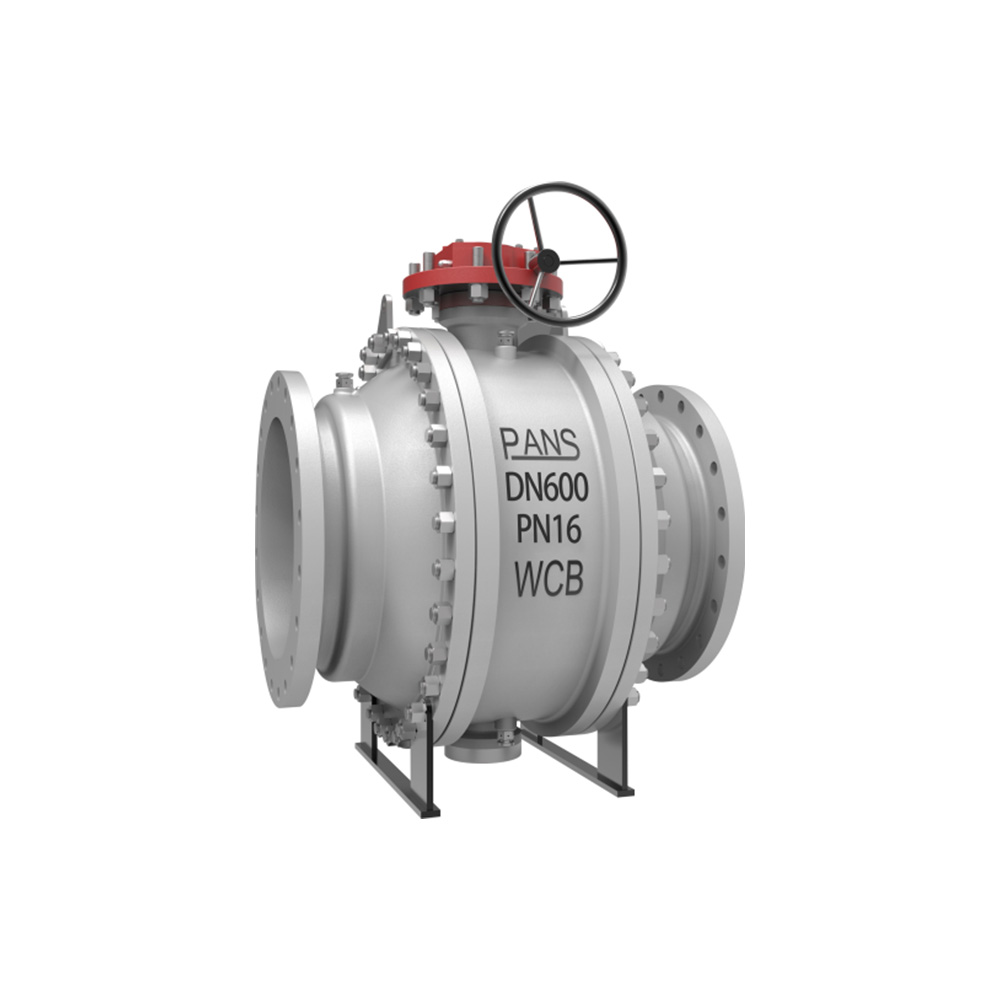
Body design also matters. A trunnion valve carries the ball on bearings, so the seat does not take the full pressure load. That is why large, high-pressure lines often use trunnion designs even with soft seats. The floating versus trunnion comparison explains the difference; the PANS trunnion-mounted ball valve range lists sizes and classes.
Maintenance and spare parts
A soft seat is usually a replaceable wear part. Replacement is simpler than re-machining a metal seat, but the valve must still be isolated and opened. In clean service, that often makes it the lower-cost choice.
A metal seat may last longer in abrasive or high-temperature duty, but damage can require re-lapping, re-coating or replacing the seat ring and ball. Include the hardfacing specification, wear limit and spare-parts list, and compare total cost over cycle life, not unit price.
Which Seat Fits Your Duty?
Use this table as a starting point, then confirm the exact model. It does not replace the valve’s pressure-temperature chart or a project specification.
| Duty or condition | Better starting point | Why | Confirm before order |
|---|---|---|---|
| Clean water, air or inert gas; moderate temperature; tight shutoff | Soft seat (PTFE or reinforced PTFE) | Low torque and tight sealing at lower cost | Temperature, pressure and media compatibility |
| Clean oil or gas; high pressure; large size | Trunnion soft seat first; metal seat if heat or wear applies | Trunnion support reduces seat load and torque | Seat grade, actuator torque and leakage class |
| Saturated steam within seat rating | Reinforced soft seat or PEEK | Tight shutoff with lower torque | Maximum temperature, cycling and steam quality |
| Superheated steam or high-temperature line | Metal seat | Removes the polymer temperature limit | Body, packing and gasket ratings; leakage class |
| Slurry, catalyst fines, scale or abrasive solids | Metal seat with hardfacing | Resists cutting and erosion | Particle size and hardness; ball valve suitability |
| Frequent cycling or high differential pressure | Metal seat or reinforced soft seat | Better wear resistance and stability | Cycle count, torque and maintenance interval |
What Should You Put in the RFQ?
A clear RFQ gets a comparable quote. Include:
- Size, pressure class or PN, and design standard.
- Medium, concentration, solids content, particle size and hardness.
- Minimum, normal and maximum temperature, including startup and upset.
- Design, operating and differential pressure.
- Required leakage class and test standard, such as API 598 or ISO 5208.
- Seat material, hardfacing and ball finish.
- Body, ball, stem and packing materials.
- End connection, face-to-face dimension and installation orientation.
- Manual or actuated operation, torque, power or air supply, and fail-safe position.
- Cycling frequency, maintenance access, fire-safe requirements and documentation.
- Quantity, spare parts and required delivery basis.
If the duty is severe, ask for the custom metal-to-metal seated ball valve options and state the wear mechanism. “Abrasive” is too broad. Say whether the problem is catalyst powder, mill scale, sand or high-velocity slurry. That detail changes the hardfacing, ball finish and seat design.
التعليمات
1. Can I replace a soft seat with a metal seat in an existing valve?
Usually not as a drop-in change. Metal seating can alter seat geometry, spring load, ball finish and torque. Ask whether the exact model has a metal-seated variant, and recheck the actuator before approving the swap.
2. Does a metal seated ball valve leak more?
It can pass more than a soft seated ball valve under the same test. That is acceptable only if the quoted leakage class matches the project requirement. Compare the acceptance class, test medium and pressure, not just the seat type.
3. Is metal seating always better for high pressure?
No. Clean high-pressure service can use a trunnion-mounted soft seat and keep tight shutoff with lower torque. Metal seating matters more when temperature, abrasion or cycling rises.
Choose the Seat for the Duty, Not the Label
Soft and metal seats are not quality grades. Match the seat to temperature, pressure, solids, leakage and cycle life. Then check body design, actuator torque and documentation, because the seat alone does not define the valve.
PANS manufactures floating, trunnion and fully welded ball valves. Share your line size, medium, temperature, pressure, required leakage class and actuation details, and we will confirm the available seat construction.
يبحث
فئات
العلامات
منتج
- صمام الكرة
- صمام الكرة العائمة
- صمام الكرة الملحومة بالكامل
- صمام الكرة مرتكز الدوران
- صمام الفراشة
- صمام الفراشة ثنائي الاتجاه ذو المقعد المعدني بالكامل
- صمام الفراشة عالي الأداء
- صمام الفراشة ذو الختم الصلب المعدني ثلاثي المركز
- فحص الصمام
- صمام فحص الرفع المصبوب
- صمام فحص التأرجح المصبوب
- صمام فحص نوع الرقاقة
- صمام الدين
- DIN صمام الكرة الأرضية المختوم
- صمام الكرة الأرضية DIN
- DIN ارتفاع صمام البوابة الجذعية
- صمام فحص التأرجح DIN
- صمام صياغة
- صمام الاختيار مزورة
- صمام الكرة العائمة مزورة
- صمام البوابة مزورة
- صمام الكرة الأرضية مزورة
- صمام البوابة
- صمام بوابة مغلق من الأسفل
- صمام البوابة المسطحة
- صمام بوابة إسفين
- صمام العالم
- صمام الكرة الأرضية المصبوب
- صمام التوصيل
- صمام التوصيل غريب الأطوار
- صمام توصيل مشحم لتوازن الضغط المقلوب
- صمام التوصيل المدار
- كم نوع صمام التوصيل
- صمام الطين
- صمام الطين
- مصفاة


