Norma API 598 para pruebas de válvulas: Guía completa de inspección y pruebas
Quick Answer: API 598 Testing
API 598 establishes the essential global standards for pressure-testing, seat tightness, and body integrity in industrial valves. It provides critical procedures for evaluating valve performance, including shell, closure, and backseat tests, before units enter service. Válvula PANS integrates these rigorous API 598 protocols into all manufacturing, ensuring every industrial valve delivers superior reliability and safety. With a 25,000m² production base and over 40 years of engineering expertise, PANS Valve guarantees high-performance, fully compliant solutions for your most demanding projects.
What is the API 598 Standard?
The American Petroleum Institute set API 598 as the global benchmark for valve inspection and testing. It covers pressure-test requirements for a wide range of industrial valves, including butterfly, check, ball, globe, plug, and gate valves with varying seating materials.
Rather than a design standard, it establishes criteria and procedures for evaluating body integrity, seat tightness, leakage rates, and hold times before units are shipped out. It is commonly used alongside API 600, API 602, and API 6D.
Mandatory API 598 Valve Inspection and Testing Types
API 598 checks two important aspects of valve performance: leak-tight closure and pressure-boundary integrity. Depending on the design, manufacturers may have to perform the following tests before a product can enter service.
API 598 Shell Test for Body Strength
Also known as the body test, it validates the integrity of pressure-containing components. During this hydrostatic procedure, a partially open valve is mounted on a bench, then pressure is applied to the walls, bonnet, and joints to identify leakage. The acceptable API 598 test pressure for steel valves must be at least 1.5 times the rated cold working pressure (CWP).
API 598 Closure Test for Seat Tightness
Also called the API 598 seat test, it confirms the sealing ability of the internal mechanism when fully closed. A high-pressure test is mandatory for various valve types under heavy load conditions. This is performed at 1.1 times the allowed CWP. A low-pressure test is needed for DN 100 or NPS 4 valves and smaller. This uses gas and air at 80 ± 20 psig to detect micro leaks the high-pressure test might miss.
API 598 Backseat Test for Stem Seals
When a valve has a backseat feature, this verifies the seal between the shaft or stem and the bonnet when the valve is fully open. Like with the closure test, the required pressure is 1.1 times the maximum allowable CWP. Please note that this test does not apply to designs that have bellow seals.
Standard Test Media: Liquid or Gas
According to valve testing standards, high-pressure tests generally use liquids like kerosene and clean water with corrosion inhibitors. Meanwhile, low-pressure tests utilize air, nitrogen, and inert gas to check for tiny leaks. Leakage is detected with a volumetric device or when bubbles are observed when the valve is immersed in water.
The API 598 Testing Procedure Step-by-Step
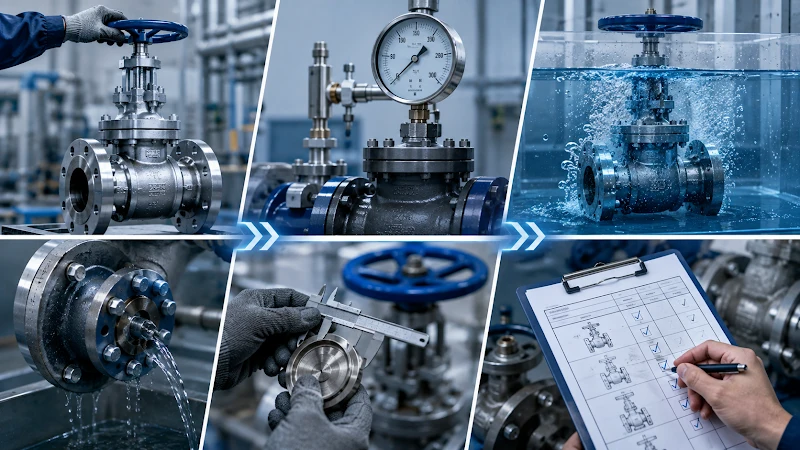
To ensure reliable results, it is vital to follow the defined sequence when conducting API 598 valve inspection and testing.
Step 1: Preparing the Valve for Testing
Before testing begins, make sure the valve is clean and free of any sealant, paint, grease, oil, and other materials. The only exception is válvulas de tapón lubricadas that rely on injectable sealants to operate properly. When using liquids, remove any trapped air from the cavity for accurate readings.
Step 2: Performing the API 598 Shell Test
This serves as the first round of pressure validation. Hydrostatic pressure is raised to 1.5 times the rated CWP and then applied to the body. For NPS 2 and smaller valves, the test is held for at least 15 seconds. This becomes 60 seconds for NPS 2.5 to 6 and up to 600 seconds for units larger than NPS 24.
Step 3: Executing the API 598 Closure Test
For those with a backseat feature, the valves are fully opened, and the packing gland is loosened. Otherwise, the valve is fully closed, and 1.1 times the CWP pressure is applied to the inlet. The hold times are relatively the same as the shell test but go up to 240 seconds for bigger units.
Step 4: Checking the API 598 Acceptance Criteria
After testing, all castings are visually inspected for any leakage or surface defects according to MSS SP-55 benchmarks. Resilient-seated valves must have zero leakage during the tests, while metal-seated valves have allowable limits based on size and test media. Additional details on these specific criteria are provided in a separate section of this article.
Which Standard Applies? API 598 vs API 6D
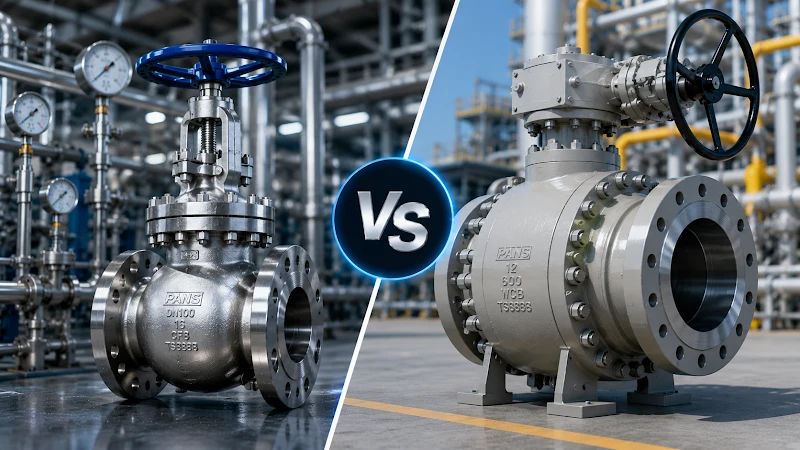
Both standards by the American Petroleum Institute are valuable, but they are not interchangeable.
Key Differences Between API 598 and API 6D
API 598 is universal for all pressure-containing industrial valves regardless of where they are used. In contrast, API 6D is specifically for pipeline valves in large-scale petroleum and natural gas transmission systems.
- Additional testing: API 6D also covers pipeline safety tests, such as Double Block and Bleed (DBB) and Double Isolation and Bleed (DIB).
- Test durations: API 6D requires longer hold times. For instance, a 2-minute hold is necessary under API 6D when it’s only 15 seconds under the general protocol.
- Torque and operability: API 6D emphasizes operational performance, so it includes torque measurement and traceability documents such as material test reports.
More on the differences between API 598 and API 6D are found in “API 598 vs API 6D: ¿Qué estándar de válvula es adecuado para su industria?”, specifically on stringency and industry applications.
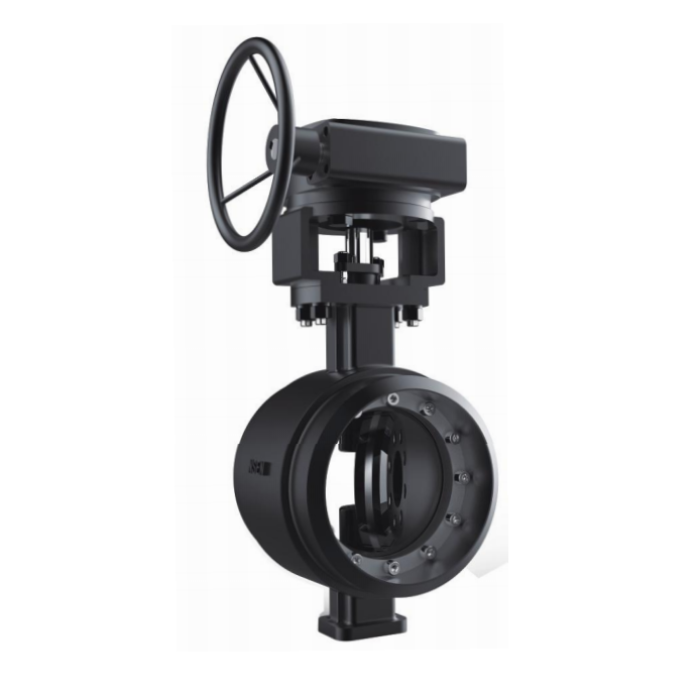
Válvula de mariposa con sello rígido de metal y tres excéntricas
1. Diseño de tres excéntricos: sellado sin fricción, que prolonga la vida útil.
2. Sistema de sellado equilibrado dinámico radial: reduce el torque operativo y garantiza un sellado bidireccional.
3. Anillo de sellado de material compuesto: respetuoso con el medio ambiente, resistente al desgaste, alto estándar de fugas.
API 598 Acceptance Criteria for Allowable Leakage
While no visible leakage is permitted for resilient-seated valves, these are the minimal leakage rates measured in drops per minute for liquid tests and bubbles per minute for gas tests.
| Size (NPS) in inches | Drops per minute | Bubbles per minute |
| ≤ 2 | 0 | 0 |
| 2 ½ | 5 | 10 |
| 3 | 6 | 12 |
| 4 | 8 | 16 |
| 6 | 12 | 24 |
| 8 | 16 | 32 |
| 10 | 20 | 40 |
| 12 | 24 | 48 |
| ≥ 14 | 2 x NPS | 4 x NPS |
Common API 598 Valve Inspection and Testing Pitfalls
Despite following the defined sequence, some typical mistakes can compromise the accuracy of the results. For instance, excessive force or supplemental leverage might be applied to close a valve during seat testing. This damages the valve or creates a temporary seal, thereby failing to reflect actual operational performance.
Another major error is neglecting to test media purity, be it liquid or gas. For instance, when testing austenitic stainless steel valves, the chloride content in the water might not have been checked. Also, protective paint or coatings may have been applied before completing the shell test, which masks porosity issues or joint leaks.
PANS Valve for API-Compliant Industrial Valves
Zhejiang Zhedong Valve Corp., Ltd eliminates risks and ensures project success by adhering to global standards like API 598 in manufacturing high-performance globe, gate, and other valves. Established in 1985, PANS Valve boasts a 25,000m² production base in Wenzhou, China, and over 3 decades of engineering experience and expertise in valve solutions.
Get in touch with PANS Valve today to ensure all valve components and products used in your industrial system are API-tested and compliant.
Buscar
Categorías
Etiquetas
Producto
- Válvula de bola
- Válvula de bola flotante
- Válvula de bola completamente soldada
- Válvula de bola de muñón
- Válvula de mariposa
- Válvula de mariposa bidireccional con asiento totalmente metálico
- Válvula de mariposa de alto rendimiento
- Válvula de mariposa con sello rígido de metal y tres excéntricas
- La válvula de retención
- Válvula de retención de elevación fundida
- Válvula de retención oscilante fundida
- Válvula de retención tipo oblea
- Válvula DIN
- Válvula de globo sellada con fuelle DIN
- Válvula de globo DIN
- Válvula de compuerta de vástago ascendente DIN
- Válvula de retención oscilante DIN
- Válvula de forja
- Válvula de retención forjada
- Válvula de bola flotante forjada
- Válvula de compuerta forjada
- Válvula de globo forjada
- Válvula de compuerta
- Válvula de compuerta sellada con fuelle
- Válvula de compuerta plana
- Válvula de compuerta de cuña
- Válvula de globo
- Válvula de globo fundida
- Válvula de tapón
- Válvula de tapón de excentricidad
- Válvula de tapón lubricada con equilibrio de presión invertida
- Válvula de tapón orbital
- Válvula de tapón tipo manguito
- Válvula de lodo
- Válvula de lodo
- Colador


