Triple Offset Butterfly Valve Selection for EPC Isolation Projects
إجابة سريعة
Choose a triple-offset butterfly valve when isolation duty needs metal sealing, frequent operation, and a disc that lifts clear of the seat before rotating. Confirm the seat construction, pressure-temperature envelope, leakage test, fire requirement, and actuator torque for the exact model—not the family name. PANS offers three-eccentric and full metal-seated bidirectional constructions; the RFQ must state isolation direction, test standard, and service data.
Geometry helps, but it does not make every triple-offset valve suitable for every isolation point. The checks below are the ones that change the quoted valve and let you compare offers on the same technical basis.
What Makes a Butterfly Valve Triple Offset?
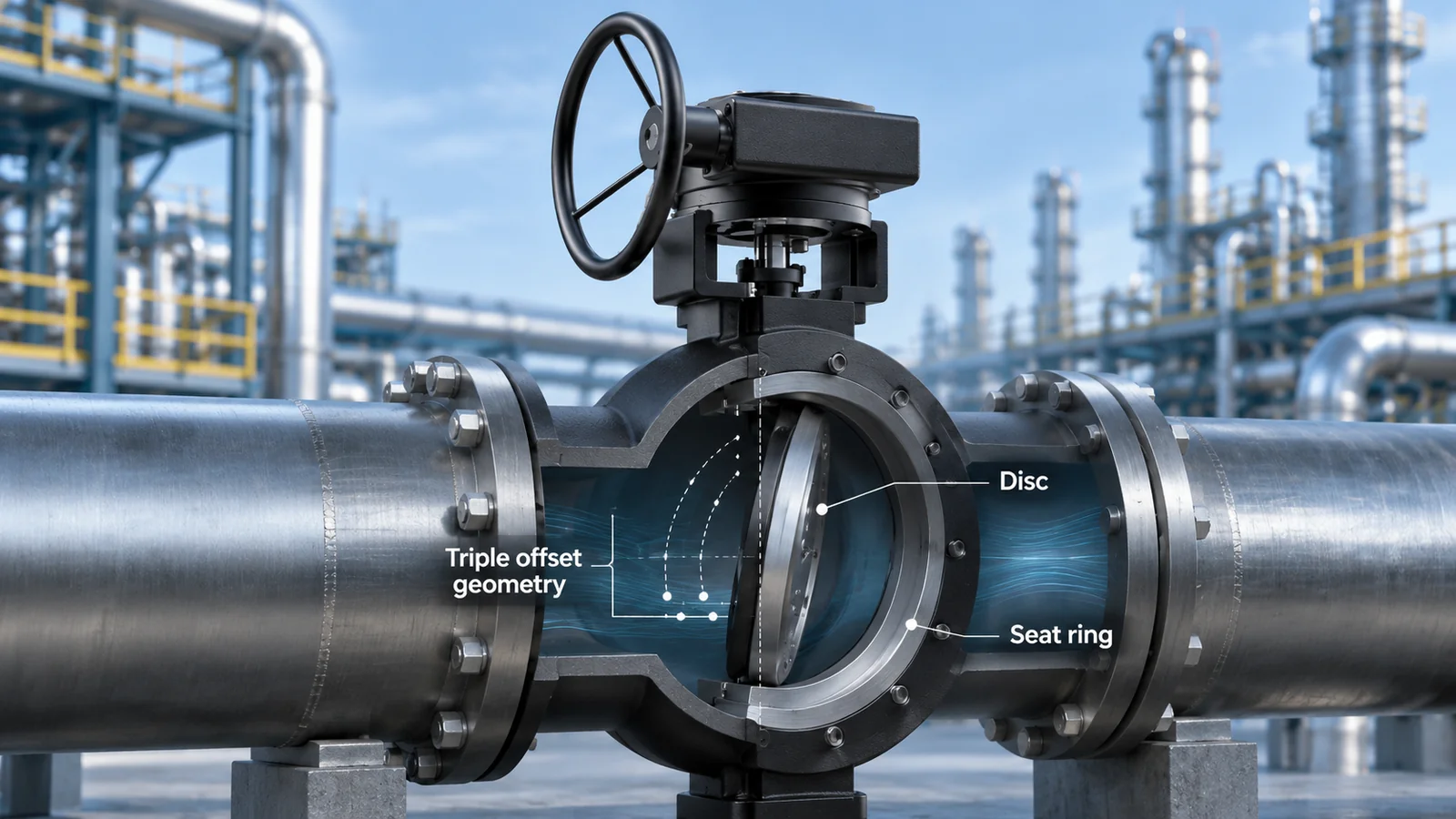
A conventional butterfly valve rotates the disc about a shaft through or near the seal. A triple offset adds an angular eccentricity, so the disc leaves the seat as it opens and contacts it again only near the closed position.
That movement reduces rubbing through most of the stroke, which lets a metal-seated valve handle more frequent cycling than a simple resilient-seated design.
The PANS صمام فراشة ثلاثي الأطوار بختم صلب معدني uses this geometry with radial dynamic balanced sealing. Its composite sealing ring includes stainless steel, graphite, carbon fiber, and PTFE; the seat and seal rings are replaceable.
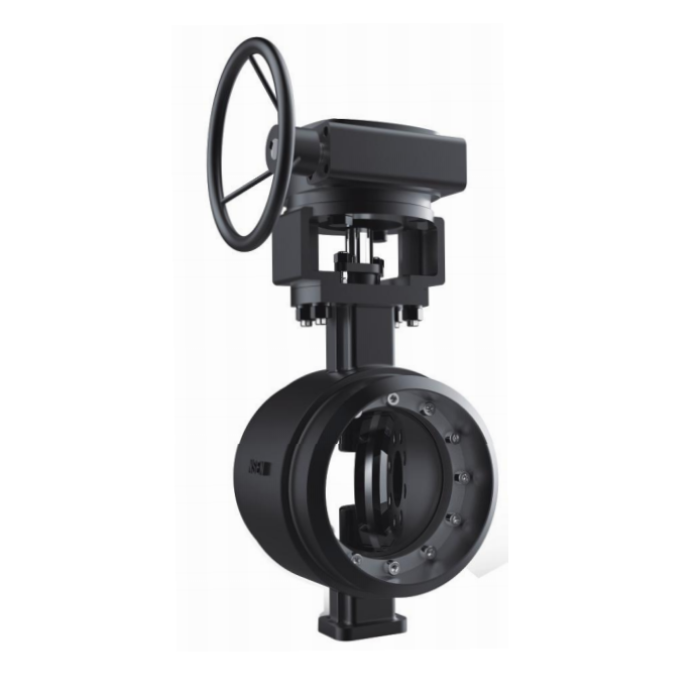
“Triple offset” is not a leakage class or a pressure rating. Two valves with the same description can have different seat designs, materials, and test results.
When Should You Choose a Triple Offset Valve?
Evaluate triple offset for metal seating, wide temperature range, or tolerance of wear and particles. It also suits large lines in congested racks, where it is shorter and lighter than a gate valve.
It is not automatic. For moderate temperature, clean medium, and an acceptable soft-seat leak rate, a high-performance valve can be simpler and more economical. The PANS صمام فراشة عالي الأداء uses an RPTFE seat and is listed from DN50 to DN600.
| Duty condition | Triple offset, metal-seated | High-performance, soft-seated | What decides it |
|---|---|---|---|
| High temperature | First family to evaluate | Limited by the soft seat | Pressure-temperature chart for the exact model |
| Clean medium, moderate temperature | Suitable if the leak class justifies it | Often simpler | Leakage standard and differential pressure |
| Abrasive particles or scale | Metal seat can be more tolerant | Soft seat may be damaged | Particle size, velocity, and seat material |
| ركوب الدراجات بشكل متكرر | Low-rub geometry helps | Wear depends on design | Cycle life and maintenance plan |
| Fire-safe requirement | Metal-to-metal seat is a common starting point | Depends on the qualified design | Test standard and certificate for the ordered model |
The table is a screening guide, not a substitute for the datasheet.
How Do Metal and Soft Seats Change the Selection?
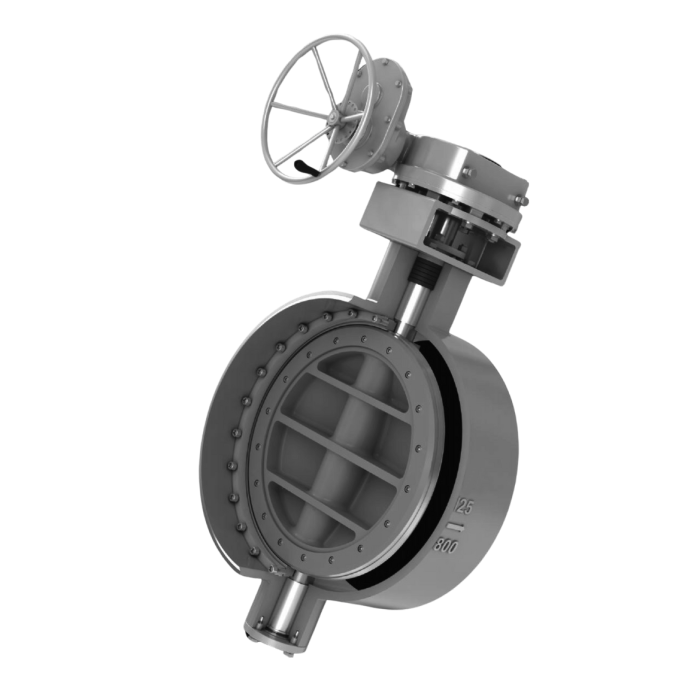
A metal-seated valve uses a hardfaced disc and seat, or a metal seal ring against a metal seat. The PANS full metal-seated bidirectional butterfly valve describes hardfaced metal-to-metal seating, a forged alloy-steel seat ring, and replaceable rings secured by distributed bolts.
Metal seating is preferred when temperature, wear, or fire exposure rules out a soft seat. The trade-off: metal-to-metal contact needs accurate geometry and surface finish to reach a tight leakage class. That result comes from manufacture and testing, not from the words “metal seated.”
A soft seat uses a polymer such as RPTFE to conform to the disc and seal at lower torque. It is a good isolation choice within its temperature and medium limits, but poor where the seat would swell, degrade, or be cut by solids.
Ask for the seat, disc overlay, stem, and packing materials, then which of those details changes the pressure-temperature rating. A family brochure cannot answer that for a specific order.
How Should You Handle Bidirectional Isolation and Fire Requirements?
Bidirectional isolation means the valve seals against differential pressure from either direction, which matters on block-and-bled arrangements and lines pressurized from both sides.
PANS describes the full metal-seated design as bidirectional and fire-safe, with live-loaded packing and a blowout-resistant stem.
State the requirement in the datasheet:
- Design pressure and differential pressure in each direction.
- Leakage standard and class, such as ISO 5208 or API 598.
- Fire test standard, if fire-safe performance is required.
- Installation orientation and any limit on reverse-pressure service.
- The test report and certificate to be supplied.
Use the PANS butterfly valve manufacturer page to shortlist a family, then move to the model drawing and test documents. “Zero leakage” is not a specification unless it names the test medium, pressure, direction, and acceptance criterion.
What Drives Temperature, Pressure, and Material Choice?
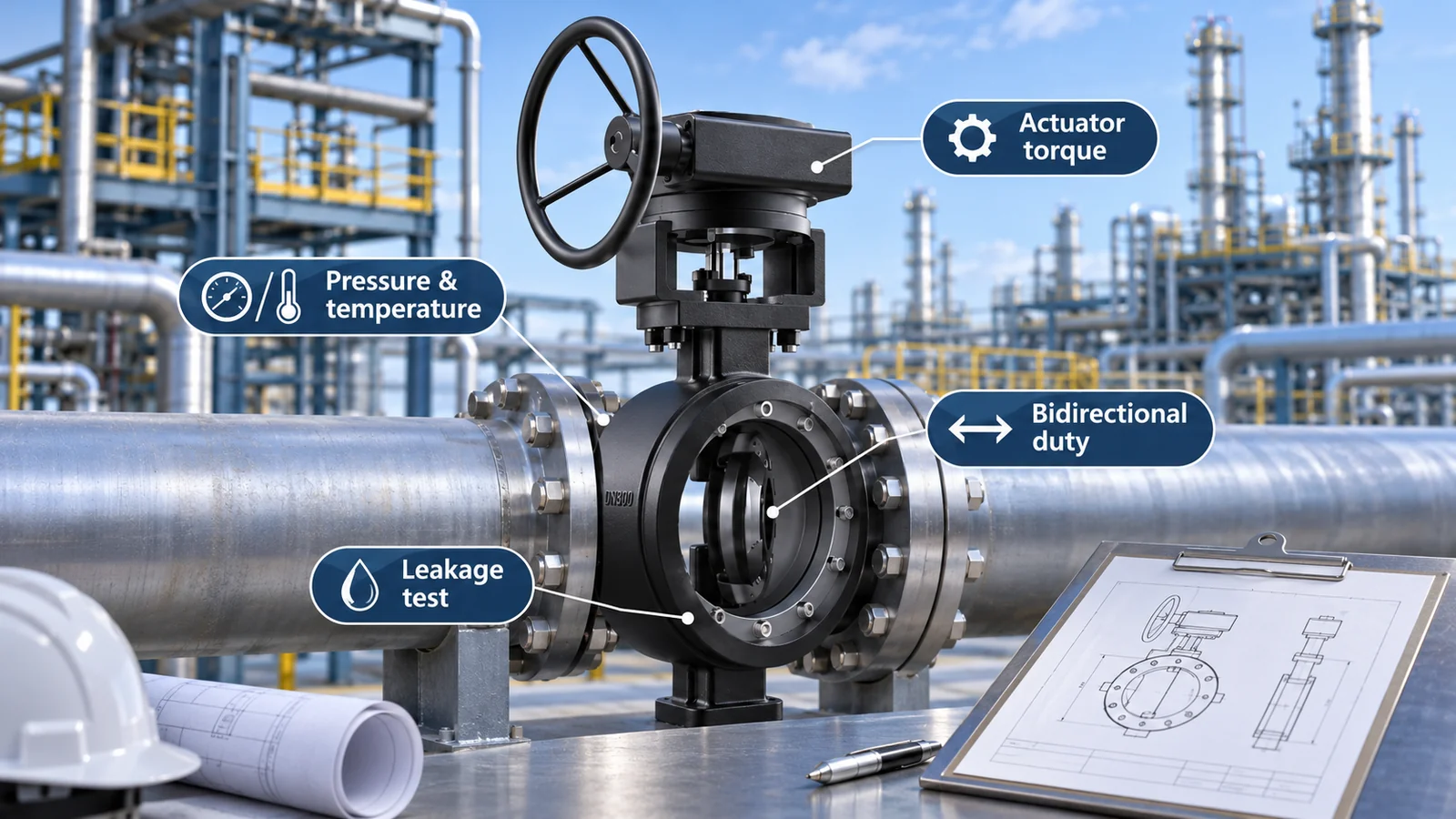
Temperature and pressure act together. A pressure rating at ambient temperature does not apply at the top of the service range, so read the pressure-temperature chart for the exact body, seat, and trim combination.
The medium decides the materials. Carbon steel may be adequate for clean, non-corrosive service; stainless steel or a corrosion-resistant trim may be needed for process fluids, seawater, or aggressive chemicals. Seat and seal materials must also survive the medium and temperature.
Wear is a separate check. A metal seat tolerates some solids, but high velocity and hard particles can erode the disc and seat. For scale or catalyst fines, state the particle size, concentration, and expected velocity.
In refinery and petrochemical service, thermal cycling matters: a valve that holds at startup may leak after hot cycles if the seat cannot accommodate differential expansion. Ask how the seat and stem guidance behave through the specified cycle.
What Data Does the Actuator and Torque Calculation Need?
Torque cannot be sized from nominal size and pressure class alone. It depends on the seat design, differential pressure at opening and closing, medium, temperature, and the friction of the packing and bearings.
Provide the following with the RFQ:
- Maximum differential pressure at opening and at closing.
- Line pressure before and after the valve during each operation.
- Medium, temperature, and any solids.
- Required cycle frequency and stroke time.
- Fail-safe position and available air or power supply.
- Ambient conditions, including temperature and corrosion exposure.
- Actuator interface standard and instrumentation requirements.
The supplier should return a torque calculation for the quoted model, not a generic table. Check that the actuator has margin for the worst case, including breakaway torque after a period of inactivity.
What Belongs in an EPC Isolation Datasheet?
A complete datasheet lets suppliers quote the same scope and lets the project compare offers fairly. Include:
- Size, pressure class, and design standard.
- Connection type, facing, and face-to-face or end-to-end dimension.
- Body, disc, seat, stem, and packing materials.
- Leakage standard, class, test medium, and test direction.
- Fire-safe requirement and test standard.
- Actuator type, interface, fail position, and instrumentation.
- Coating, marking, and tag number.
- Documentation: material certificates, test reports, drawings, and operating manual.
- Inspection and witness requirements.
Add any project-specific requirement that changes the valve, such as low-temperature impact testing, NACE compliance, or a defined painting system. If two documents conflict, resolve the conflict before order. A quotation built on the wrong seat or test standard is not a lower price; it is a different valve.
التعليمات
1. Can a triple offset valve be used for bidirectional isolation?
Some constructions are described as bidirectional, but qualification depends on the model, the differential pressure in each direction, and the test basis. State the requirement in the RFQ and ask for the test report.
2. Does a metal seat mean zero leakage?
No. Metal seats can reach tight leakage classes, but the result depends on design, manufacture, and test standard. Ask for the acceptance criterion and test conditions.
3. When is a soft-seated high-performance valve a better choice?
When temperature is within the seat limit, the medium is clean, and the required leakage class can be met at lower torque. It is usually simpler and cheaper for moderate service.
4. What is the most common RFQ omission?
The differential pressure and test direction. Without them, the supplier cannot size the seat or actuator, and quotations cannot be compared on equal terms.
Specify the Valve, Not Just the Family
Triple offset geometry solves a real isolation problem: a metal-seated butterfly valve can close without dragging the seat through the full stroke. It does not remove the need to specify pressure, temperature, medium, leakage, fire performance, and actuator duty.
Build the datasheet around the isolation function, ask for model-specific evidence, and compare quotations against the same requirements. That is how an EPC package avoids buying a valve that meets the brochure but not the line.
Share your valve specification with PANS to request a quotation. اتصل بـ PANS with the datasheet, including isolation direction and test standard.
يبحث
فئات
العلامات
منتج
- صمام الكرة
- صمام الكرة العائمة
- صمام الكرة الملحومة بالكامل
- صمام الكرة مرتكز الدوران
- صمام الفراشة
- صمام الفراشة ثنائي الاتجاه ذو المقعد المعدني بالكامل
- صمام الفراشة عالي الأداء
- صمام الفراشة ذو الختم الصلب المعدني ثلاثي المركز
- فحص الصمام
- صمام فحص الرفع المصبوب
- صمام فحص التأرجح المصبوب
- صمام فحص نوع الرقاقة
- صمام الدين
- DIN صمام الكرة الأرضية المختوم
- صمام الكرة الأرضية DIN
- DIN ارتفاع صمام البوابة الجذعية
- صمام فحص التأرجح DIN
- صمام صياغة
- صمام الاختيار مزورة
- صمام الكرة العائمة مزورة
- صمام البوابة مزورة
- صمام الكرة الأرضية مزورة
- صمام البوابة
- صمام بوابة مغلق من الأسفل
- صمام البوابة المسطحة
- صمام بوابة إسفين
- صمام العالم
- صمام الكرة الأرضية المصبوب
- صمام التوصيل
- صمام التوصيل غريب الأطوار
- صمام توصيل مشحم لتوازن الضغط المقلوب
- صمام التوصيل المدار
- كم نوع صمام التوصيل
- صمام الطين
- صمام الطين
- مصفاة


