API 600 Gate Valve: Standard, Design & Selection
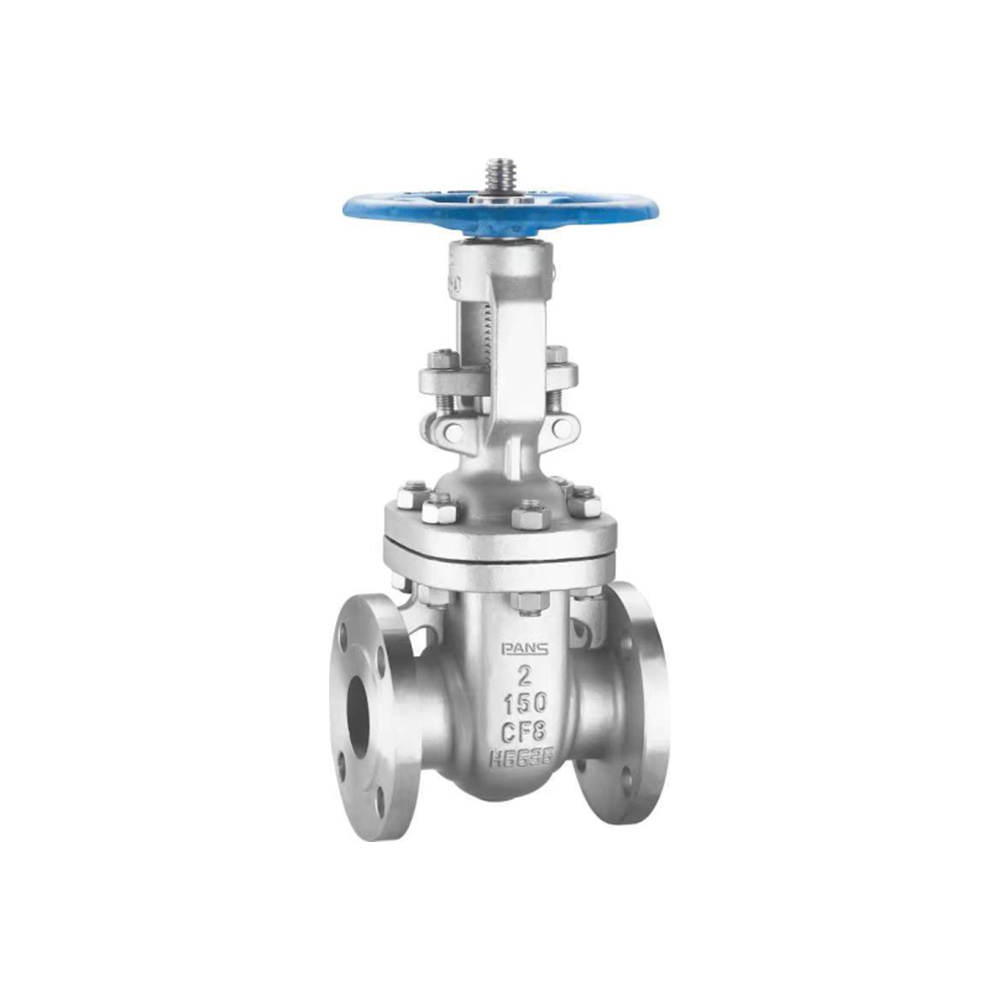
An API 600 gate valve is a bolted-bonnet cast-steel gate valve designed for petroleum and natural gas service where full-port openings, heavy wall sections, and large stem diameters are required. The applicable size and pressure-class range should be stated according to the edition of API 600 used for the project.
PANS Valve manufactures API 600 Vannes in wedge and flat designs from 2 to 60 inches to API 600, API 598, and ASME B16.34 standards, with ISO 9001, CE, API, and TUV certification for global project supply.
What Is API 600?

API 600 is the American Petroleum Institute standard for bolted-bonnet steel gate valves in petroleum and natural gas service. It covers valves where conditions require full-port openings, heavy wall sections, and extra-large stem diameters for reliable isolation under high pressure and temperature.
The standard specifies design requirements for body and bonnet wall thickness, flanged and butt-welding end dimensions, bonnet-to-body joints, gate design, yoke, stem and stem nut, packing box, bolting, and auxiliary connections. It also addresses materials and trim designations. Pressure testing, including shell, closure, and backseat testing where applicable, is generally performed in accordance with API 598 as referenced by the valve specification.
What Are the Key Design Features of an API 600 Gate Valve?
Four features define the API 600 gate valve and separate it from lighter-duty designs.
Bolted bonnet. Secured to the body with bolts. Allows easy field maintenance and internal access without specialized equipment.
Outside screw and yoke. Stem threads sit external to the valve body. Stem position visually indicates open or closed, which is critical for process safety.
Wedge design. API 600 valves may use an appropriate wedge configuration, such as a flexible wedge, depending on the design and service conditions. A flexible wedge can help accommodate limited seat distortion caused by temperature changes or piping loads.
Heavy wall sections. Body and bonnet walls are thicker than standard designs, providing mechanical strength for high-pressure petroleum and steam service.
How Does API 600 Compare to API 602 and API 603?
The table below summarizes key differences across the three gate valve standards most commonly referenced alongside API 600.
| Fonctionnalité | API 600 | API 602 | API 603 |
| Valve type | Cast gate valve | Forged gate, globe, check | Corrosion-resistant cast gate |
| Size range | NPS 2 and larger | NPS 4 and smaller | NPS 1/2 to 24 |
| Body construction | Cast steel | Forged steel | Corrosion-resistant cast |
| End connections | Flanged, butt-weld | Threaded, socket weld, flanged | Flanged, butt-weld |
| Primary service | Refinery, petrochemical, steam | Compact high-pressure piping | Corrosive chemical service |
| Pressure classes | 150 to 2500 | 150 to 2500 | 150 to 600 |
API 600 vs API 602: API 600 suits larger-bore process lines where cast construction and easy bonnet access are priorities. API 602 suits smaller-bore high-pressure systems where forged construction and compactness matter more than maintenance access. API 603 covers corrosion-resistant bolted-bonnet gate valves in stainless and alloy materials for corrosive chemical service where standard carbon steel API 600 designs are not suitable.
How Does API 600 Compare to API 6D?
API 600 and API 6D are both used in oil and gas but serve different system types. API 600 is a refinery and process plant gate valve standard covering bolted-bonnet cast-steel designs for on-site process isolation.
API 6D covers ball, gate, check, and vannes à boisseau specifically for pipeline transportation systems. It includes additional pipeline-specific requirements for fire testing, sour service, and operational cycling that go beyond what API 600 specifies. A gate valve can be manufactured to both standards depending on design and testing scope. For pipeline projects, check whether the specification requires API 6D, API 600, or both before ordering.
What Are the Pressure Classes and Size Range?
API 600 valve pressure-temperature ratings are established using the applicable ASME B16.34 material-group tables. Face-to-face, flanged-end, and butt-welding-end dimensions are governed by the applicable dimensional standards specified for the valve. Standard pressure classes run from Class 150 through Class 2500. Each class defines the maximum allowable working pressure at a given temperature for a given material group.
For the specified material group, verify the Class 150 pressure rating at the stated temperature against the applicable edition of ASME B16.34; for example, some WCB ratings are approximately 285 psi at 38°C (100°F). As temperature increases, the allowable pressure decreases per ASME B16.34 derating tables. The full api 600 dimensions scope extends from NPS 2 to NPS 60 and beyond, from manufacturers with heavy-wall cast body production capability at larger diameters.
Where Are API 600 Gate Valves Used?
Three primary application segments drive the majority of API 600 gate valve demand globally.
Refineries and petrochemical plants. Full-port isolation in crude oil, refined product, and chemical process lines. Heavy wall construction handles pressure cycling and thermal stress common in refinery environments.
Pipeline systems. Large-bore isolation at pump stations, manifolds, and block valve locations where bolted-bonnet cast-steel design is specified.
Power generation. Steam isolation on boiler feedwater, main steam, and extraction lines. OS&Y design and bolted bonnet construction suit high-temperature, high-pressure cycling in power plant steam systems.
How Do You Select the Right API 600 Gate Valve?
Six questions cover the selection checklist for any API 600 application.
What is the fluid? Carbon steel WCB for general service. Stainless CF8M for corrosive service. Alloy WC9 or C5 for high-temperature service.
What is the operating pressure and temperature? Confirms the pressure class required under ASME B16.34 de-rating.
What size is required? Confirms the manufacturer can produce the specific NPS.
What end connection is needed? Flanged or butt-welding based on piping system design.
Is a Class 600 valve pressure class required, or does the application suit Class 150 or Class 300?
What testing documentation is required? Specify the required API 598 test reports or certificates in the purchase order or inspection and test plan, including shell, closure, and applicable backseat test records.
PANS Valve manufactures api 600 gate valves from NPS 2 to 60 in WCB, CF8M, LCB, WC6, and Hastelloy. API 598 tested. Full material traceability. Browse PANS Valve API 600 gate valve products ou contact PANS Valve for a project-specific quotation.
Vanne à vanne en coin
Norme de conception et de fabrication : API 600
Face à face: ASME B16.10
Foire aux questions
What is an API 600 gate valve?
A bolted-bonnet cast-steel gate valve for petroleum and natural gas service. Covers NPS 2 and larger across pressure classes 150 through 2500, with heavy wall sections, OS&Y stem design, and full-port openings for reliable isolation in refinery and petrochemical applications.
What is the difference between API 600 and API 602?
API 600 covers larger-bore cast-steel gate valves from NPS 2 and above. API 602 covers compact forged-steel gate, globe, and clapets anti-retour in sizes NPS 4 and smaller. Forged construction in API 602 suits high-pressure compact piping. Cast construction in API 600 suits larger process lines.
What is the difference between API 6D and API 600?
API 600 is a refinery and process plant gate valve standard. API 6D covers ball, gate, check, and plug valves for pipeline transportation systems, with additional requirements for fire testing, sour service, and operational cycling not covered under API 600.
What is a Class 600 valve?
A Class 600 valve refers to the ASME pressure class designation, not the API standard number. Class 600 defines the pressure-temperature rating for the valve body. A carbon steel Class 600 valve carries approximately 1480 psi maximum working pressure at ambient temperature under ASME B16.34 tables.
Recherche
Catégories
Mots clés
Produit
- Robinet à tournant sphérique
- Robinet à tournant sphérique flottant
- Robinet à tournant sphérique entièrement soudé
- Robinet à bille à tourillon
- Vanne papillon
- Vanne papillon bidirectionnelle à siège entièrement métallique
- Vanne papillon haute performance
- Vanne papillon à joint dur en métal à trois excentriques
- Clapet anti-retour
- Clapet anti-retour à levage moulé
- Clapet anti-retour à battant en fonte
- Clapet anti-retour de type plaquette
- Vanne DIN
- Vanne à soupape scellée à soufflet DIN
- Robinet à soupape DIN
- Vanne à vanne à tige montante DIN
- Clapet anti-retour à battant DIN
- Vanne de Forge
- Clapet anti-retour forgé
- Robinet à tournant sphérique flottant forgé
- Vanne à vanne forgée
- Robinet à soupape forgé
- Vanne à vanne
- Vanne à guillotine à soufflet
- Vanne à vanne plate
- Vanne à vanne en coin
- Robinet à soupape
- Robinet à soupape moulé
- Vanne à boisseau
- Vanne à boisseau excentrique
- Vanne à boisseau lubrifiée à pression équilibrée inversée
- Vanne à boisseau orbitale
- Vanne à boisseau à manchon
- Vanne à lisier
- Vanne à lisier
- Passoire


