Ball Valve Fugitive Emissions Testing: 7 RFQ Checks Before You Approve a Quote
Réponse rapide :
A low-emission ball valve is only as strong as its evidence. Match the test standard to the valve design, confirm the report covers the exact size, class, materials and stem seal you are buying, and separate type-test qualification from production testing. A logo is not a report for the valve you will install. PANS trunnion-mounted ball valves use a supported ball and blowout-proof stem; the seat, stem seal, and test scope are confirmed for each order.
Fugitive emissions are leaks to the atmosphere, usually at the stem seal and body joints. They are not the same as seat leakage, which is internal flow past a closed ball. This guide explains where ball valve fugitive emissions testing fits, which standards apply, and what to put in the request for quotation (RFQ).
Where Do Fugitive Emissions Come From in a Ball Valve?
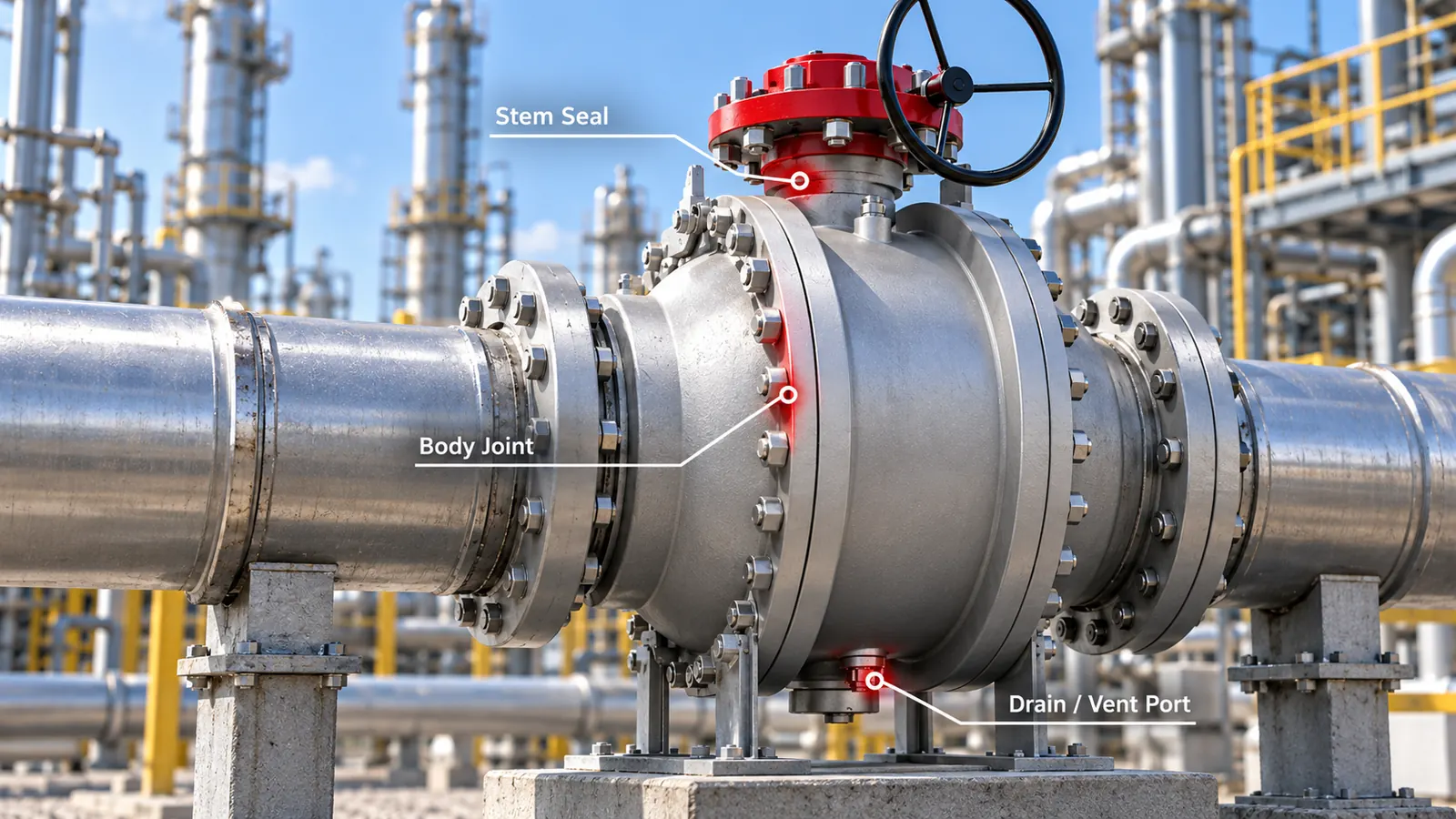
A ball valve has three main external leak paths: the stem seal, body joints, and small threaded connections such as drain, vent and grease-injection ports. Seat leakage is a separate, internal path. A valve can pass a seat test and still leak at the stem.
Body construction changes the joint count. A split-body trunnion valve has bolted body flanges; a fully welded body removes them but keeps the stem and any small ports. A top-entry body has one access joint; a side-entry body uses two or three sections. None of these designs is automatically low-emitting. Gasket selection, bolt load, surface finish and assembly control decide the result.
Stem sealing is the hardest part to control. The stem rotates, so the seal must handle motion, pressure and temperature change without losing contact stress. A spring-loaded packing set, lip seal or bellows may be proposed, but the label is not evidence. Ask for the exact seal arrangement and its qualified temperature range. The ball support also affects stem load; compare floating versus trunnion ball valve designs at the same duty, not by general reputation.
Top-entry and side-entry trunnion body designs change maintenance access and joint count, not a guaranteed emission class. The test report must cover the construction you order.
Which Test Standard Applies to Your Ball Valve?
Standards are often listed as if interchangeable. They are not.
| Standard | What it covers | What it does not prove |
|---|---|---|
| API 598 | Shell and seat leakage test | Stem or body-joint emissions |
| API 607 / API 6FA | Fire exposure and post-fire sealing | Normal-operation fugitive emissions |
| ISO 15848-1 | Type-test qualification and classification | That every delivered valve was tested |
| ISO 15848-2 | Production acceptance test | Design qualification across a size range |
| API 641 | Type testing of quarter-turn valves | Production testing of each valve |
| API 624 | Type testing of rising-stem valves with graphite packing | Ball valve qualification |
ISO 15848-2 specifies production acceptance testing for valves whose design has successfully passed ISO 15848-1 type testing. Confirm the existing qualification and specify any additional production testing required by the order.
The most common mix-up is ISO 15848-1 versus API 641. Both qualify a ball valve design, but use different test sequences and acceptance criteria. ISO 15848-1 classifies performance by tightness class, endurance class and temperature class; the tightness class applies to the stem sealing system. API 641 is a type test for quarter-turn valves. A project may accept either, so name the standard and edition in the RFQ. In practice, ISO 15848 valve testing and API 641 ball valve qualification are often quoted as if they were the same.
Fire-safe and low-emission are also separate claims. A valve can pass a fire test and still leak at the stem, or show low emissions without fire qualification. If both matter, request both. Our ball valve standards and certification guide explains how these documents sit beside API 6D, API 608 and ASME B16.34, while the API 607 fire-safe valve guide covers the fire-test boundary.
What Should a Fugitive Emissions Test Report Contain?
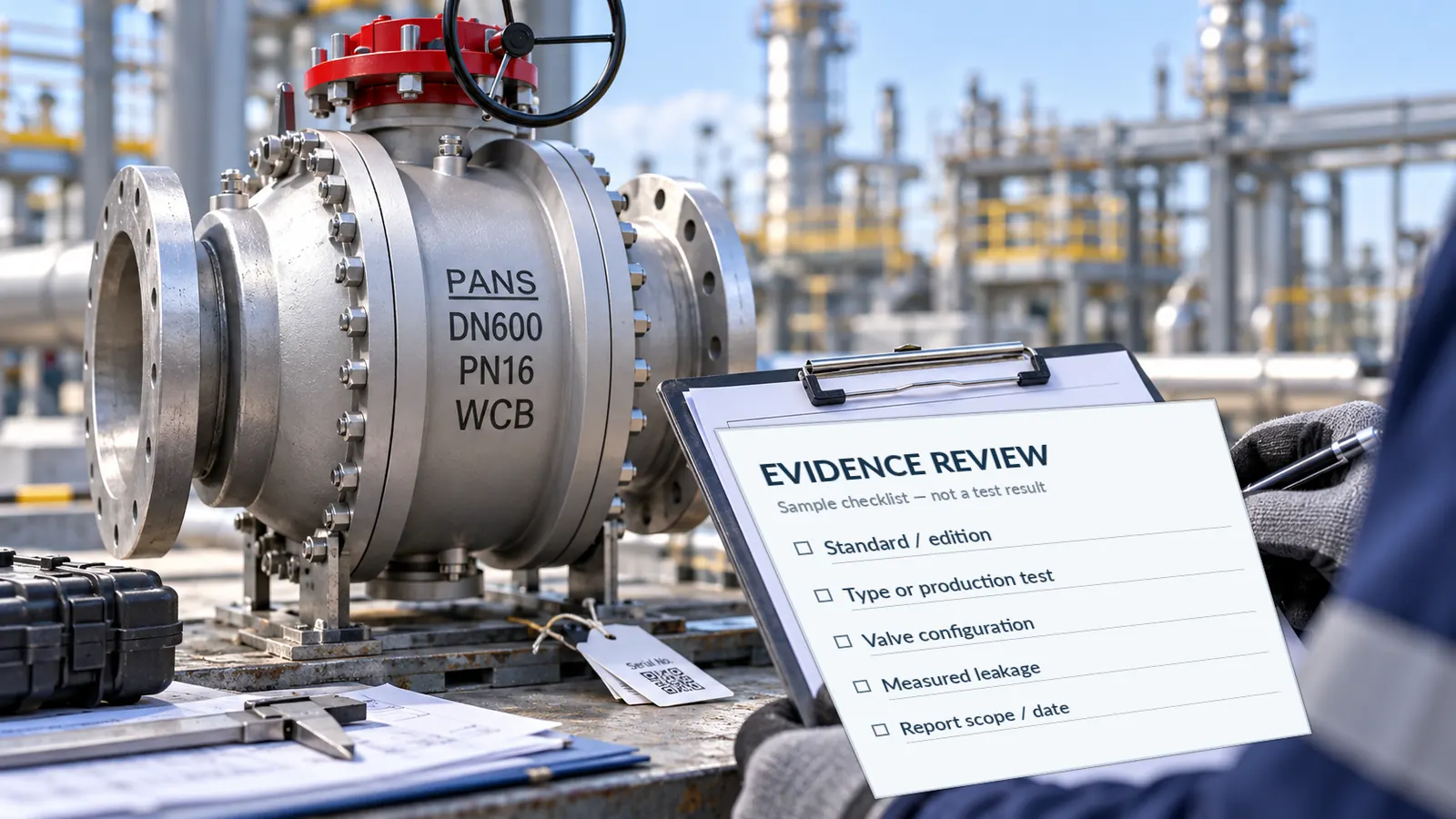
Approve the report, not the cover page. A usable ball valve fugitive emissions testing report links the specimen to the quoted valve and shows the result at each stage.
- Standard, part and edition – for example, ISO 15848-1:2015, not just “ISO 15848.”
- Type test or production test – plus the report number and issue date.
- Exact specimen – model, size, class, body material, stem seal, packing, gasket and seat.
- Test gas and method – helium or methane, detector type, measurement points, calibration and background concentration.
- Pressure and temperature – test pressure, temperature class or profile, and soak time.
- Mechanical and thermal cycles – number, sequence and whether the valve was cycled under pressure.
- Measured leakage – values at each stage, not only “passed,” plus the acceptance limit.
- Scope of validity – sizes, classes, materials and variants covered, and what needs re-testing.
Two checks are often missed. First, ask who witnessed the test and which laboratory issued the report. An in-house report can be valid, but know its origin. Second, ask how the report ties to the delivered valve. A type test covers a design family; a production test should carry the serial number or tag. If the quoted valve uses a different stem extension, cryogenic bonnet, actuator or gasket, confirm that the qualification still applies.
What Belongs in the Supply Scope?
Test evidence is one part of the package. The purchase order should state what is supplied, who pays and what happens if a document is late.
| Item | Why you need it | What to write in the PO |
|---|---|---|
| Type-test report | Shows the design basis | Standard, edition, class, tested configuration |
| Production test report | Identifies the valves actually tested and the production lot represented | |
| Inspection and test plan (ITP) | Defines inspection and hold points | Witness points, notice period |
| Material certificates | Ties body and trim to the order | EN 10204 3.1 or 3.2 as required |
| Spare packing or seal kit | Supports maintenance | Quantity, material, storage |
| Marking and traceability | Links valve to documents | Tag, heat number, nameplate data |
A certificate of conformity is not a test report. The certificate confirms the supplier’s declaration; the report shows what was measured. If third-party inspection is required, name the inspection body and hold points in the RFQ before packing.
What Should Your RFQ Ask For?
Use these seven checks to turn a general ball valve fugitive emissions testing requirement into an auditable order.
- Service envelope – medium, design and operating pressure, temperature range, ambient conditions and cycle frequency.
- Valve configuration – size, class, end connection, body style, ball support, seat, stem seal, gasket and trim.
- Test basis – standard, edition, tightness class, temperature class, endurance class and test gas.
- Test stage – type test, production test or both, and who witnesses each.
- Report scope – tested model, size and class, plus written confirmation that the quoted variant is covered.
- Document package – ITP, material test certificates, drawings, report language, copies and third-party inspection.
- Spares and lifecycle – packing or seal kit, replacement instructions and storage limits.
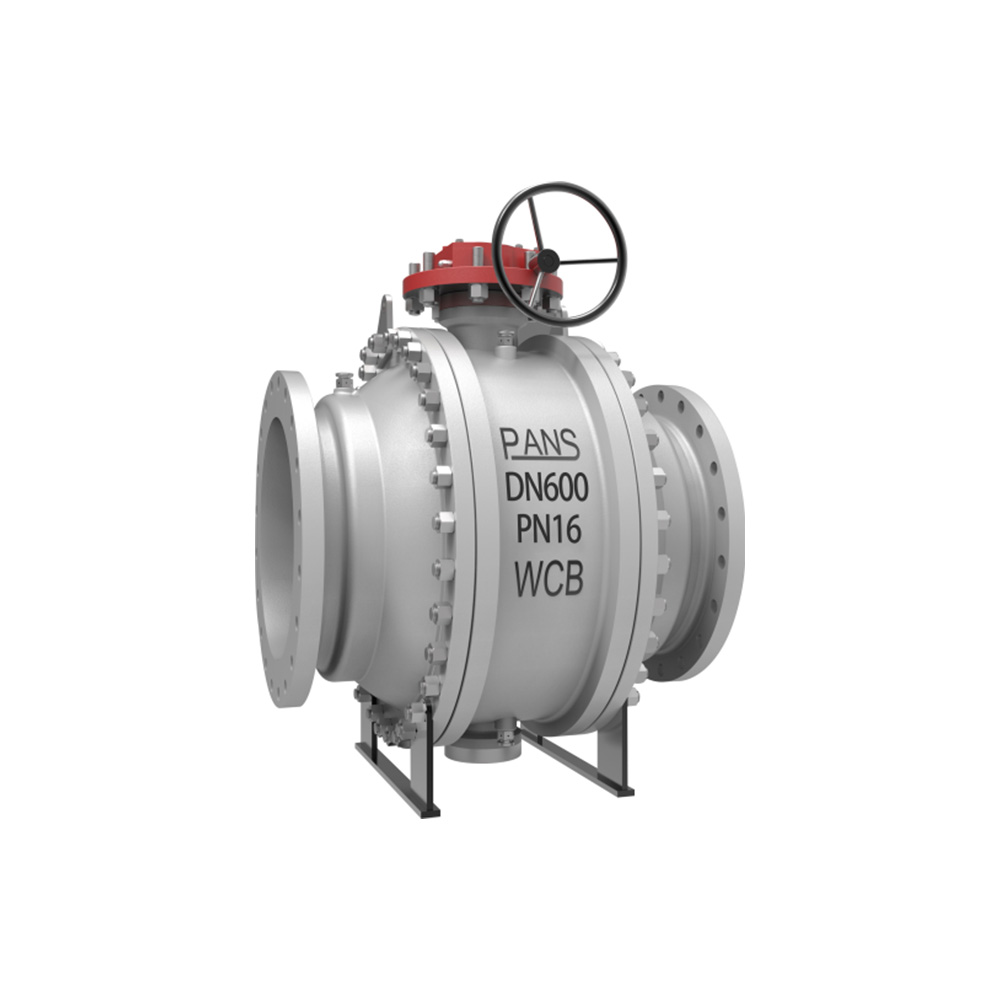
Put the answers in the quotation, not an email. A supplier who cannot state the tested configuration in writing leaves the risk with you. For a trunnion-mounted valve, start with the PANS trunnion-mounted ball valve range; check the final test scope against the order drawing and bill of materials.
Foire aux questions
1. Is API 641 the same as ISO 15848-1?
No. API 641 is a quarter-turn valve type test with its own sequence and criteria. ISO 15848-1 is a classification and qualification standard built around tightness, endurance and temperature classes. A project may accept either; the RFQ should say which.
2. Does a fire-safe ball valve have low fugitive emissions?
Not necessarily. Fire-safe testing checks sealing after fire exposure. Fugitive emissions testing measures external leakage during defined mechanical and thermal cycles. They are separate qualifications and should be requested separately.
3. Is ISO 15848-1 a certificate for every valve shipped?
No. Part 1 qualifies a design through type testing. Part 2 is the production acceptance test. If the project needs both, state both in the purchase order and require the production report to carry the serial number.
4. What is the difference between seat leakage and fugitive emissions?
Seat leakage is internal flow past the closed ball. Fugitive emissions are external leaks to the atmosphere, mainly at the stem seal and body joints. A valve can pass a seat test and still fail an emissions test.
Final Check Before You Approve
Fugitive emissions approval is a document exercise before it is a valve purchase. Match the standard to the design, check the report against the exact configuration, and make the supply scope explicit. That is how a low-emission claim becomes an auditable decision.
Share your specification with PANS to request a quotation with the proposed test scope and document list. Send your RFQ to PANS.
Recherche
Catégories
Mots clés
Produit
- Robinet à tournant sphérique
- Robinet à tournant sphérique flottant
- Robinet à tournant sphérique entièrement soudé
- Robinet à bille à tourillon
- Vanne papillon
- Vanne papillon bidirectionnelle à siège entièrement métallique
- Vanne papillon haute performance
- Vanne papillon à joint dur en métal à trois excentriques
- Clapet anti-retour
- Clapet anti-retour à levage moulé
- Clapet anti-retour à battant en fonte
- Clapet anti-retour de type plaquette
- Vanne DIN
- Vanne à soupape scellée à soufflet DIN
- Robinet à soupape DIN
- Vanne à vanne à tige montante DIN
- Clapet anti-retour à battant DIN
- Vanne de Forge
- Clapet anti-retour forgé
- Robinet à tournant sphérique flottant forgé
- Vanne à vanne forgée
- Robinet à soupape forgé
- Vanne à vanne
- Vanne à guillotine à soufflet
- Vanne à vanne plate
- Vanne à vanne en coin
- Robinet à soupape
- Robinet à soupape moulé
- Vanne à boisseau
- Vanne à boisseau excentrique
- Vanne à boisseau lubrifiée à pression équilibrée inversée
- Vanne à boisseau orbitale
- Vanne à boisseau à manchon
- Vanne à lisier
- Vanne à lisier
- Passoire


