Double Block and Bleed (DBB) Valve: SBB vs DBB, Design & Applications
Three valves. One assembly. That is what a block and bleed valve does. It combines isolation and pressure venting into a single compact unit, cutting down on weight, leak points, and installation complexity. A double block and bleed adds a second independent sealing surface, with a bleed port between the two seats to safely vent cavity pressure before maintenance starts. PANS Valve manufactures ball, gate, globe, and plug valves for block and bleed configurations to API 6D and API 598 standards for oil and gas, petrochemical, instrumentation, and pipeline applications.
What Is a Block and Bleed Valve?
Two functions. One body. The block function stops flow and isolates a section of pipeline or equipment. The bleed function vents trapped pressure from the isolated cavity to atmosphere or a safe disposal point.
In instrumentation service, block and bleed assemblies sit at the interface between the process line and measurement devices. Pressure transmitters. Gauges. Flow meters. Any device that needs to be removed from service without shutting down the entire line benefits from having a block and bleed assembly at the connection point.
How Does a Block and Bleed Valve Work?
Block first. Bleed second, always in that order.
Upstream block valve closes. Downstream section is isolated from process pressure. Second block valve closes if present, creating a sealed cavity between the two seats. Bleed valve opens. Pressure in that cavity vents safely. Now the technician can confirm both seats are holding before touching anything downstream.
The block and bleed valve diagram shows exactly this: two block valves in series, bleed valve on the cavity between them. The block and bleed valve symbol in P&ID drawings uses two valve symbols in series with a vent line and a valve branching off the middle section.
What Is the Difference Between Single Block and Bleed and Double Block and Bleed?
The table below compares single block and bleed valve and double block and bleed valve configurations across key isolation criteria.
| Особенность | Одинарный блок и слив | Двойная блокировка и продувка |
| Number of block seats | One | Two |
| Isolation redundancy | Single seat only | Two independent seats |
| Leak verification | Not possible | Possible via bleed valve |
| OSHA DBB compliance | Нет | Yes with two separate valves |
| Typical application | Low-risk instrumentation | Hazardous or high-pressure service |
Single block and bleed: one seat, one bleed, basic isolation. Fine for low-risk instrumentation takeoffs. Double block and bleed: two seats, cavity bleed between them, seat leakage verification possible. Required for flammable, toxic, or high-pressure lines. OSHA DBB compliance specifically requires two separate inline valves with a bleed between them. A DBB valve built as a single body with two internal seats meets API’s definition but not OSHA’s.
What Is the Difference Between DBB and DIB?
Same basic layout. Different sealing behaviour.
A DBB valve uses two unidirectional self-relieving seats. Each seat seals against pressure from one direction. If body cavity pressure builds beyond line pressure, the seat self-relieves back into the process. Useful in most applications. Not ideal where zero leakage is critical.
A DIB valve uses bidirectional seats. Seals from both directions independently. Cannot self-relieve. Requires an external relief system to manage body cavity overpressure. DIB is the specification when fluid cleanliness or zero leakage tolerance demands a positive pressure barrier that does not communicate back to the process under any condition.
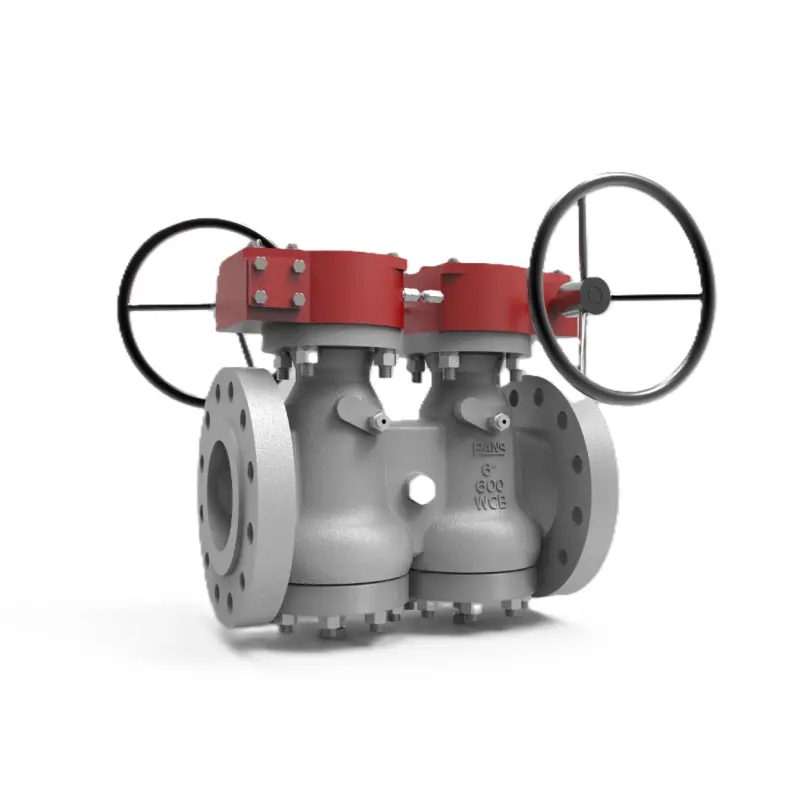
Пробковый клапан DBB
What Valve Types Are Used in Block and Bleed Assemblies?
Three valve types. Different jobs.
Шаровые краны. Workhorse of process block service. Double block and bleed ball valve designs with trunnion mounting and bidirectional seats are standard in oil and gas, LNG, and pipeline applications. Quick quarter-turn operation. Full bore options available. Watch for hydraulic shock risk in liquid service on rapid closure.
Needle valves. Standard for the bleed port and instrumentation block positions. Gradual shutoff. No hydraulic shock. Some needle valve designs are specifically built for positive shutoff in block service.
Пробковые клапаны. Expanding plug designs use mechanical seat energization. No reliance on line pressure to create the seal. Preferred for demanding pipeline and storage DIB applications.
Where Are Block and Bleed Valves Required?

Four service categories. DBB is standard across all of them.
Oil and gas production. Instrumentation takeoffs on hydrocarbon lines need at minimum a single block and bleed. Flammable or high-pressure service: DBB required.
Petrochemical and chemical processing. Sampling points, injection connections, and measurement device interfaces on toxic or corrosive fluid lines.
Offshore platforms. Space and weight matter. One integrated double block and bleed valve assembly replaces three separate valves and reduces topside weight.
Pipeline systems. Mainline isolation, meter stations, and manifold valves on hydrocarbon transmission lines require DBB or DIB per API 6D.
What Standards Apply to Block and Bleed Valves?
API 6D covers ball, ворота, check, and plug valves for pipeline service. Defines DBB and DIB capability requirements for trunnion-mounted ball valves, slab gate valves, and expanding plug valves. API 598 covers pressure testing for all valve types in block and bleed assemblies. PANS Valve manufactures to both with full material traceability and test documentation on every order.
How Do You Select the Right Block and Bleed Configuration?
Four questions. Answer all four before specifying anything.
Is the fluid flammable, toxic, or at high pressure? Yes: DBB minimum.
Is zero leakage or fluid cleanliness critical? Yes: DIB specification.
Is space or weight a constraint? Integrated assembly replaces three separate valves and reduces footprint and potential leak paths.
Is OSHA DBB compliance required? OSHA requires two separate inline valves with a bleed between them. Single-body API DBB designs do not satisfy this requirement.
PANS Valve manufactures ball, gate, глобус, and plug valves suitable for block and bleed configurations in instrumentation, process, and pipeline service. Contact PANS Valve for a project-specific quotation and technical selection support.
Часто задаваемые вопросы
What is the purpose of a block and bleed valve?
Isolates a pipeline section and safely vents trapped pressure from the cavity before maintenance. Replaces two block valves and one bleed valve in a single compact assembly, reducing leak points, installation space, weight, and maintenance complexity in process and instrumentation systems.
When should you use a double block and bleed valve?
When handling flammable, toxic, or high-pressure fluids where single isolation is insufficient. Also required where OSHA DBB compliance applies and wherever safe verification of upstream seat tightness is needed before maintenance or equipment removal begins.
What is a double block and bleed ball valve?
A trunnion-mounted ball valve with two independent seating surfaces and a body cavity bleed port between them. Each seat seals independently. The bleed port allows cavity pressure to be vented and verified before the downstream section is opened for maintenance.
What is the difference between SBB and DBB?
Single block and bleed has one isolation seat and one bleed valve. Double block and bleed has two independent seats with a bleed valve between them. DBB allows seat leakage verification and meets OSHA DBB requirements when configured as two separate inline valves with a bleed between them.
Поиск
Категории
Теги
Продукт
- Шаровой кран
- Плавающий шаровой клапан
- Полностью сварной шаровой кран
- Цапфовый шаровой клапан
- Дроссельный клапан
- Двунаправленный дисковый затвор с цельнометаллическим седлом
- Высокопроизводительный поворотный клапан-бабочка
- Трехэксцентриковый металлический поворотный затвор с жестким уплотнением
- Обратный клапан
- Литой подъемный обратный клапан
- Литой обратный клапан
- Обратный клапан вафельного типа
- DIN-клапан
- Проходной клапан с сильфонным уплотнением по стандарту DIN
- Шаровой клапан DIN
- Задвижка с выдвижным штоком DIN
- Поворотный обратный клапан DIN
- Кузница Клапан
- Кованый обратный клапан
- Кованый плавающий шаровой клапан
- Кованая задвижка
- Кованый шаровой клапан
- Задвижка
- Задвижка с сильфонным уплотнением
- Плоская задвижка
- Клиновая задвижка
- Шаровой вентиль
- Литой шаровой клапан
- Пробковый клапан
- Эксцентриситетный пробковый клапан
- Пробковый клапан с перевернутым балансом давления и смазкой
- Орбитальный пробковый клапан
- Пробковый клапан рукавного типа
- Шламовый клапан
- Шламовый клапан
- сетчатый фильтр


