Electric Actuated Butterfly Valve: Sizing and RFQ Guide
Réponse rapide
Electric actuated butterfly valve selection starts with valve torque at the worst differential pressure and temperature, then matches an actuator that can deliver it at the available power supply and required duty. On/off service, modulating control, fail-safe position, feedback and environment each change the specification. PANS butterfly valves are supplied with the actuator mounting interface defined for the selected model. State medium, pressure, temperature, cycle rate, power and control signal so both parts are sized together.
An electric actuator needs no compressed air, gives clear position feedback and connects to a plant control system. The hard part is not the motor: it is defining torque, duty and interface so valve, gearbox and actuator work as one assembly.
What Parts Make Up an Electric Actuated Butterfly Valve?
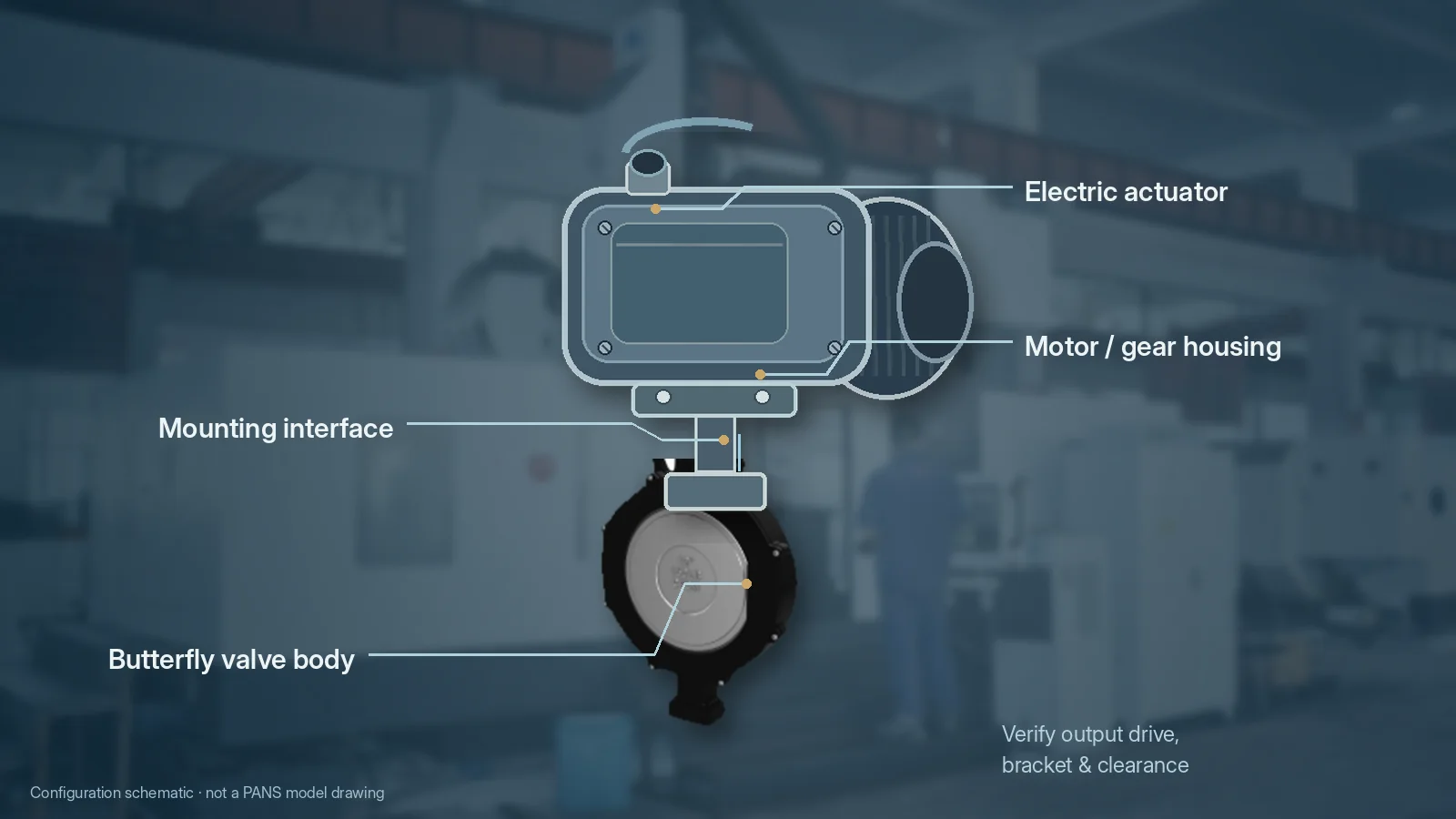
An electric actuated butterfly valve combines a valve and an actuator, and each half carries its own selection data.
The valve side includes the body, disc, stem, seat and bearings. Wafer bodies fit between flanges, lugged bodies allow dead-end service, and double-flanged bodies give a defined envelope. The seat drives torque and temperature limits: resilient seats seal at low differential pressure but have a narrower temperature range. PTFE seats, such as the RPTFE seat in the PANS high-performance butterfly valves, and metal seats in the metal-seated ranges extend temperature capability at the cost of higher seating force.
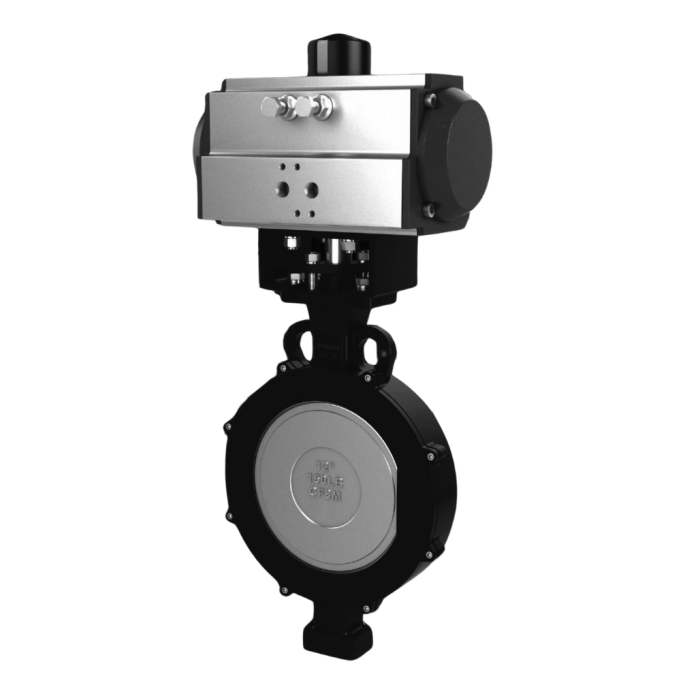
The actuator side includes the motor, gear train, limit and torque switches, control card, terminal box and manual override. The gear train multiplies torque and sets stroke speed; the switches report position and protect against overload.
The halves meet at the mounting interface. ISO 5211 defines a flange pattern and shaft drive, but that alone does not prove a match. Output torque, shaft size, spool height and bracket clearance must be checked together. The PANS butterfly valve range lists body styles; the model drawing remains the reference.
How Do On/Off and Modulating Duty Change the Actuator?
On/off duty is simpler. The actuator drives the disc from fully open to fully closed, usually against the highest torque in the cycle. Selection focuses on breakaway torque, seating torque, stroke time and starts per hour. A valve that opens twice a day and one cycling every few minutes are different thermal duties at identical torque.
Modulating duty adds positioning. The actuator must hold intermediate positions and avoid hunting. Butterfly flow changes most rapidly near closed, so a small stroke correction produces a large flow change; deadband, resolution and positioner quality matter more than on a ball or globe valve.
Modulating service multiplies starts. Confirm rated starts per hour and duty cycle at the actual stroke, ambient temperature and load. An on/off actuator is not made modulating by adding a positioner; motor, gear train and braking may not suit continuous positioning.
Why Is Torque the First Sizing Input?
Three torque values matter. Breakaway torque moves the disc off the seat. Running torque carries it through travel. Seating torque develops the final seal. The highest value at the worst condition sets the actuator requirement.
Torque is not a property of nominal size. It changes with differential pressure and direction, seat material, temperature, medium, time held closed and valve geometry. A soft seat closed for months can need more release torque than a new valve on a test bench, and solids or scaling add friction.
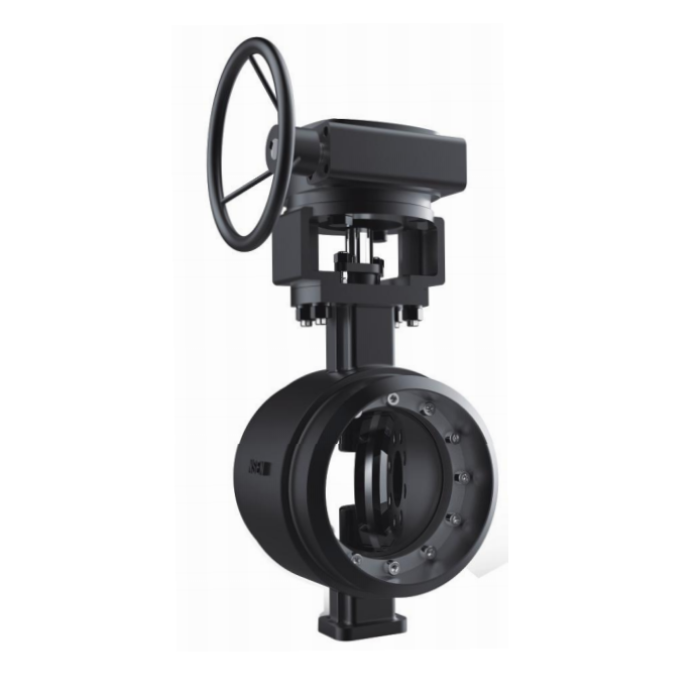
Metal-seated designs behave differently. The three-eccentric metal hard-seal butterfly valves use triple-offset geometry with replaceable seat and seal rings; the full metal-seated bi-directional butterfly valves use hardfaced disc and seat rings. Seating force and temperature capability follow the metal seal.
Two checks are often missed. Confirm actuator output at the actual supply voltage, because motor torque falls as voltage drops, and at the real ambient temperature, because a motor in a hot enclosure or direct sun may not reach its catalogue rating.
The safety margin must follow the manufacturer’s sizing method for that model. There is no responsible generic torque table for electric butterfly valves: the number belongs to a size, seat, class and service condition.
What Power, Control and Feedback Details Belong in the RFQ?
State the power at the installation point: AC or DC, voltage, frequency, phases and neutral, plus control voltage separately. State whether control is by dry contacts, an analog signal or a fieldbus, and name the protocol.
Define position feedback at the same time: limit switches, auxiliary contacts, a potentiometer, an analog signal or a bus value. Open/closed contacts cannot give a control system continuous position.
Fail-safe needs an explicit decision. A standard electric actuator holds its last position when power is lost. Fail-closed or fail-open requires a spring-return actuator, battery backup or external UPS, with different cost, space and maintenance implications. State the failure position and acceptable stroke time.
Also confirm manual override, local control, enclosure protection, ambient range, humidity, corrosion category and hazardous-area classification; these change the enclosure and are difficult to add later.
Electric vs Pneumatic Actuation: What Should a Buyer Compare?
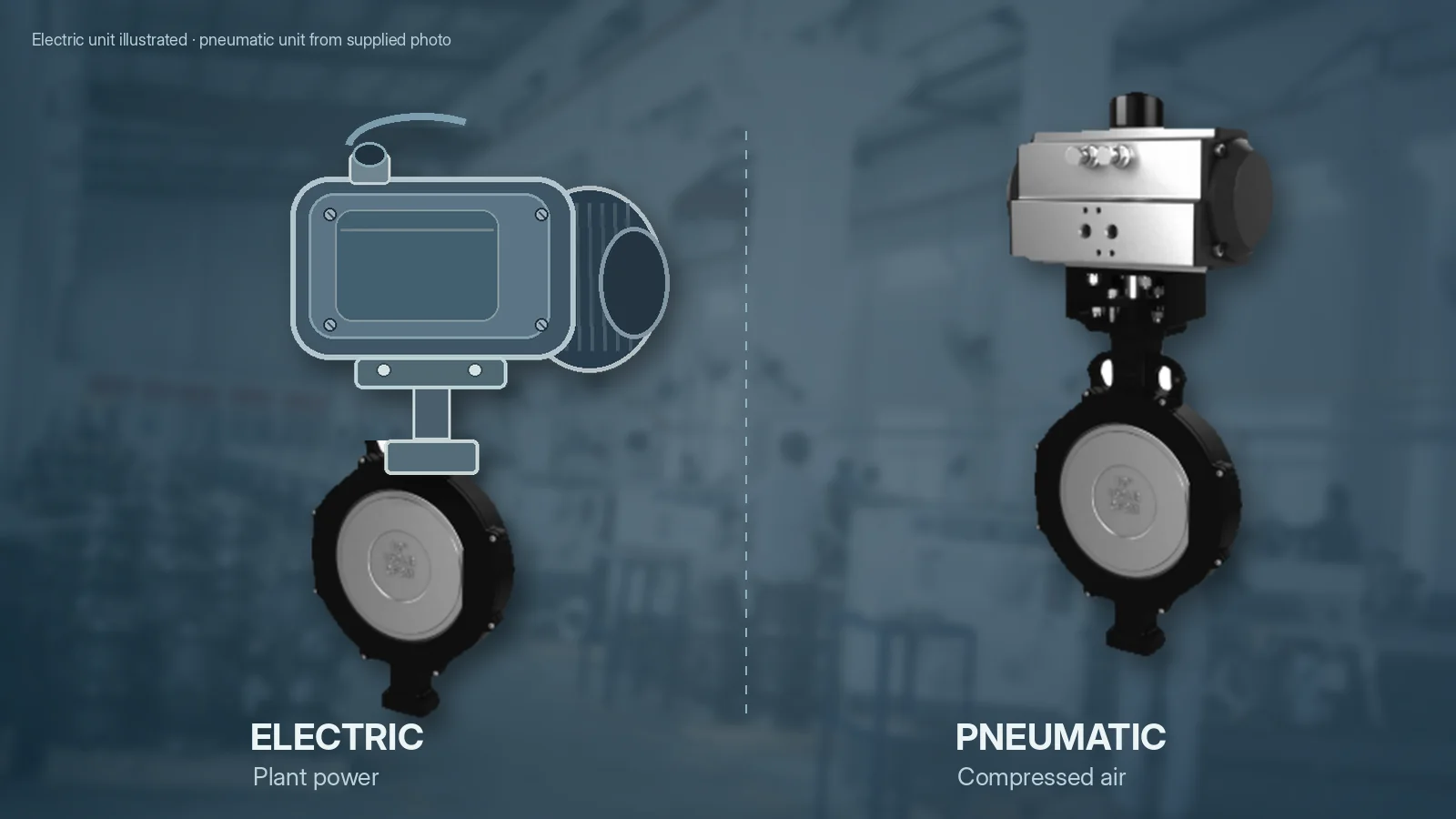
Electric and pneumatic actuators solve different problems. The table is a starting point, not a recommendation.
| Criterion | Electric actuator | Pneumatic actuator |
|---|---|---|
| Energy source | Plant power at the valve | Clean, dry compressed air |
| Fail-safe | Last position by default; spring or battery for fail-safe | Spring return is common and simple |
| Positioning | Good for modulating with the right control card | Good with a positioner; air quality matters |
| Vitesse | Set by gear ratio and motor | Fast, subject to air supply and size |
Power availability usually decides. Where compressed air is distributed and fail-safe is required, a pneumatic actuator is often simpler. Where air is unavailable or detailed position feedback is needed, electric actuation is preferred. The pneumatic butterfly valve actuator guide covers the air-side options.
Which Data Should an Electric Butterfly Valve RFQ Include?
A complete RFQ lets the supplier size both halves without guessing. Include:
- Medium, concentration, solids and scaling risk; size, connection standard, flange facing and pipe schedule.
- Pressure class, design standard and test requirement.
- Design, normal and maximum differential pressure, with direction and whether the valve must seal both ways.
- Operating, minimum and maximum temperature, including ambient.
- Flow and allowed pressure drop for modulating duty, with the Cv basis.
- Duty (on/off or modulating), cycles per hour or day and stroke time.
- Power: voltage, frequency, phases and control voltage; control signal, feedback and protocol.
- Required failure position and fail-safe stroke time.
- Environment, manual override and enclosure: indoor or outdoor, ambient, humidity, corrosion, hazardous area, local control.
- Documentation: drawing, material certificates, test reports, wiring diagram, IOM and spares.
Include the flow cases used for the Cv check. The valve Cv sizing calculation guide explains the coefficient; it does not replace sizing for the selected valve.
If two documents give different limits for one model, ask for written confirmation. A family name is not a specification. The quotation should list valve model, seat and body material, actuator model, output torque and power supply.
FAQ
1. Can any electric actuator be fitted to a butterfly valve?
Only when interface and output match. ISO 5211 defines the flange and drive, but the actuator must also provide enough torque at the actual supply voltage, fit the shaft and spool height, and clear the space. A bracket that bolts on is not proof of a match.
2. What determines the stroke time?
Gear ratio, motor speed and load set the standard stroke time, and the required time should be stated in the RFQ. A shorter stroke is not automatically better: fast closure of a liquid line can create surge, and fast operation raises the starting duty on the motor.
3. Does the actuator need a heater?
It is needed where condensation is likely, such as humid, outdoor or cycling-temperature locations. The heater keeps the enclosure above dew point and protects the control card. State ambient and humidity so the enclosure and heater are specified together.
Select the Valve and Actuator as One Assembly
Selection is a torque and duty exercise before it is a catalogue exercise. Define the worst pressure, temperature and seat condition, confirm actuator output at real voltage and ambient, then specify the control and feedback interface. Quote valve, gearbox and actuator as one assembly, with assumptions written down.
Share your medium, line size, pressure, temperature, duty and power supply with PANS to request a quotation.
Recherche
Catégories
Mots clés
Produit
- Robinet à tournant sphérique
- Robinet à tournant sphérique flottant
- Robinet à tournant sphérique entièrement soudé
- Robinet à bille à tourillon
- Vanne papillon
- Vanne papillon bidirectionnelle à siège entièrement métallique
- Vanne papillon haute performance
- Vanne papillon à joint dur en métal à trois excentriques
- Clapet anti-retour
- Clapet anti-retour à levage moulé
- Clapet anti-retour à battant en fonte
- Clapet anti-retour de type plaquette
- Vanne DIN
- Vanne à soupape scellée à soufflet DIN
- Robinet à soupape DIN
- Vanne à vanne à tige montante DIN
- Clapet anti-retour à battant DIN
- Vanne de Forge
- Clapet anti-retour forgé
- Robinet à tournant sphérique flottant forgé
- Vanne à vanne forgée
- Robinet à soupape forgé
- Vanne à vanne
- Vanne à guillotine à soufflet
- Vanne à vanne plate
- Vanne à vanne en coin
- Robinet à soupape
- Robinet à soupape moulé
- Vanne à boisseau
- Vanne à boisseau excentrique
- Vanne à boisseau lubrifiée à pression équilibrée inversée
- Vanne à boisseau orbitale
- Vanne à boisseau à manchon
- Vanne à lisier
- Vanne à lisier
- Passoire


