Types de clapets anti-retour à bride
Dans la plupart des projets, les clapets anti-retour ne sont pas le premier sujet de conversation. Mais lorsqu'une pompe tourne à l'envers, qu'une conduite se ferme brutalement ou qu'un compteur est endommagé par un reflux, le clapet anti-retour devient crucial. clapet anti-retour à brides Cela devient soudainement très important.
Pour les équipes EPC, les équipementiers et les responsables de la maintenance, comprendre les principaux types de clapets anti-retour à brides facilite le choix d'une conception qui correspond réellement à l'usage prévu, et pas seulement à la fiche technique.
Dans ce guide, nous allons passer en revue les conceptions d'extrémités à brides les plus courantes, leur fonctionnement et leurs domaines d'application habituels, dans une perspective pratique et axée sur les projets.
Qu'est-ce qu'un clapet anti-retour à brides ?
UN clapet anti-retour à brides Il s'agit d'un clapet anti-retour automatique à brides, boulonné directement sur la canalisation. Lorsque le fluide circule dans le bon sens, le disque interne s'ouvre. En cas d'arrêt ou d'inversion du flux, le disque se ferme, bloquant le reflux et protégeant ainsi les équipements en amont.
Sur les schémas de tuyauterie et d'instrumentation (P&ID), symbole de clapet anti-retour à brides spectacles :
- Sens d'écoulement à travers la vanne
- Qu'il s'agit d'un appareil sans retour (à sens unique).
- Parfois, il s'agit d'un type interne, comme un système à double plaque ou à charnières.
Grâce à leurs brides conformes aux normes courantes (ASME, EN, JIS, etc.), ces vannes sont faciles à installer, à démonter et à entretenir dans une large gamme de systèmes industriels.
Pourquoi utiliser des clapets anti-retour à brides dans les systèmes industriels ?
Comparé aux conceptions filetées ou soudées, un corps à brides vous offre :
- Fermeture sécurisée pour des tâches à pression moyenne et élevée
- Retrait facile pour inspection ou remplacement
- Bon alignement sur les grands et lourds pipelines
- Dimensions standard qui s'adaptent aux brides et joints existants
En d'autres termes, un raccordement à brides est souvent la solution la plus sûre et la plus facile à entretenir pour les conduites critiques dans les centrales électriques, les raffineries, les usines chimiques et les installations de traitement des eaux.
Principaux types de clapets anti-retour à brides
Les clapets anti-retour à brides sont disponibles avec différents mécanismes internes. Le choix du modèle approprié dépend du fluide utilisé, de la configuration de l'installation et du profil de fonctionnement.
Vous trouverez ci-dessous les types les plus couramment utilisés dans les projets industriels.
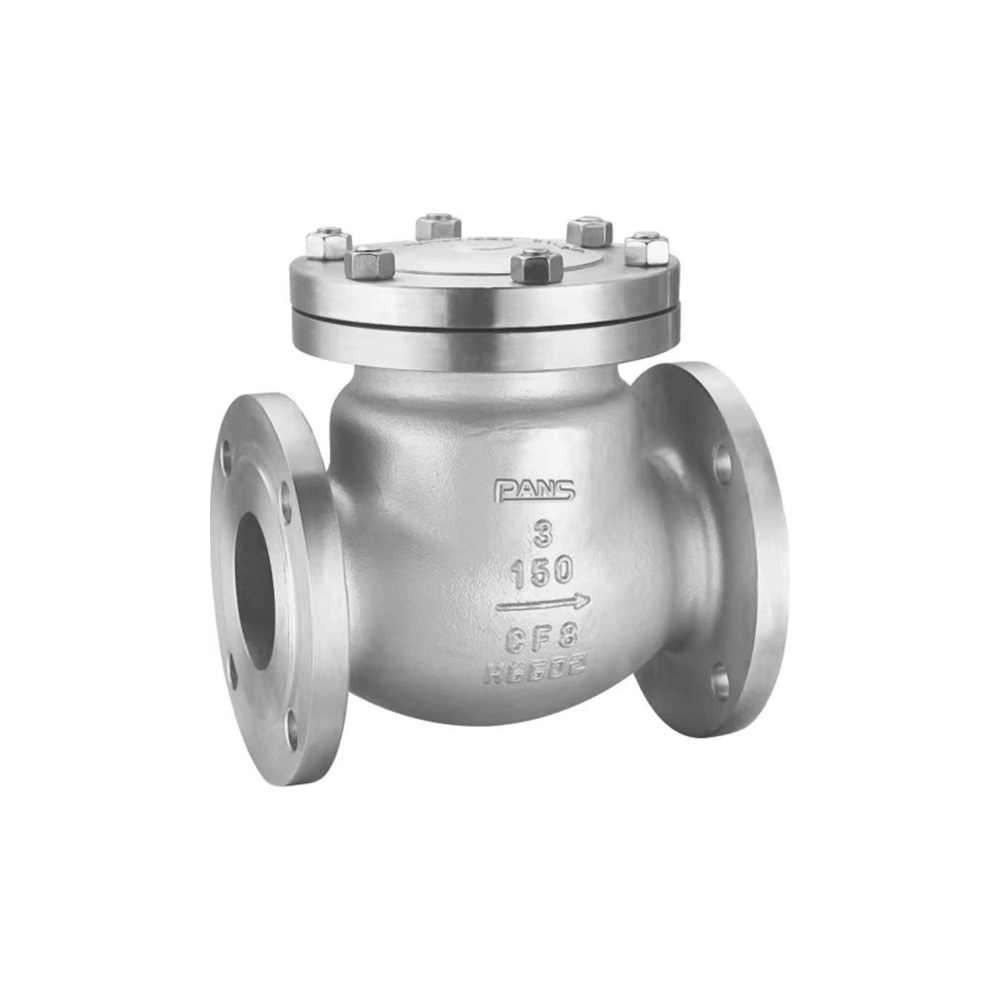
1. Clapet anti-retour à brides
Clapets anti-retour à battant utiliser un disque articulé qui s'ouvre dans le sens du flux et se ferme lorsque le flux s'inverse.
Caractéristiques typiques :
- Structure simple et faible perte de charge
- Convient pour l'eau propre, l'huile et les services généraux
- Fonctionne bien dans les lignes horizontales et certaines lignes verticales ascendantes
Pour un débit stable et non pulsatoire où le coup de bélier est maîtrisé, les clapets anti-retour à brides de type oscillant sont souvent le premier choix.
2. Clapet anti-retour à bille à brides
UN clapet anti-retour à bille à bride Le disque est remplacé par une bille sphérique. Lorsque le flux est direct, la bille se soulève de son siège. Le flux inverse la remet en place pour assurer l'étanchéité.
Ce modèle est populaire lorsque :
- Le milieu transporte des matières solides molles ou des boues
- Vous souhaitez un effet autonettoyant grâce à la rotation de la bille.
- Les équipes de maintenance préfèrent un agencement intérieur très simple.
On rencontre souvent des clapets anti-retour à bille sur les conduites d'eaux usées, les rejets de pompes et certains réseaux d'évacuation de boues.
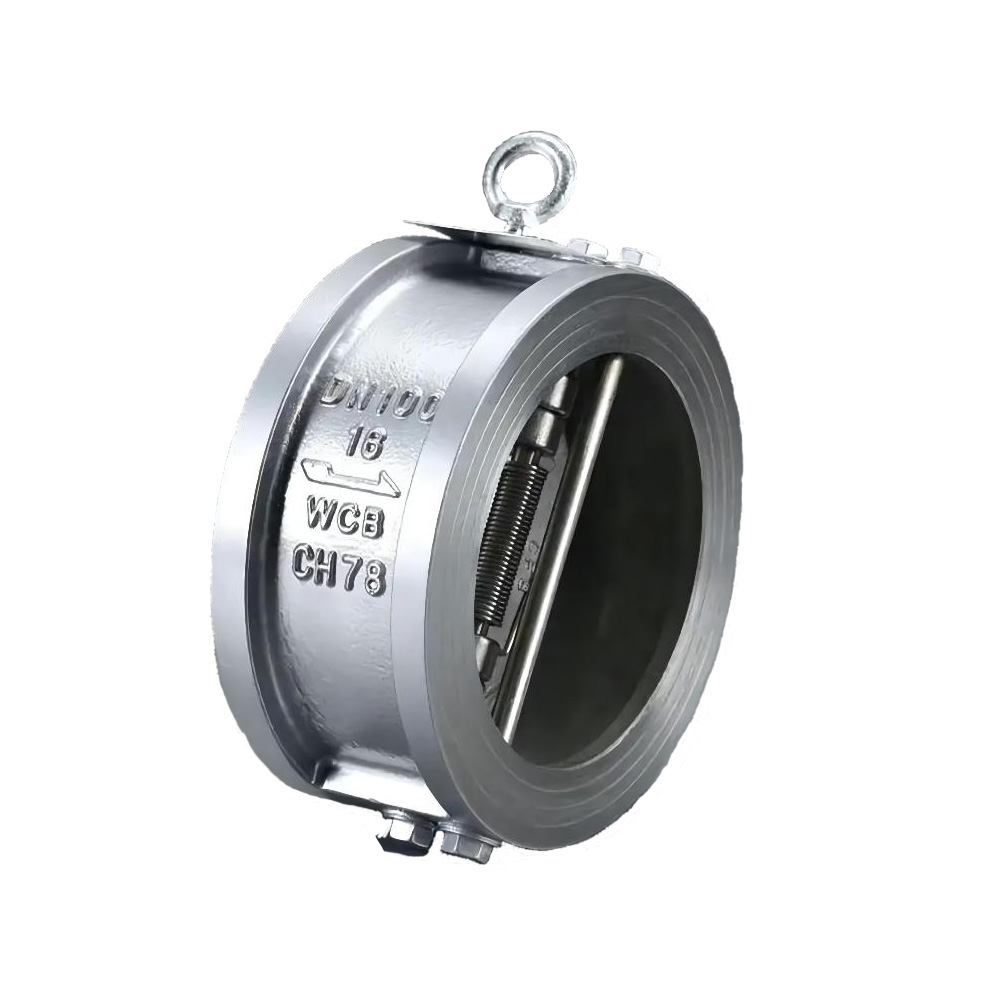
3. Clapet anti-retour à double plaque à brides
UN bride clapet anti-retour à double plaque Ce clapet anti-retour (également appelé clapet à double battant ou clapet à disque divisé) utilise deux plaques à ressort montées sur un axe central. Les plaques s'ouvrent lorsque le débit les pousse et se referment rapidement lorsque le débit diminue.
Principaux avantages :
- Des échanges en face à face très courts comparés aux types de swing traditionnels
- Léger, surtout en grands diamètres
- La fermeture assistée par ressort réduit les coups de bélier et le bruit.
Ils sont largement utilisés dans les centrales électriques, les réseaux énergétiques urbains et les conduites d'eau de refroidissement de grand diamètre où l'espace et le poids sont limités.
4. Clapet anti-retour à ressort à bride
UN clapet anti-retour à ressort à bride Il utilise un disque ou un piston unique, ainsi qu'un ressort qui le repousse vers son siège. Il ne nécessite pas un fort reflux pour se fermer ; le ressort contribue à une fermeture plus rapide.
Cela est utile lorsque vous :
- Les pipelines de grande hauteur ou de grande longueur sont sujets aux surpressions.
- Il faut une fermeture plus rapide pour éviter les coups de bélier.
- Installez la vanne sur les conduites verticales ou à proximité des équipements sensibles.
Les clapets anti-retour “ silencieux ” à ressort sont courants sur les conduites d'alimentation en eau des chaudières, d'eau glacée et de refoulement des pompes à grande vitesse.
5. Clapets anti-retour à brides de type plaquette
UN clapet anti-retour à brides ou clapet anti-retour à brides de type plaquette Elle est fixée entre deux brides et possède un corps mince. À l'intérieur, elle peut être oscillante, à double plaque ou à ressort ; seule la forme compacte de la plaquette change.
Pourquoi les ingénieurs apprécient les clapets anti-retour à brides de type wafer :
- Un encombrement réduit face à face permet de gagner de la place dans les palettes et les supports de tuyauterie étroits.
- Un poids réduit facilite la manutention sur site
- Installation simple entre les brides existantes
Ces vannes sont courantes dans les systèmes de chauffage, de ventilation et de climatisation, les circuits d'eau de refroidissement et les lignes de production industrielle où chaque millimètre de longueur de tiroir compte.
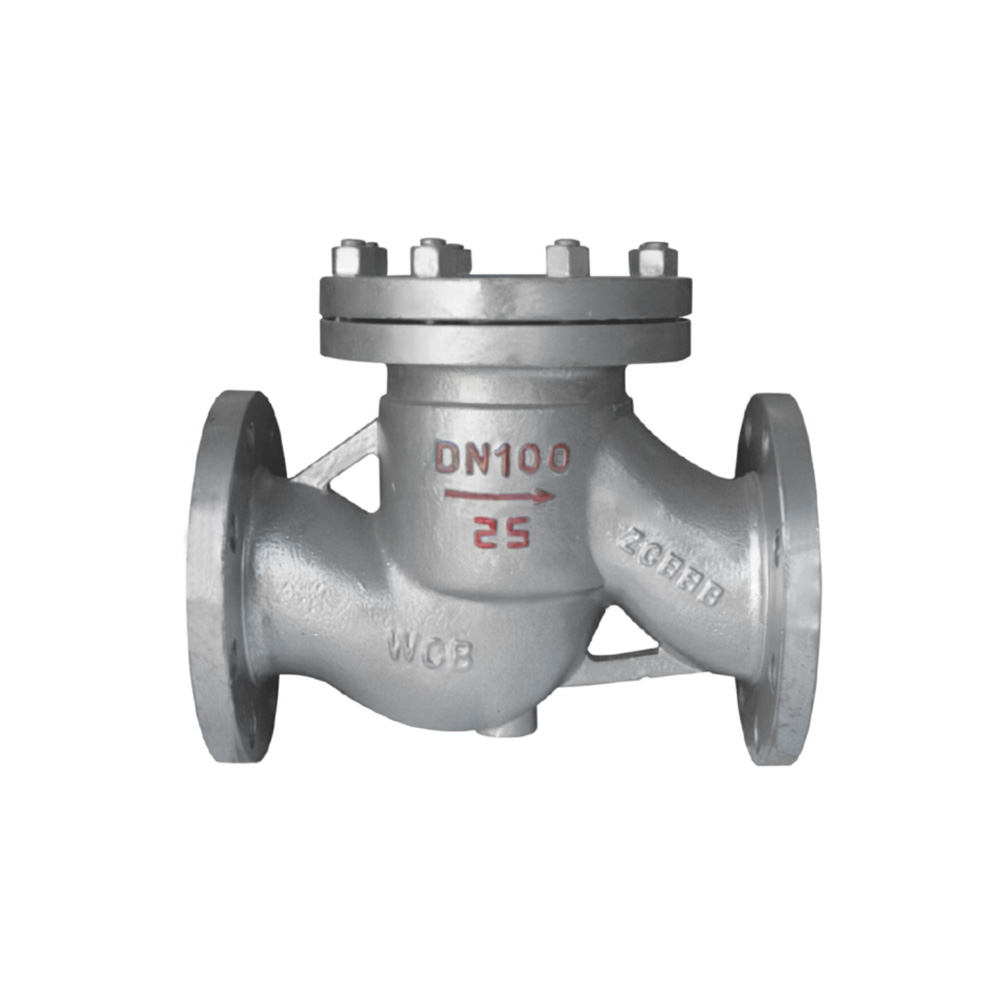
Découvrez notre gamme de clapets anti-retour de haute qualité
Comment choisir le clapet anti-retour à brides adapté ?
Lorsque vous spécifiez un clapet anti-retour à brides, Se baser uniquement sur la taille et la classe de pression est risqué. Il est préférable de partir de l'application et de remonter la chaîne.
Points clés de sélection :
- Moyen: eau propre, eau de mer, condensat, produits chimiques, boues, vapeur
- Pression et température de fonctionnement : inclure les variations transitoires et les marges de sécurité
- Profil d'écoulement : régulier, pulsé, démarrage/arrêt fréquent, vertical ou horizontal
- Risque de coup de bélier : Choisir un système à ressort ou à double plaque selon les besoins
- Compatibilité des matériaux : Carrosserie, garnitures et sièges contre la corrosion et l'érosion
- Normes et homologations : Spécifications API, ASME, EN, ISO et spécifications spécifiques au projet
Dans de nombreux cas, travailler directement avec un fabricant de clapets anti-retour à brides vous permettra d'affiner votre sélection beaucoup plus rapidement qu'en comparant uniquement les pages du catalogue.
Applications typiques et conseils d'installation des clapets anti-retour à brides
Vous trouverez des clapets anti-retour à brides dans les secteurs suivants :
- Centrales électriques (eau de refroidissement, condensats, alimentation de chaudière)
- Production et pipelines de pétrole et de gaz
- usines pétrochimiques et chimiques
- Systèmes d'eau d'incendie et eau utilitaire
- Traitement des eaux municipales et des eaux usées
Bonnes pratiques pour les installateurs :
- Suivez la flèche et symbole de clapet anti-retour à brides sur le corps pour indiquer le sens d'écoulement correct.
- Utilisez le type de joint et les valeurs de couple de serrage des boulons appropriés à la norme de bride.
- Assurez-vous que les conduites en amont/aval soient rectilignes lorsque cela est recommandé par le fabricant d'origine.
- Pour les systèmes à haute énergie, privilégiez les conceptions à ressorts ou à double plaque afin de réduire les coups de bélier.
Travailler avec Fournisseurs de clapets anti-retour à brides de confiance
Pour les équipementiers et les entreprises d'ingénierie, d'approvisionnement et de construction (EPC), une relation solide avec fournisseurs de clapets anti-retour à brides techniquement compétents réduit les risques liés au projet.
- Recommandez le type et le matériau appropriés en fonction de votre liste de lignes.
- Fournir une documentation claire (tests, certificats de matériaux, normes)
- Répondre aux exigences particulières telles que les revêtements, les garnitures ou les interactions personnalisées en face à face
Des fabricants comme Vanne de casseroles, qui se concentrent sur les vannes industrielles, combinent le support technique avec contrôle de qualité strict Ainsi, vos clapets anti-retour à brides arrivent prêts à l'emploi, sans nécessiter de retouches sur site.
Conclusion
UN clapet anti-retour à brides Il peut s'agir d'une simple ligne dans votre cahier des charges, mais elle joue un rôle majeur dans la protection des pompes, des instruments et des unités de traitement complètes. Les modèles à bascule, à bille, à double plaque, à ressort et à plaquette répondent tous à des problèmes légèrement différents.
En adaptant la vanne à vos conditions de fonctionnement réelles et en vous associant à un expert fabricant de clapets anti-retour à brides, Vous pouvez ainsi réduire les coups de bélier, prolonger la durée de vie de vos équipements et éviter des temps d'arrêt coûteux.
Si vous prévoyez un nouveau système ou la mise à niveau de lignes existantes, contactez-nous. Vanne de casseroles pour obtenir de l'aide dans le choix de clapets anti-retour à brides adaptés aux exigences de votre projet.
Points clés à retenir
- À chaque application correspond une conception différente. Les clapets anti-retour à battant, à bille, à double plaque, à ressort et à brides de type wafer présentent chacun des avantages dans des conditions spécifiques.
- Les conditions du système sont primordiales. Le fluide, la pression, la température, le profil d'écoulement et la configuration doivent guider le choix du clapet anti-retour à brides.
- Un bon fournisseur apporte une réelle valeur ajoutée. Les fournisseurs expérimentés de clapets anti-retour à brides contribuent à optimiser les performances d'écoulement, la disponibilité et le coût du cycle de vie, et pas seulement le prix unitaire.
FAQ sur les clapets anti-retour à brides
Q1 : À quoi sert un clapet anti-retour à brides ?
A1 : Il permet le flux dans une direction et bloque automatiquement le flux inverse, protégeant ainsi les pompes, les compteurs et autres équipements en amont contre le reflux et les surpressions.
Q2 : Quand dois-je utiliser un clapet anti-retour à bille à bride ?
A2 : Utilisez un clapet anti-retour à bille à bride lorsque le fluide peut contenir des matières solides ou des boues. La bille qui roule est plus tolérante aux débris et contribue à réduire le risque d’obstruction dans les conduites d’eaux usées et de boues.
Q3 : Qu'est-ce qui caractérise un clapet anti-retour à double plaque à brides ?
A3 : Un clapet anti-retour à double plaque à brides est doté de deux plaques à ressort et d’une longueur face à face très réduite. Plus léger et plus compact qu’un clapet anti-retour à battant traditionnel, il se ferme plus rapidement, réduisant ainsi les coups de bélier.
Q4 : Un clapet anti-retour à bride est-il aussi performant qu'un clapet à corps plein ?
A4 : Oui, à condition d’être correctement sélectionnée et installée. Un clapet anti-retour à brides de type plaquette utilise simplement un corps plus fin, mais peut tout de même répondre aux mêmes normes de pression et de performance.
Q5 : Comment choisir le bon fabricant de clapets anti-retour à brides ?
A5 : Recherchez une expérience industrielle éprouvée, des normes reconnues, une documentation complète des essais, la traçabilité des matériaux et un support technique réactif. Cela garantit que vos vannes répondent aux exigences de votre projet et aux réglementations locales.
Recherche
Catégories
Mots clés
Produit
- Robinet à tournant sphérique
- Robinet à tournant sphérique flottant
- Robinet à tournant sphérique entièrement soudé
- Robinet à bille à tourillon
- Vanne papillon
- Vanne papillon bidirectionnelle à siège entièrement métallique
- Vanne papillon haute performance
- Vanne papillon à joint dur en métal à trois excentriques
- Clapet anti-retour
- Clapet anti-retour à levage moulé
- Clapet anti-retour à battant en fonte
- Clapet anti-retour de type plaquette
- Vanne DIN
- Vanne à soupape scellée à soufflet DIN
- Robinet à soupape DIN
- Vanne à vanne à tige montante DIN
- Clapet anti-retour à battant DIN
- Vanne de Forge
- Clapet anti-retour forgé
- Robinet à tournant sphérique flottant forgé
- Vanne à vanne forgée
- Robinet à soupape forgé
- Vanne à vanne
- Vanne à guillotine à soufflet
- Vanne à vanne plate
- Vanne à vanne en coin
- Robinet à soupape
- Robinet à soupape moulé
- Vanne à boisseau
- Vanne à boisseau excentrique
- Vanne à boisseau lubrifiée à pression équilibrée inversée
- Vanne à boisseau orbitale
- Vanne à boisseau à manchon
- Vanne à lisier
- Vanne à lisier
- Passoire


